BIBLIOGRAPHY PART FIVE
P. 209, P. 211 - Part Five
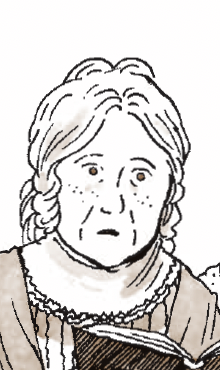
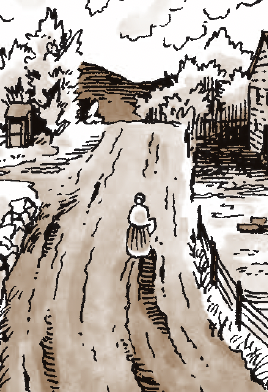
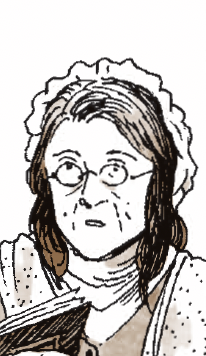
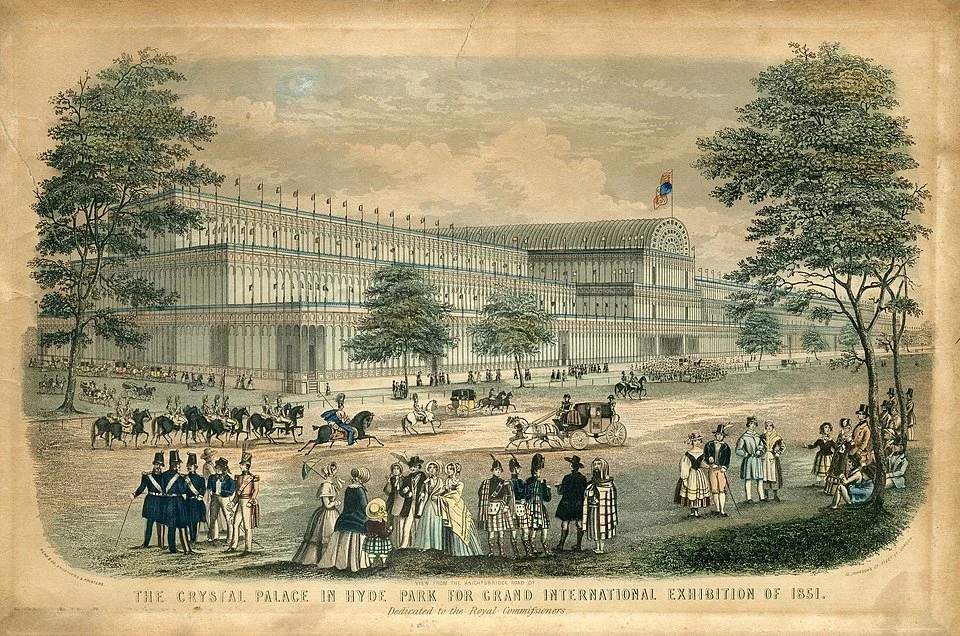
All details mentioned of this time period are real. The Civil War, Millard Filmore, Moby Dick, the fire at the Library of Congress, the Great Exhibition in London, and of course, the culmination of marriage equality in June 2015. Not mentioned here are all the other significant stepping stones that led to rights for Queer americans. Read in more depth about the long fight for equality for all identities and backgrounds.
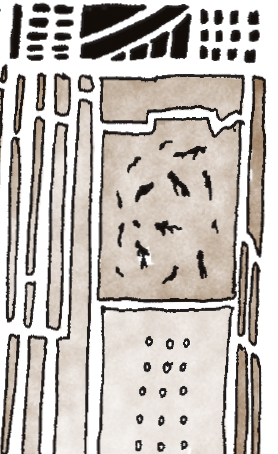
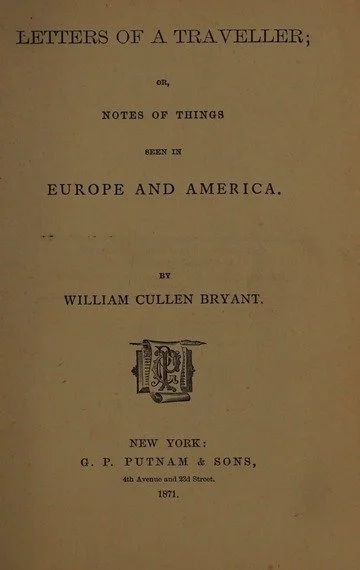
P. 213 - Letters of a Traveler
The published passage about Charity and Sylvia in William Cullen Bryant’s book is very much real. What is unknown is their reaction to it, but it was published in their lifetime, so I (and the folks at the Henry Sheldon Museum, and Cleves) believe they knew of it.
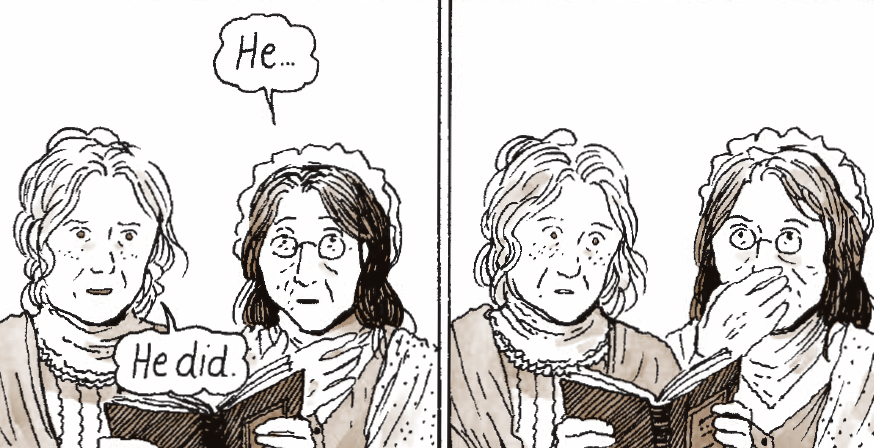
P. 214 - The Body Tires, But The Mind Alights
A fabricated sequence based on WCB’s writing. Also come on, who doesn’t talk to their spouse in bed?
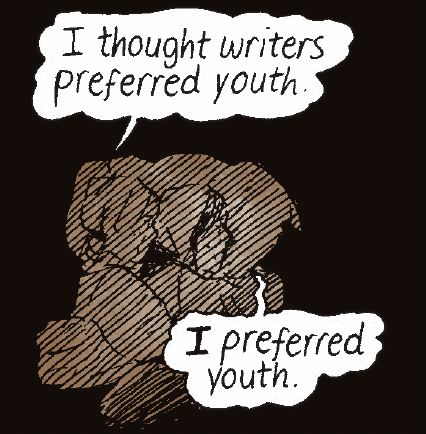
P. 215 - The Woodhouse Must be Repaired
The last piece of writing of Charity’s before her death is a small scrap of paper where she writes an inquiry about Mr Seake repairing their woodhouse. She dates it, so it is clear it was written a few weeks before she took her last breath. This paper is at the archive at the Henry Sheldon Museum.
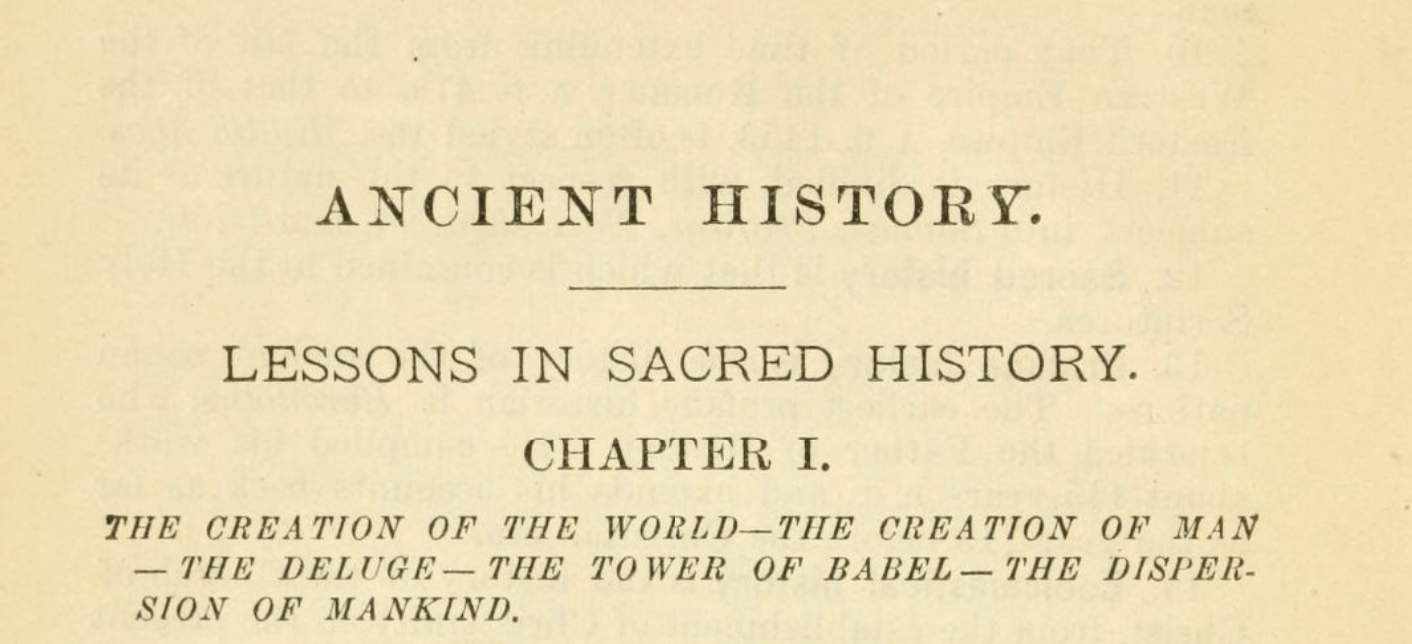
So, this is true. The mentions of the history book they are reading is also true. Sylvia mentions reading many passages from the books Modern and Ancient History by Kerney. She specifically mentions learning about the mediterranean in her journal: “The mediterranean lies on the north of Africa.”
I do not know if Sylvia continued to teach the youth at their church into her old age, this is just my imagining.
P. 216 - A Church, A Comfort, Our Comfort
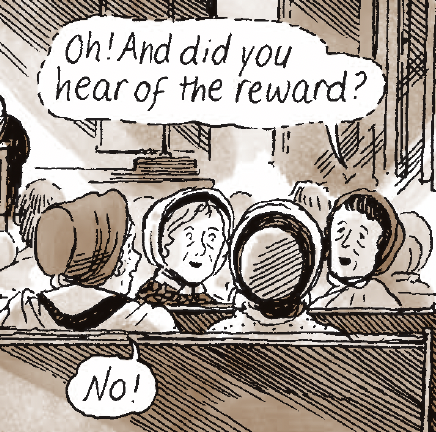
All mentioned events are true, even old Mr. Avery offering money to find out who burnt his barn (that tidbit was found in an 1840s newspaper in the Henry Sheldon Museum.)
I really enjoyed writing the scenes with Charity, Sylvia, Louisa and Polly. The girl gang. I went into writing this book imagining the love in this book would be focused on the main relationship - Charity and Sylvia. But I ended up feeling so much love between everyone. In a time when people needed friends and family to literally eat and survive, these relationships mattered to such a profound degree. Sylvia’s diary is not so much a catalogue of her life with Charity, but a record of her life with a townspeople.
P. 217 - A Poem by Miss Bryant, Composed For Miss Drake
This is a real poem, written by Charity for Sylvia in 1847, and can be found at the HSM. The full text is below:
Twice thirty years and three
Have roll’d with speed away;
Since first your mortal eyes
Beheld the light of Day.
And more than forty years
Have you and I together,
Run the swift race race of life
In fair and stormy weather.
How short must be the span,
That now remains to run,
And so does that appear
From whence we first begun!
As more than seven years
Your senior I am found,
I may be first, to leave
This little spot of ground.
On which so many years
Our dwelling place has been;
In which we many ills
And much of Good have seen.
For all your kindness shown
I wish my thanks to give,
And hope to grateful prove
As long as I shall live.
If aught that I have done
Has caus’d you grief of heart
I ask forgiveness Now
E’er we are call’d to part
And beg your prayers for me
That I may be forgiven
Of God for all my sins
And thus prepar’d for Heaven.
There may we meet at last
When Earthly Cares are o’er.
With all the blissful throng
On that immortal shore.
And songs of Grateful Praise
Employ our daily breath
To Him who sav’d out souls
From Everlasting Death!
But while you sojourn Here,
May no rude changes come
To cross your daily path,
And mar your peaceful home.
And never may you want
A Friend your heart to Cheer,
To hush the rising sigh,
And wipe the Starting tear
To share with you the joys
That grow on Earths low soil,
And those of Heavenly Birth
Which sweeten every toil.
And when your toils are o’er,
And you are call’d to Die!
With every needless care
May some kind friend be nigh
To accently prepare
Your life, forsaken Clay
To take its peaceful sleep
Till wak’d to Endless Day
P. 218 - The Years Are Felt In The Back and Hips
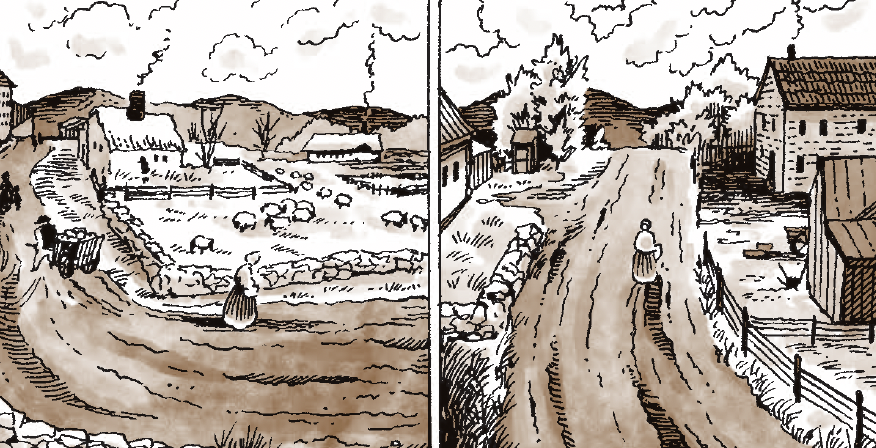
This is fabricated, though the details are true. Mr Seake, as mentioned earlier, was mentioned in a letter of Charitys. And of course, she continued to be in Asaph and Louisa’s life until her death. But I have no evidence in any journals of this conversation occuring.
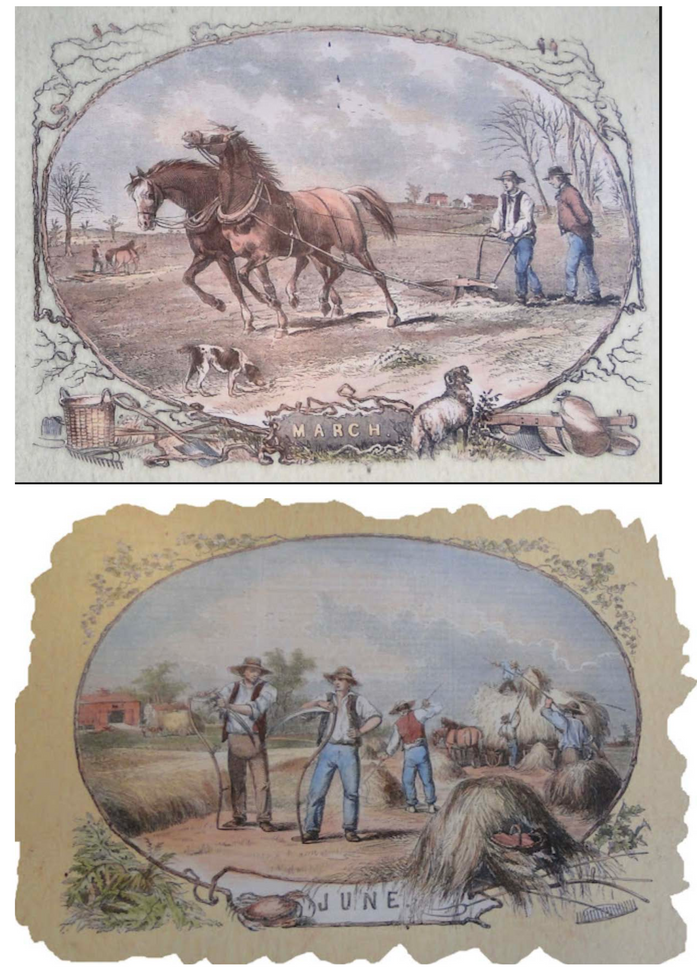
1854, Minton
P. 219 - A Drift, Adrift
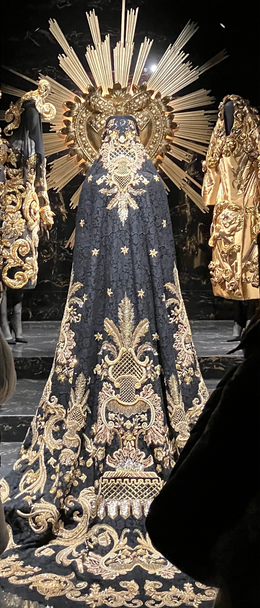
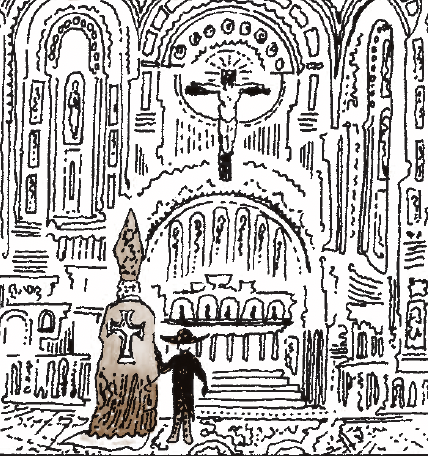
Fabricated, of course. Sylvia never recorded her dreams, nor did Charity. This sequence was inspired by a Dolce and Gabana exhibit I saw in Paris, which had a lot of costumes mixed with christian imagery.
P. 220 - Peter Did, In Fact, Make Good On Charity’s Request
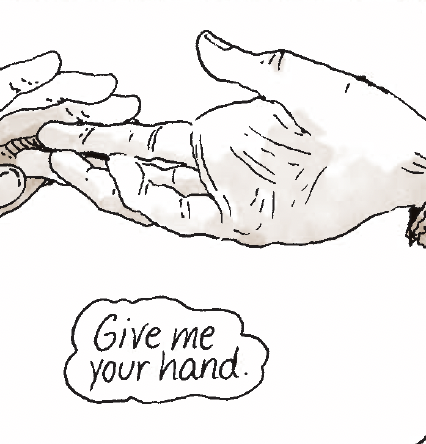
This is a stretch - all I know, from Cleves, is that there was a request made to Peter Bryant, from Charity Bryant, for him to purchase a ring. I have no idea if the ring was bought, and if it was, if it was kept safe through their lives. This is just my imagining.
P. 221 - 24 Visitors On A Late-September Eve
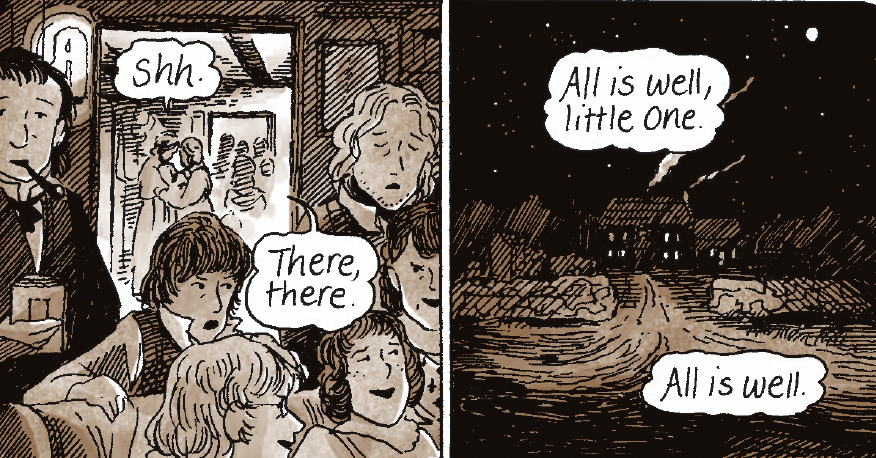
This vignette was inspired by a few passages from Sylvia’s journal:
“Unite with the Church of Vergennes.”
“20 ladies + Mr Moody here to tea. A pain in my head.”
“Br + Sisters kids all come in the evening.”
There are also constant mentions of Edwin, showing his presence in their lives:
“Edwin came in the evening + read.”
“Miss Warner with Edwin. We read John Adams eulogy on Marquis De Lafayette”
“Edwin finishes planting our garden, sweeps the Chimney.”
‘Ms B picks cherries + cuts up limbs for fuel that Br N__d saw’d down for us on Friday. Edwin calls, brings letter from Mr Moody.”
“Edwin harnesses his horse to our chaise.”
Edwin had 7 children, the last of whom was born in 1852. He would die two years later, in 1854, after Charity but before Sylvia. He was 51 years old, and his cause of death is not known.
P. 226 - To Understand
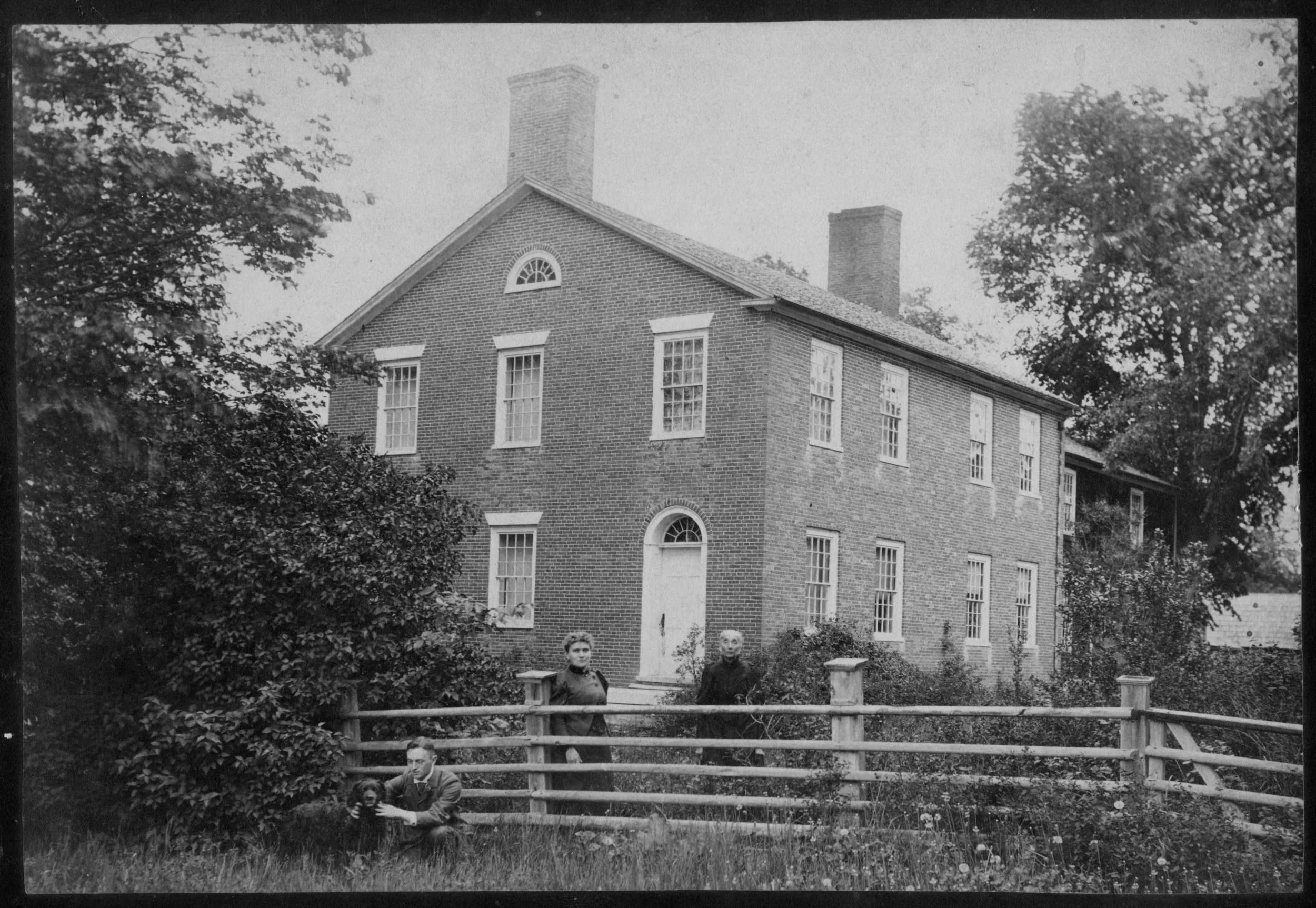
This is fabricated, but this vignette serves an important purpose. Sylvia Louisa was the niece of theirs that would go on to save their papers and trunk, and because of her they continue to exist today at the HSM. To save her Aunts writings shows, at the very least, some familial loyalty, and possibly even affection. Sylvia Louisa also never married, which was still a shocking road to take. I wanted the reader to have a brief familiarity with her before bringing her up in the afterword. There also exists a picture of Sylvia Louisa in front of Asaph’s house, that I will place below.
P. 223 - A Letter Discovered, Dusty, Written 48 Years Prior
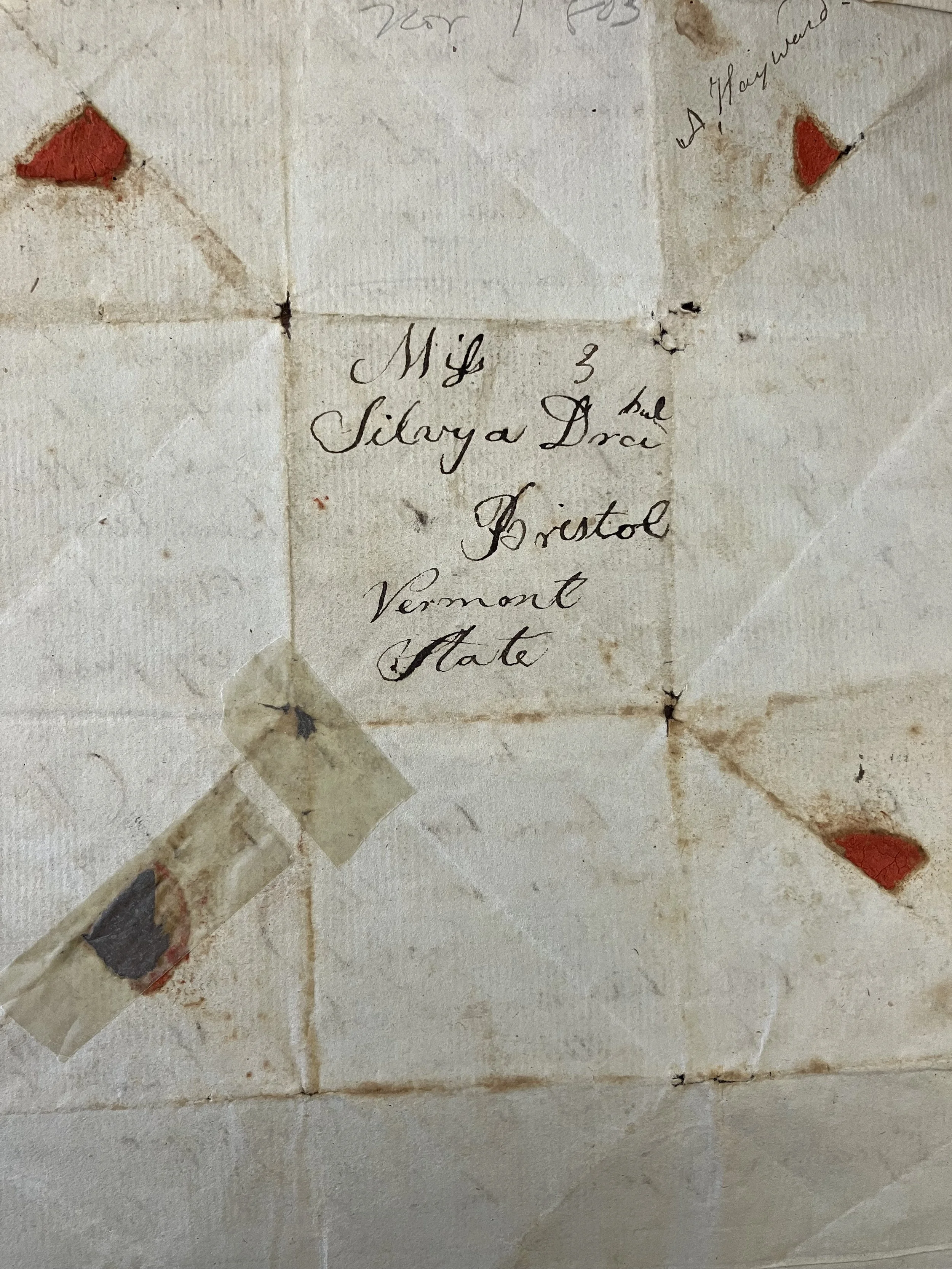
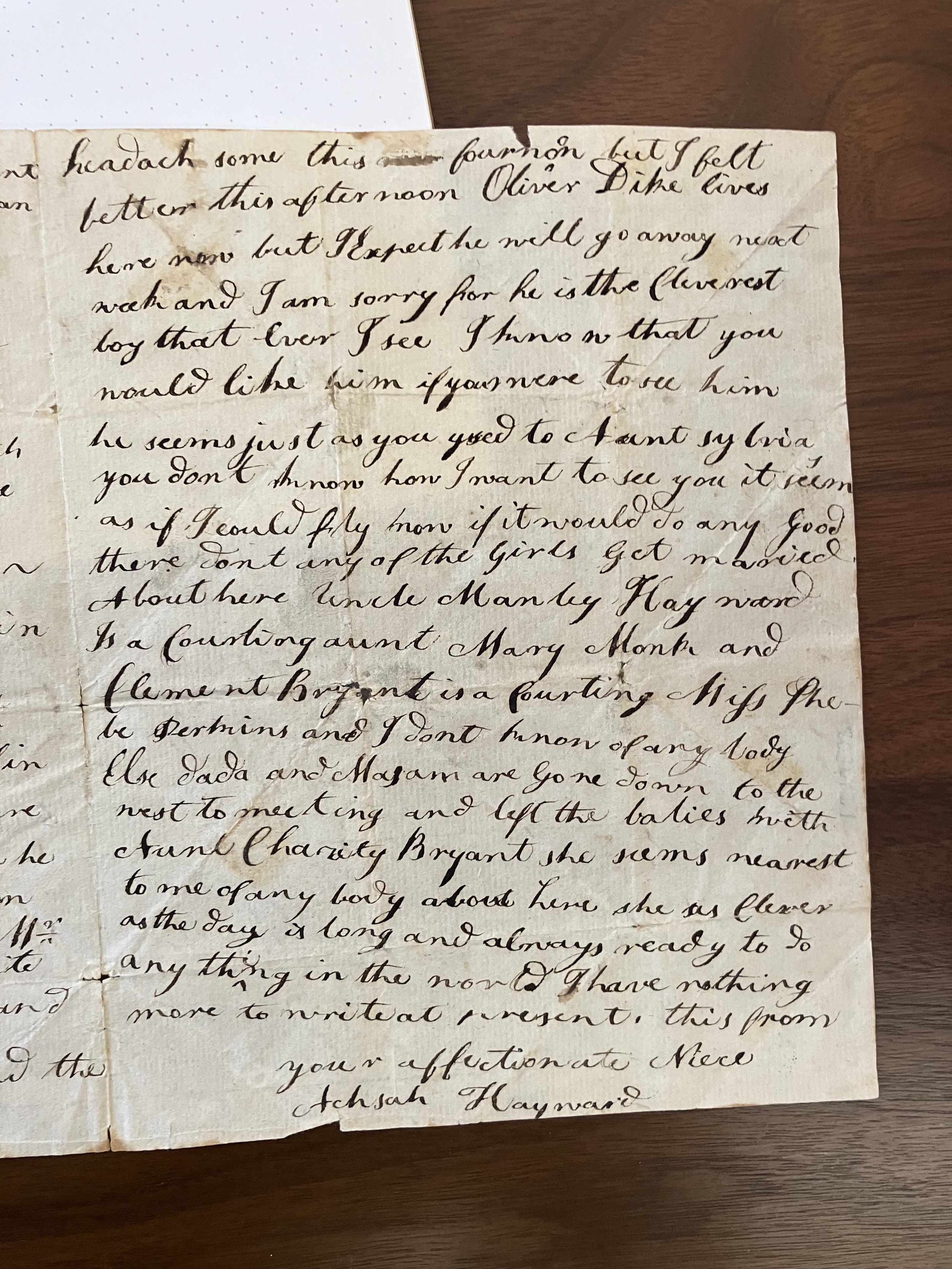
This is real. Two of Achsah’s letters still exist at the HSM. The text is slightly altered to fit the format. Transcriptions of both of Achsah’s letters below, as well as images:
Letter from Achsah to Sylvia - 1803 (Achsah is 9 at the time of writing)
My Dear Aunt,
It is with much multiplicity of concerns I take my pen to inform you of my health which is tolerable good. I have no news to write at present. I heard that Aunt Denise and Uncle Solomon were married but to who I cannot find out. I shall enclose a letter in this. You must make a thousand excuses for me. We have a family moved in our house. Thomas Linby and his wife. The woman to all appearances is a very clever woman indeed. Pa did not go to the Ohio this fall and I do not think he will ever go. He talked of going up into — country but he Postpond it till next Spring. I cannot write any more now because I have no time for I had but a minutes warning. So farewell, your affectionate niece, Achsah Hayward.
Letter from Achsah to Sylvia - 1803
Respected Aunt,
As writing is the only way which distant friends can have any correspondence, it gives me singular satisfaction to send you the following lines by a Careful hand. Having spent Many Delightful hours in your agreeable Company, enamourd with the sweet Conversation which flowed from your scarlet lips therefore I hope this letter will find you and the rest of the family in perfect health. I have been very well the summer past. Little Edwin and Emma are well and grow very fast. I have been to meeting today down to the north and Mr/Mss M preached the text was. (Him this life only we have hope in Christ we are of all men most miserable) He preached very well he has got a little son and they call his name Asa after Mr Mech. I have nothing agreeable to write at present. I went to meeting afoot and so you may judge how I feel I had the headach some this forenoon but I felt better this afternoon. Oliver Dike lives here now but I expect he will go away next week and I am sorry for he is the Cleverest boy that ever I see. I know that you would like him if you were to see him he seems just as you used to Aunt Sylvia. You don’t know how I want to see you it seems as if I could fly how it would do any good there. Don’t any of the girls get married about here. Uncle Manley Hayward is a courting Aunt Mary Monk and Clement Bryant is a courting Miss Phebe Perkins and I don’t know of anybody else. Dada and Madam are gone down to the next meeting and left the ladies with Aunt Charity Bryant she seems nearest to me of anybody about here. She is as clever as the day is long and always ready to do anything in the world. I have nothing more to write at present. This from,
Your affectionate niece,
Acsah Hayward
P. 224, P. 225 - The Journals of Charity Bryant (Which I Have Never Read)
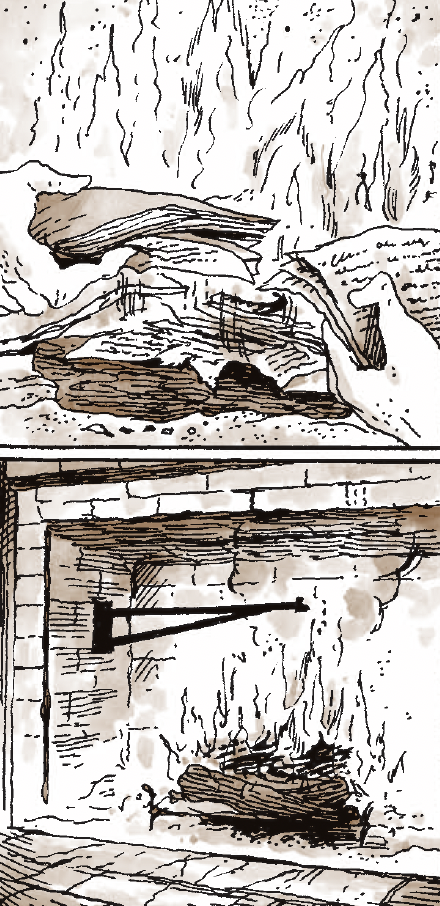
This vignette is based on the research in Rachel Hope Cleves’ book that concludes it is likely Charity destroyed her own journal and many of her papers. How she did so and when she did so will never be known, so that is imagined.
P. 226 - I Am Disaster
This is imagined, but it is very likely that Charity suffered greatly in her final years. Her ailments alone in her life create a long list, and to imagine her pain without the help of any kind of medication or modern medicine leads to a picture of struggle. At least they had the cradle!
P. 227 - On The Many Wonderful And Soothing Sensations Of A Cradle
As mentioned in previous sections, their cradle was real and used all their life. This page was fun to draw!

P. 228, P. 229, P. 230 - Recollections, Rocking
This is fabricated, and employs some visual fantasy. Other than the dream page this is the only time in the story I really enter a more fantastical space. The events in their childhood that I talk about are ones I’ve made up, but the feelings are based on some that I remember in my own youth. The silhouette, of course, is real, but I have no information about the experience of making it.
I wanted there to be one point in the book where their memories of the past collide with the present. My own sense of memory often has moments where it feels like the vail between now and then is paper thin. I remember being 10 years old and lying on my back on my friends trampoline. I was looking up at the sky and my body was billowing up and down. For some reason, that memory is so vivid that to this day I still sometimes wonder if I’m actually there, not here. I’m not at my computer writing a bibliography, I’m still on the trampoline under that sky going up and down.
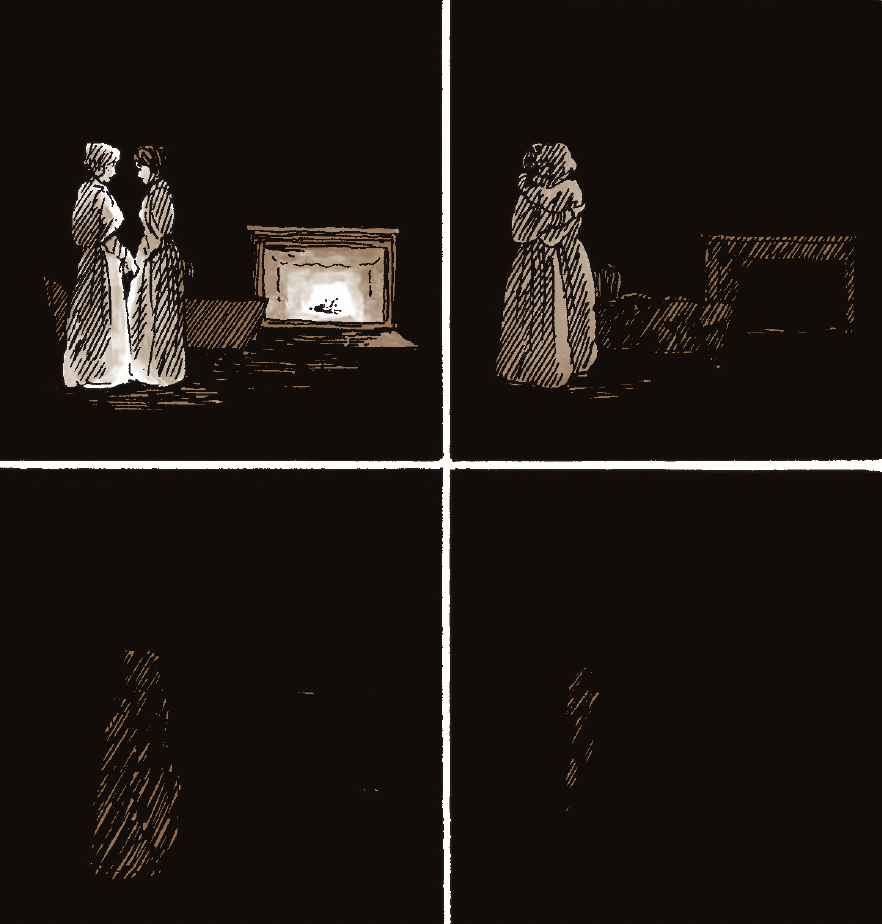
P. 231 - Silence Arrives By Rail
This is real. Silence really did come visit them by rail, as explained in Cleves’ book in chapter 18. Cleves notes she was accompanied by her daughter. The reference to revolutionary gunfire is also from Cleves in chapter 1, where she discusses the Bryant families experiences with the War for Independence.
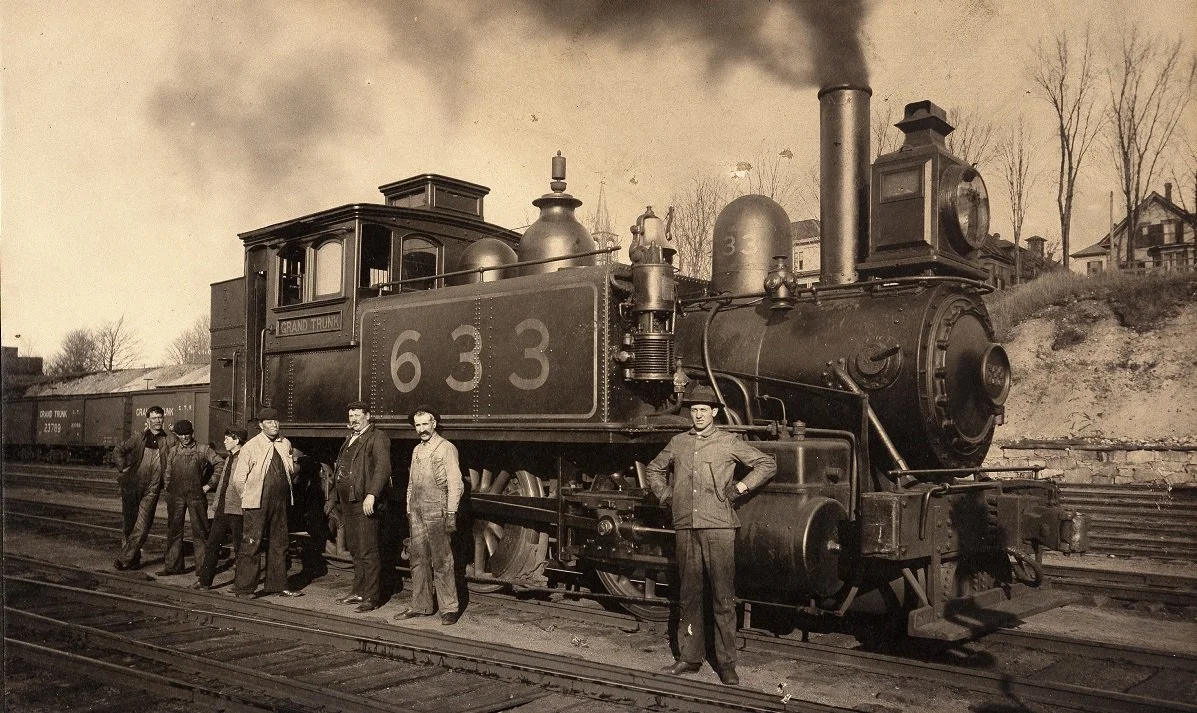

Early Vermont Steam Engine
P. 232 - Spite, The Cure Of All
Everything Silence brings up is true. I was sad to not be able to include more of her story in this book, because I read many of her letters to Charity that were extremely interesting. Below is a letter from Silence to get a sense of her writing. She was not very bitter in these lines, but I wrote her as such at this age given the extreme amount of tragedy she faced in her life:
Letter from Silence Bryant to Charity Bryant, Henry Sheldon Museum
1820
August 20th
My dearest sister,
Painful and deeply afflictive is the task that now devolves upon me and no doubt your sympathy for me will make it distressing to you. Oh my dear sister how can I tell you my dear Husband is no more! Pray my dear sister that in view of this affliction my mercises may not be forgotten often in the bitter – of my anguish. I am ready to exclaim what have I more? And to say with — I was not at rest neither was I quiet yet trouble came. He came home the 23 of July he was sick about a fortnight before he left North Carolina but was little better. When he sout out on the road he was taken with a fever and ague he died the 2nd day of Auguest. Oh my god grant that it may be a loud and solemn warning to me to be ready to follow him. All those who went with except Cyrus Kingman returned with him all sick of a fever and ague but I believe they are all getting better Freeman has been quite low but he is a little better the remainder of my family are all well as normal. I don’t know what should induce Mr E to take such a story respecting Mary it is true she was unwell last spring with a cold but not so that she lost a days work as I can recollect and since then I don’t know but she has been as well as usual I received your letter the 27th of July and your present sypen was very welcome and for both which I give you my warmest thanks I received a letter this morning from Brother B which states that times are very hard and that his health is poor. I should have written to you before now but I waited for more composure. I have not written to Cummington if I am blotted from their memory I will not pain them by the remembrance. I wish you would be so kind as to write a few lines to Mayor Lewis for I wish them to be informed and I have no more paper and consequently should have an opportunity to send to the post office for some time.
What is to be my lot is hidden in the womb of fate. Clouds and darkness hang upon my prospects but I have neither time nor room to speak upon it. Write immediately and direct your letter to Pelham that is may come to Pelham PO. I need the consolation of your letter. Give my best to Sylvia wish to include her in everything I write as my second sister. Oliver is now waiting for my letter and must conclude. Praying God to preserve you both.
Your affectionate sister,
S Bryant
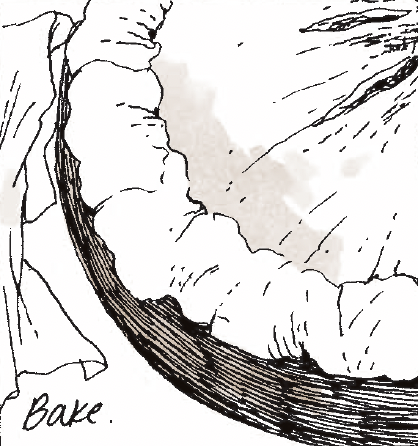
P. 233 - An October Journal Entry, Penned By Miss Drake
Almost all real text from Sylvia’s journal, but from much earlier in her life (the 1820s and 1830s). No journals exist from her final years, though I desperately wish they did.
This is also a page that is probably visually nice for a reader but is definitely an example of a Very Tired Cartoonist. I was rushing here, folks.
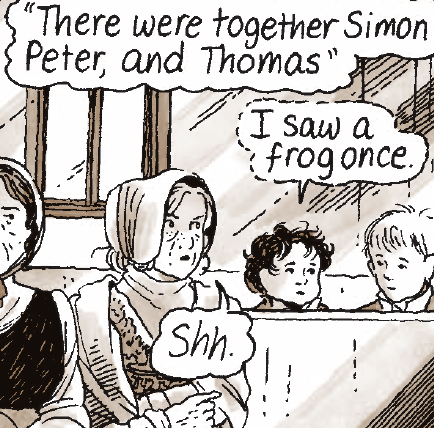
P. 234 - A Meeting Day, Poorly Attended
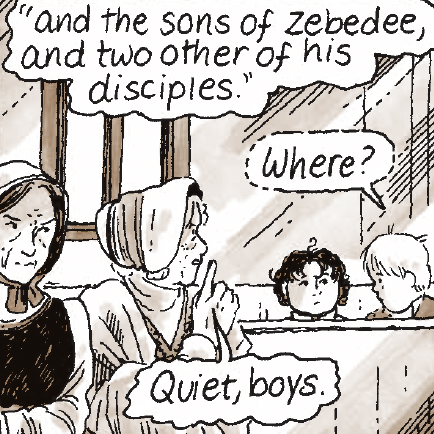
Charity and Sylvia very likely continued to go to meeting until the end of their life. Sylvia, in her early years, complained of children’s behavior:
“Girls + boys go to singing school. Behave ridiculously.”
The bible passage was one I found while flipping through the bible I kept on my desk while working on this story. I was struck by how boring it was, but then found the line about Jesus coming to shore very vivid. As soon as I read that line, I knew that it was time for Charity to die in the next vignette.
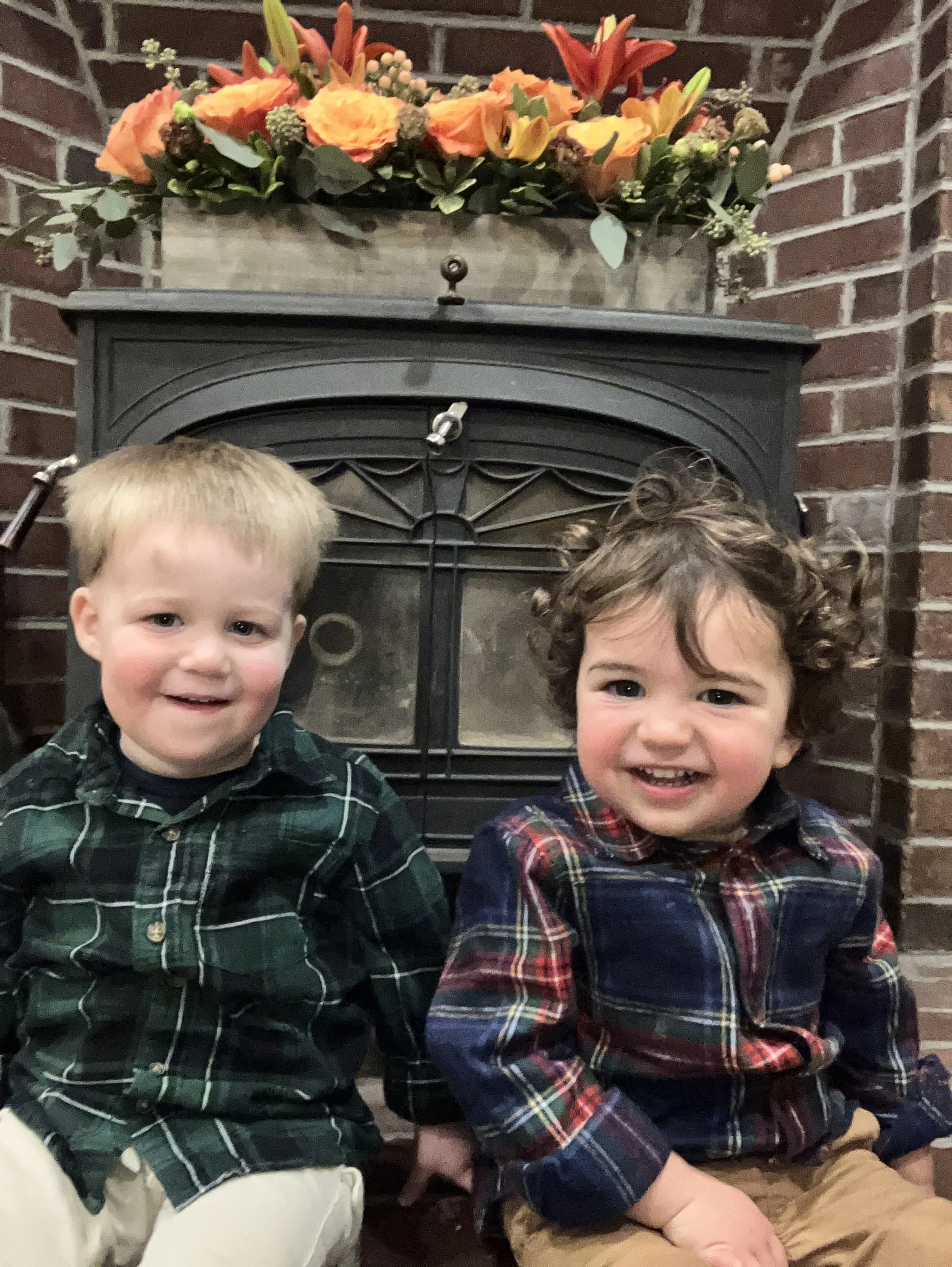
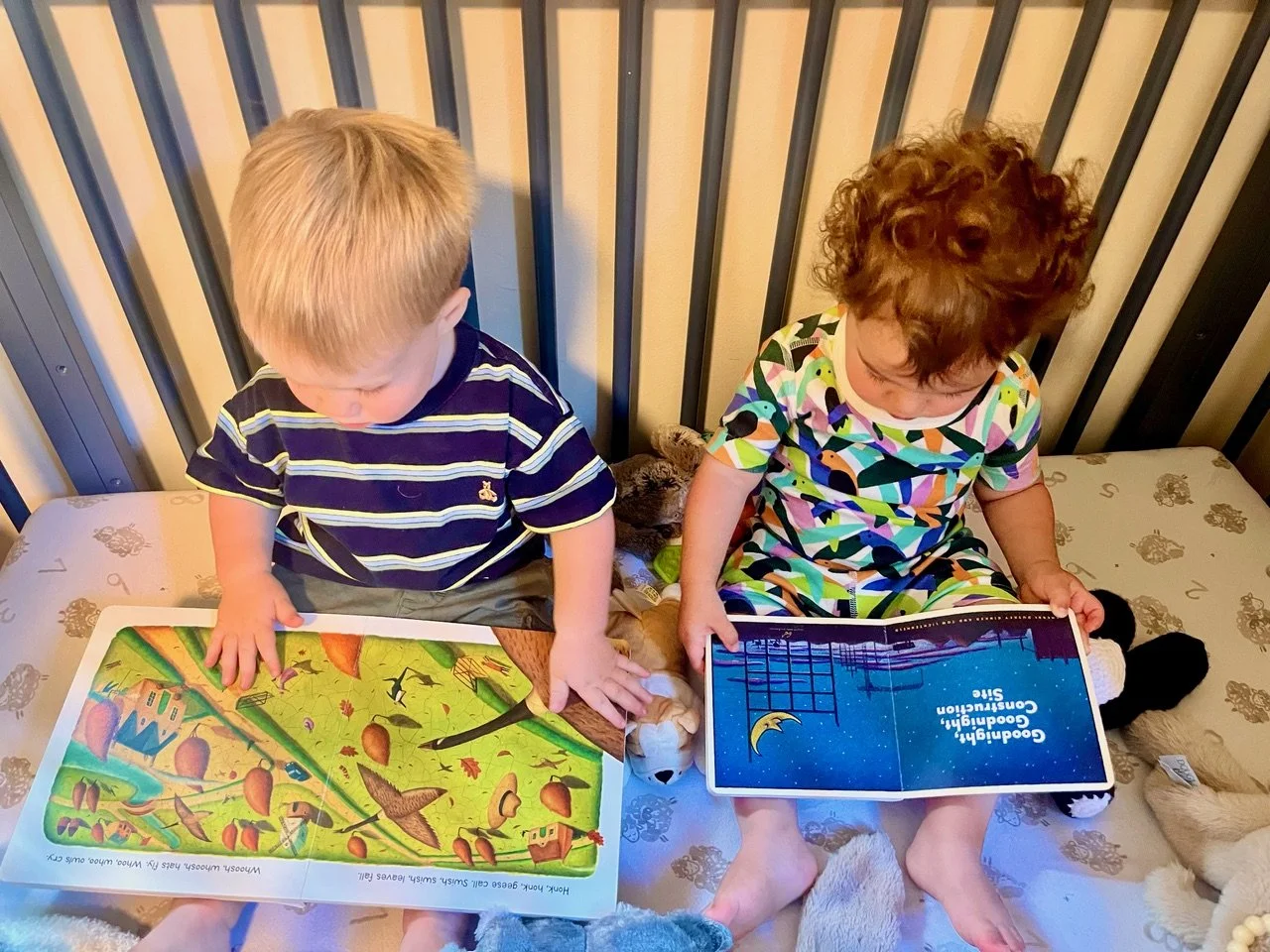
The two boys in the background are based on my son, Walter, and his best friend Asa. Who I doubt would be able to keep quiet in church. They are included here in many photos not because it’s needed for the bibliography but because they are SO CUTE.


P. 235 - P. 245 - He Is On The Shore
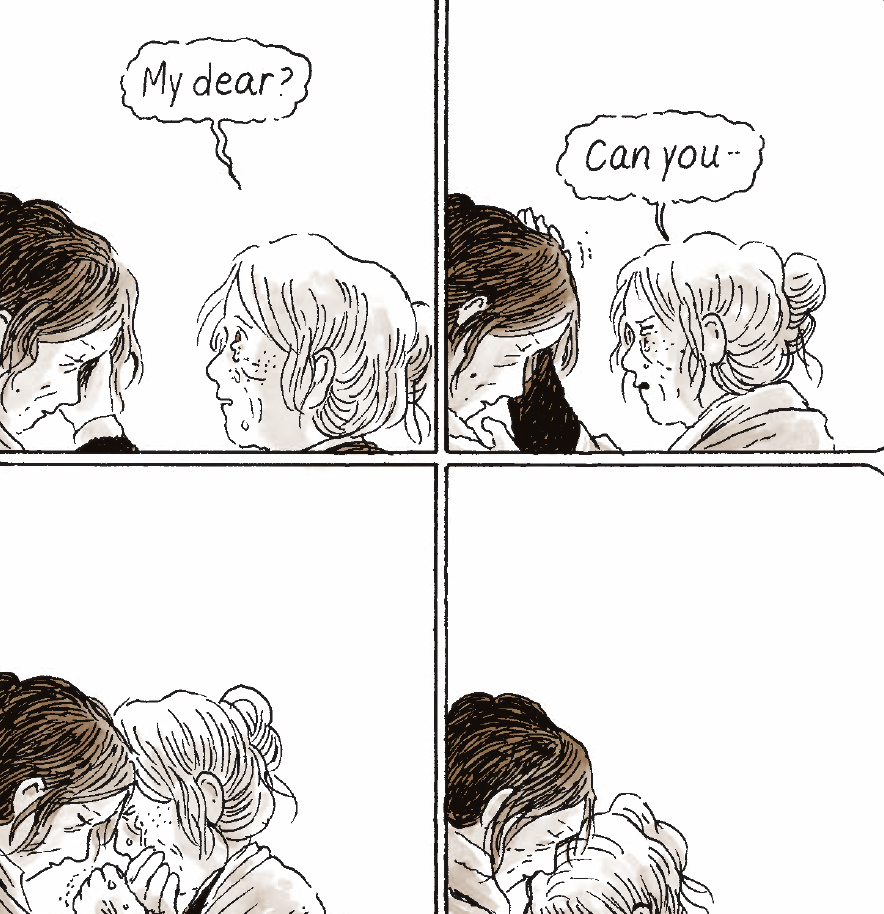
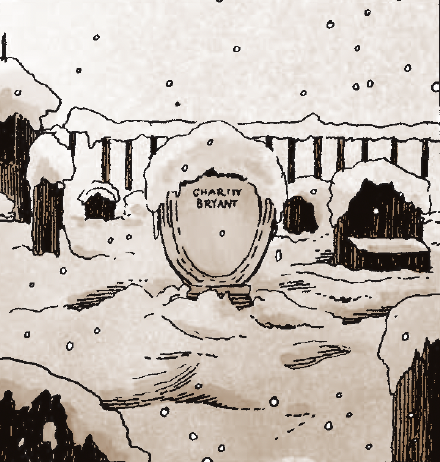
It is true that Charity died by the fire in October of 1851, as evidenced by Rachel Hope Cleves. How it was experienced by her I will never know, and as such what you read is my imagining.
P. 246 - Sylvia Drake Will Live For 16 Years After Charity Bryant’s Death
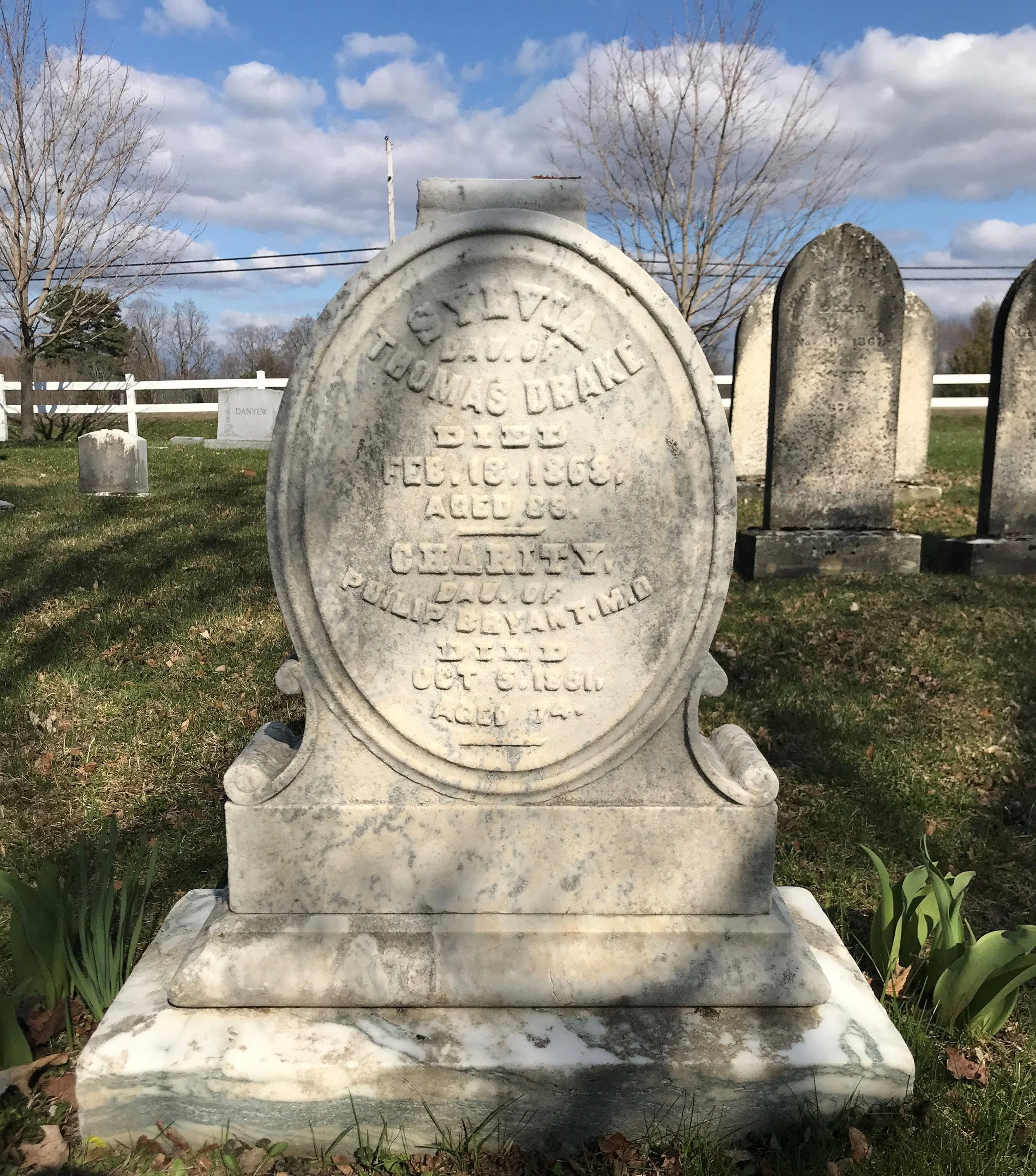
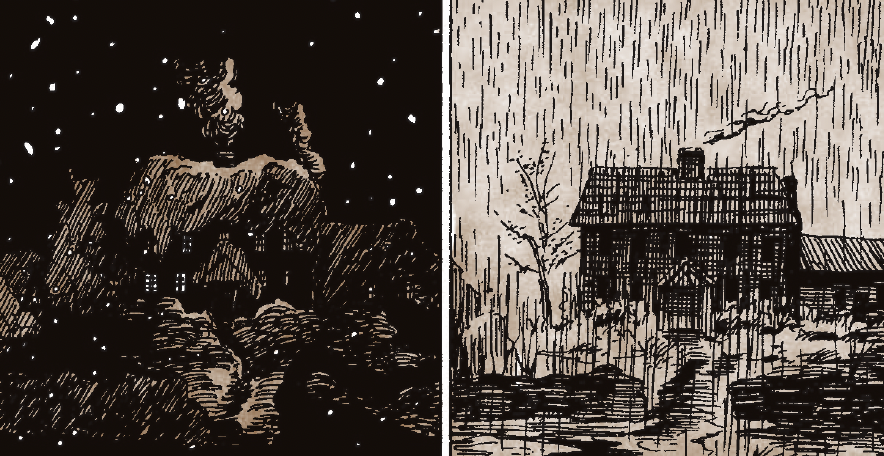
This is true. As marked on her grave she will die in 1868 at the age of 83.
P. 247 - She Will Stop Tailoring And Move In With Asaph And Louisa
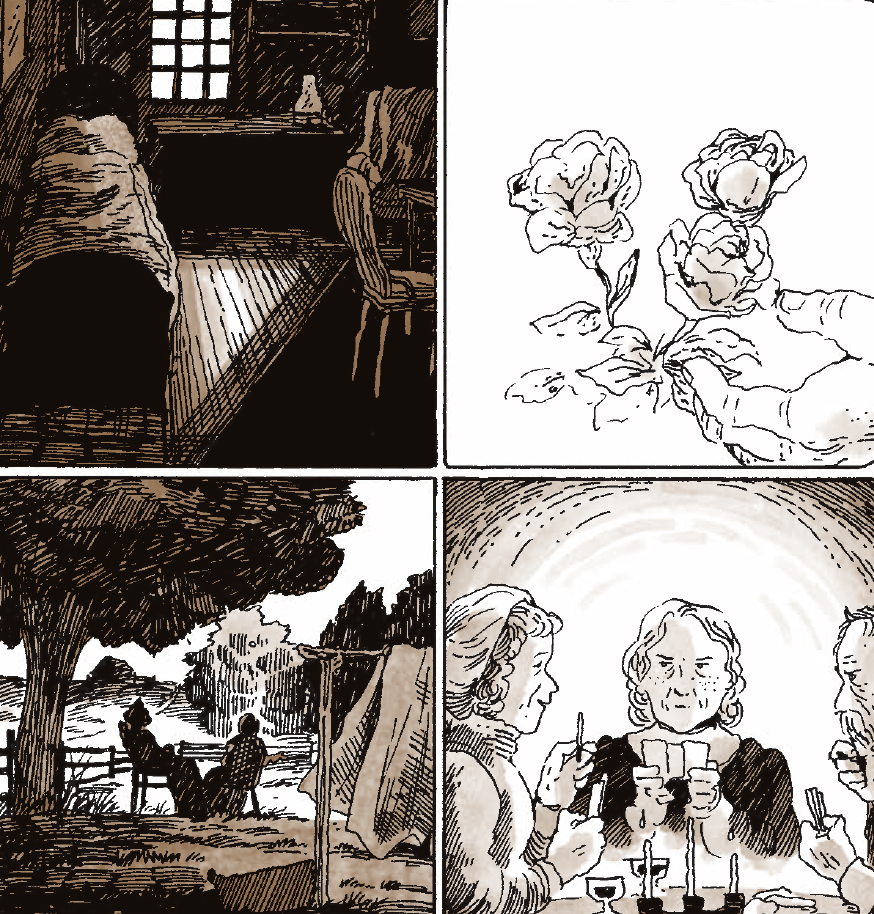
True, with one fabrication. I kept Louisa alive here, but she actually died in 1854, three years after Charity’s death. When Sylvia moved in with Asaph it was to help him in his widowed life, as well as to give Sylvia more support, as detailed by Cleves in chapter 19. I realize it would’ve been easy to keep true to the history here and note that Louisa passed on, but honestly, my heart couldn’t take it. I think that this is one of the gifts of narrative. People can live on, even for just a few more years. Everyone reading knows already that everyone in this story is long dead and buried. And while my goal with this project was to tell the true history of these people’s lives, another goal was to cherish them. So Louisa got a few more years to play cards with her husband and sister-in-law.
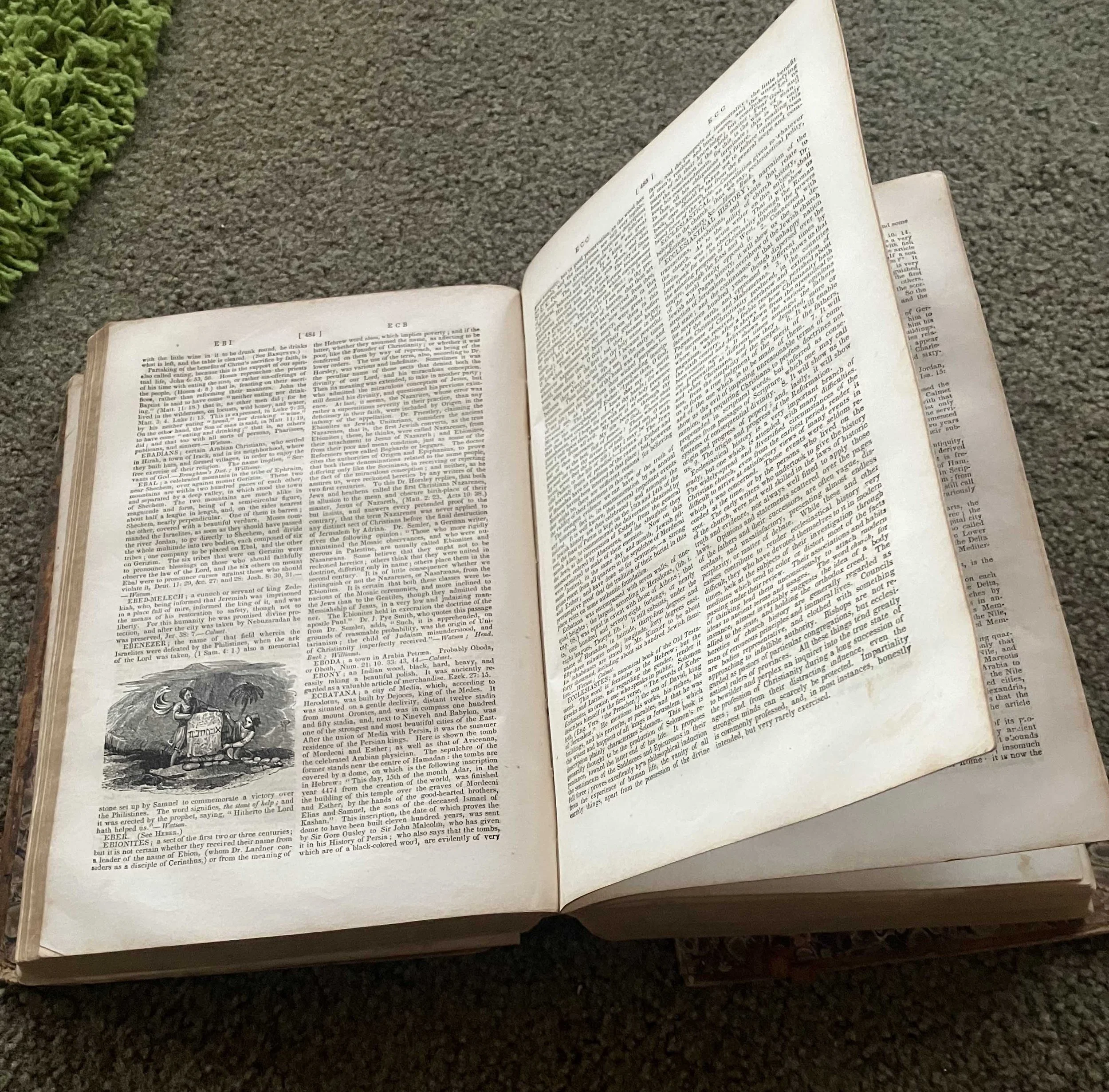
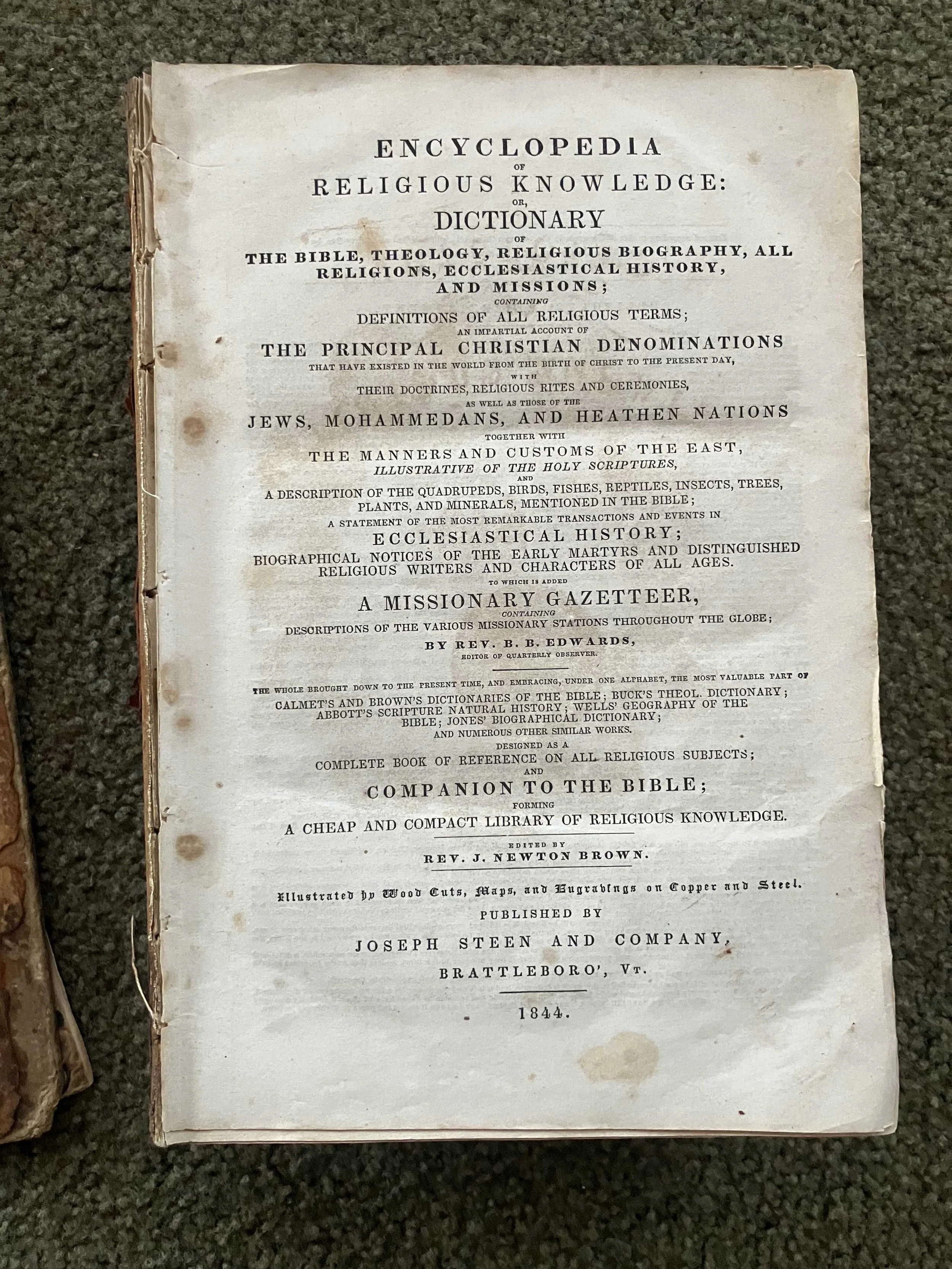
P. 248 - Louisa Gives Her The Encyclopedia of Religious Knowledge, Which She Reads Every Day
This book was real, as noted by Cleves, but it’s unclear who gave it to her. Of course it wasn’t Louisa, that was pure fabrication. The text in this vignette is all actually from the book, which I tracked down a copy of. It came to me falling apart and was stupidly expensive, but it was the same edition Sylvia would’ve read. To scan the text from the book, I had to do a little mild defacing and rip out a few pages to get a flat scan. Being an encyclopedia, I had my choice to rip out a page that was categorized by any letter. I chose the pages that covered topics starting with ‘CH.’
P. 249 - P. 253 - When Death Comes For Her
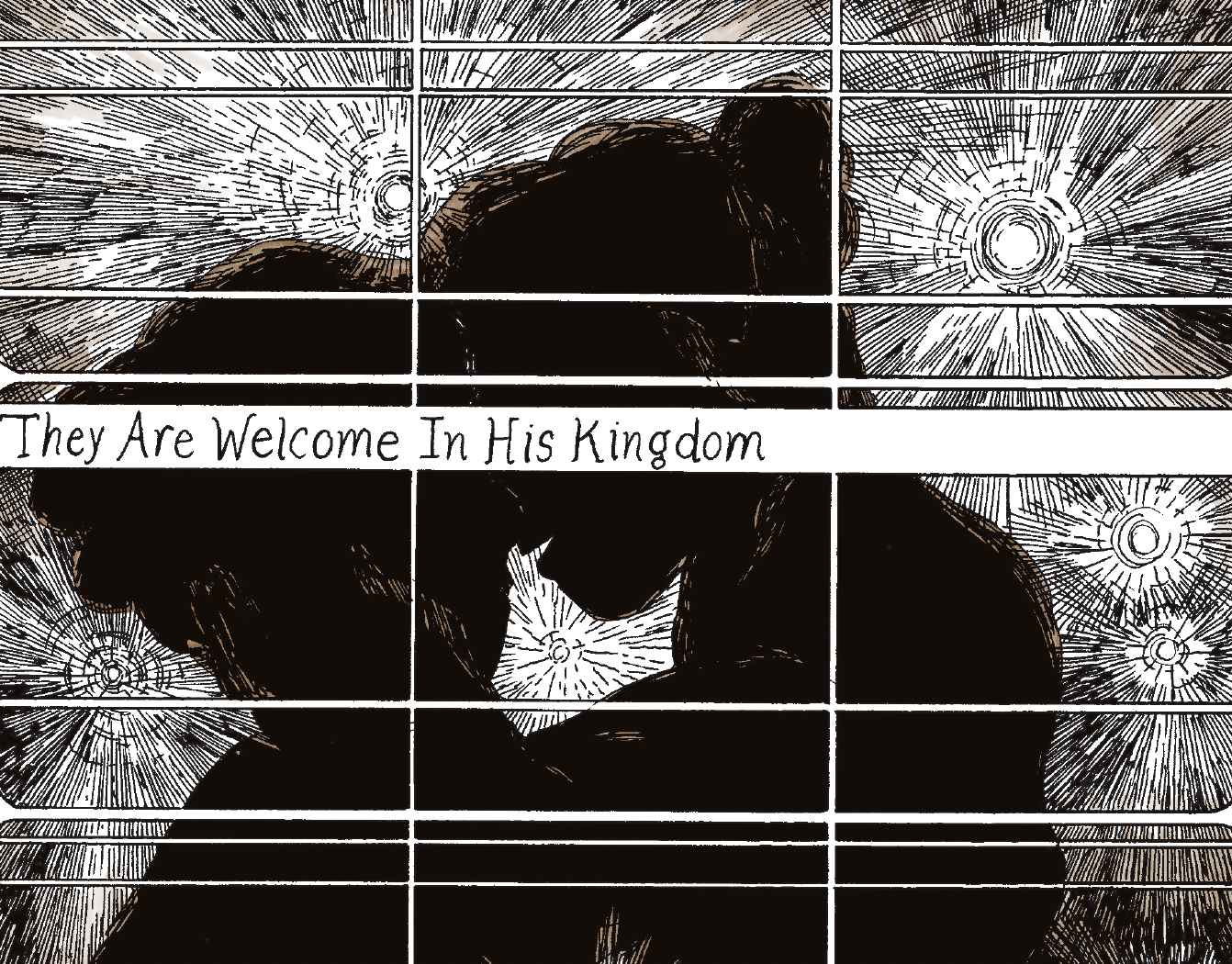
I don’t know the details of Sylvia’s death. I don’t know how exactly it happened, but here is what I know to be true: She lived a long life, she was a widow, she believed in God. She was tortured by the stain of sin and craved acceptance. So I gave it to her. And the idea that she and Charity deserved acceptance within themselves and from their God is to me the truest statement in this whole book. Of course they deserved it, and of course they got it.
If you made it this far, wow. Thank you. See the about page for information on my artistic process and other relevant links.