ABOUT
Thank you for coming to this website and learning more about my book Charity and Sylvia. First and foremost are links to the significant organizations and people that made this book possible, both directly and indirectly:
For more about my many other books and contact information look to my main website. There is no direct way to contact me at this time but my agent, publisher and original art dealer can all be reached. For press or potential events please contact publicity@drawnandquarterly.com. Serious inquiries only, please.
Updates on book events can be found on my instagram.
Notes on Process
How This Book Was Created (Should That Interest You)
Part One: Research
Summer 2023 to Summer 2025
The first phase of research was simple: Read the only historical book on the subject of Charity Bryant and Sylvia Drake. It is not possible for me to overstate how important Rachel Hope Cleves’ book on the subject was to this project. She researched extensively into their whole lives and pulled it all together into a narrative. Being able to start the research process with her text was lovely, it gave me such a strong sense of who Charity and Sylvia were and what the shape of their life was like.
After reading it once, I set out to read it again, slower this time and taking some notes while I went. And drawing a little, of course:
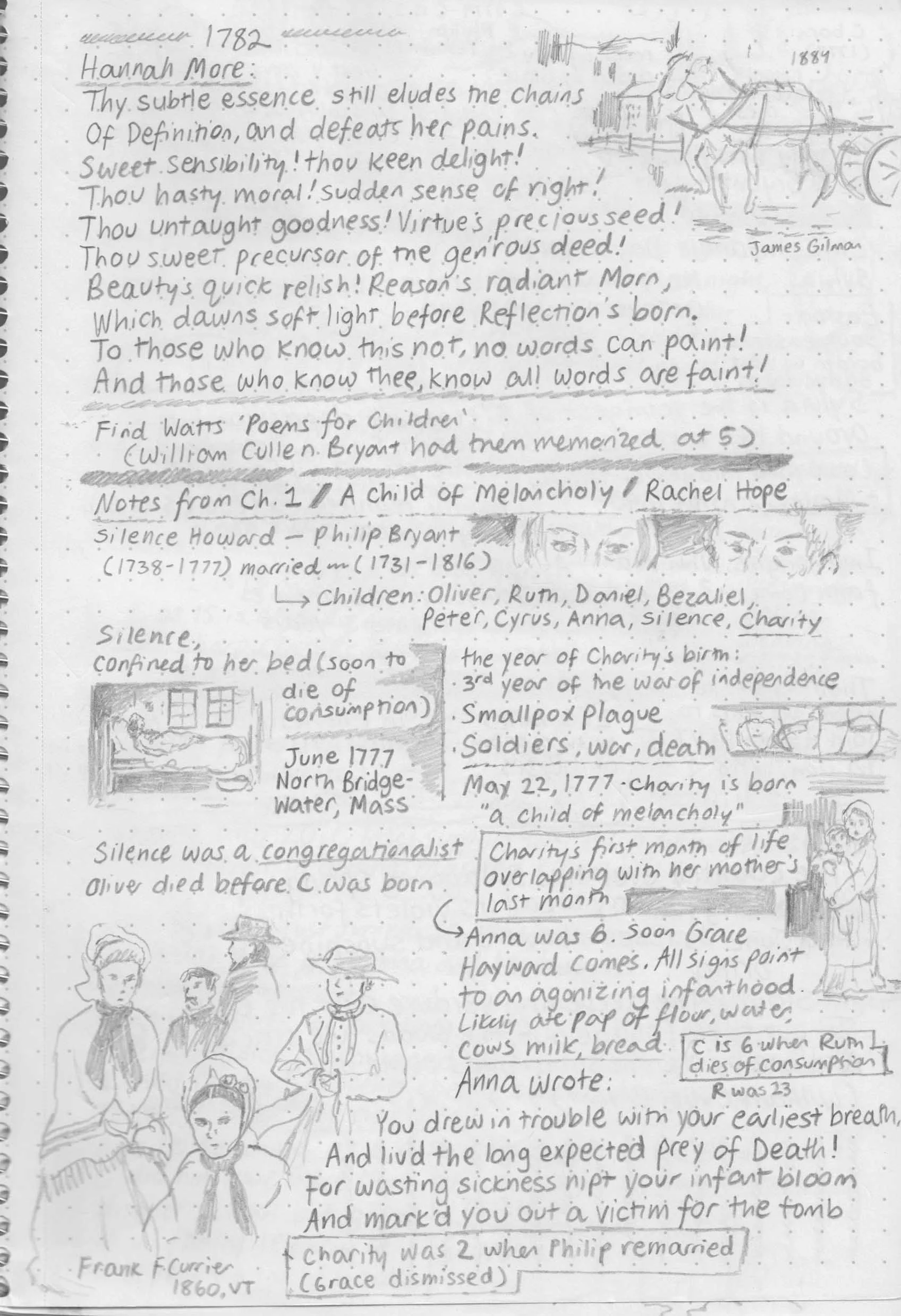
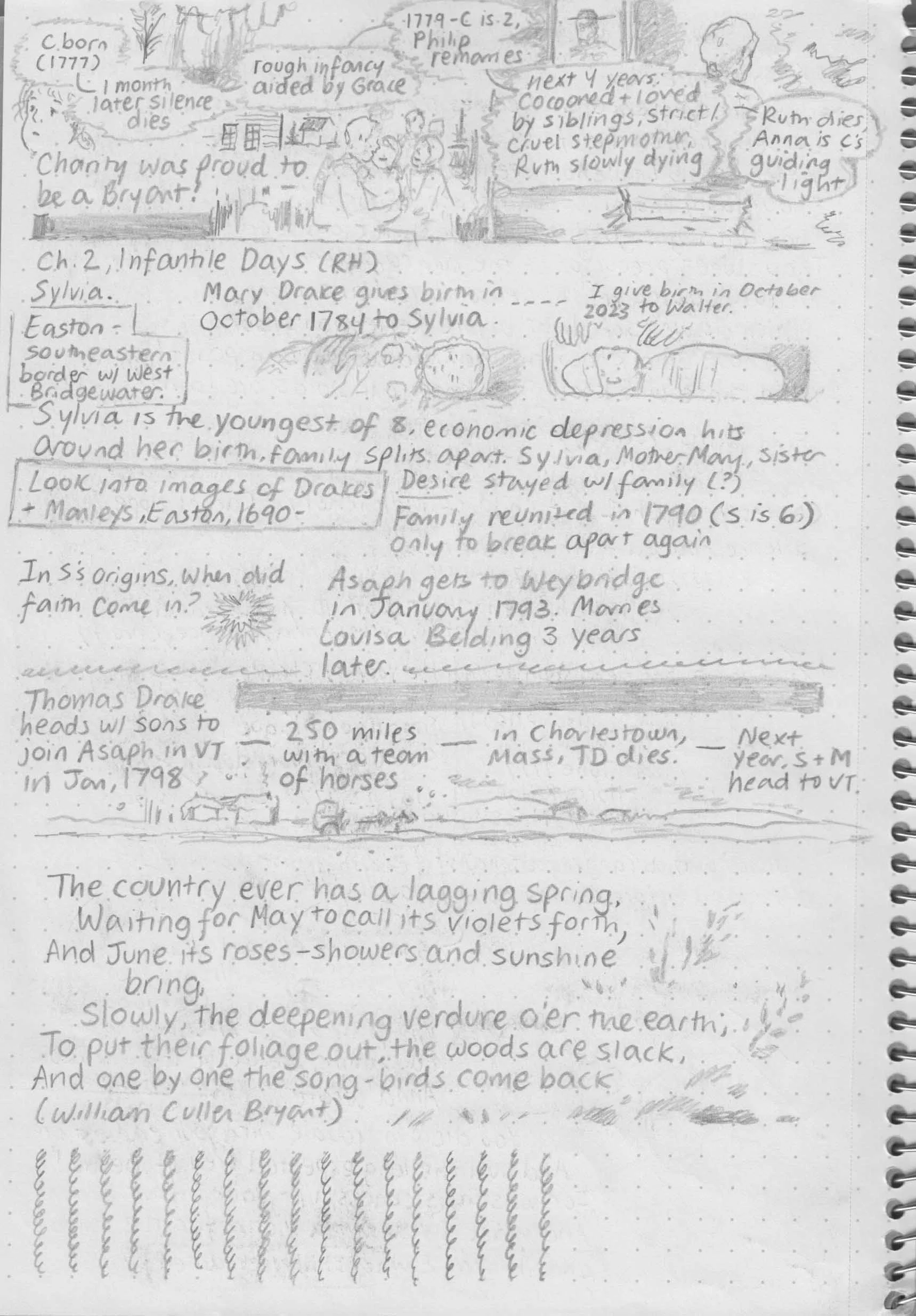
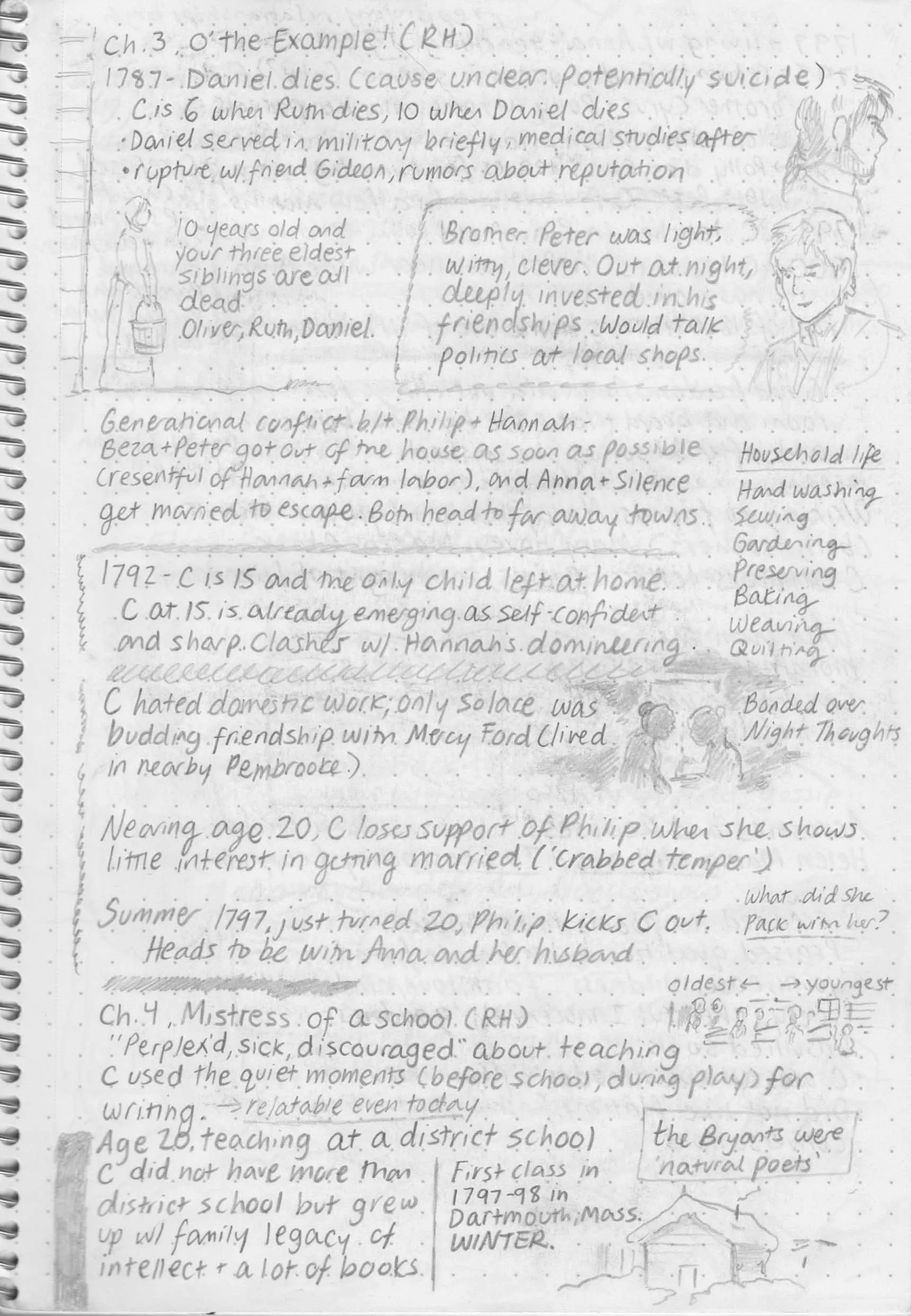
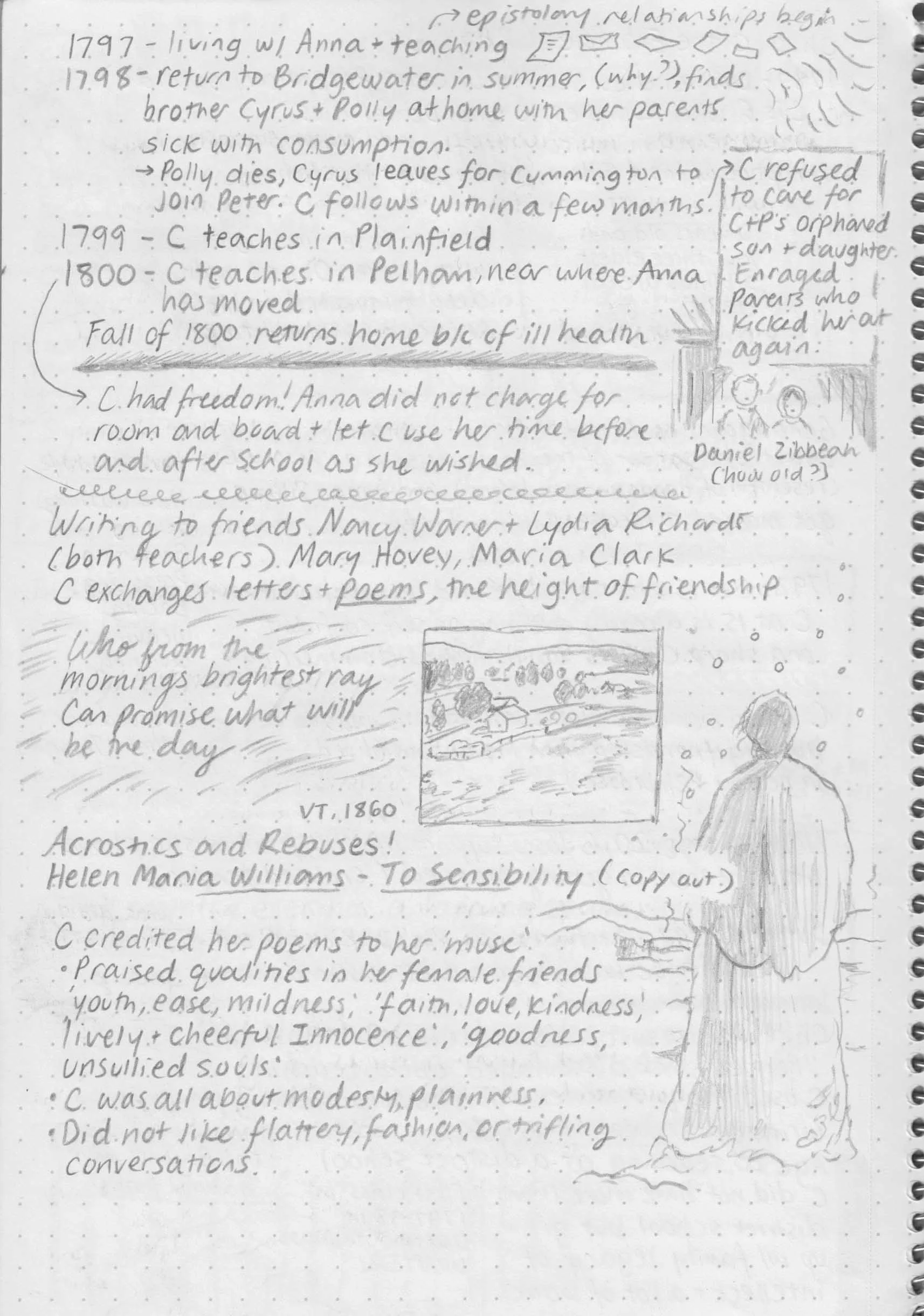
After getting everything I could from Cleves, I moved on to the wonderful and arduous process of driving an hour and a half over two mountains to get to Middlebury, Vermont where the Henry Sheldon Museum is, and where the majority of C&S’s papers are. At the HSM there are some 900 letters (mostly written to Charity and Sylvia), multiple journals, stacks of poetry and all sorts of other bits and bobs (tailoring receipts, drafts, notes). There is also a wealth of other resources at the Sheldon that extrapolate on their time period in Vermont. Maps, books, portraits, newspapers, more journals, more letters, and on and on. And to top it all off, there are a few objects that remain of theirs. The cradle, of course. A pincushion. And the silhouette!
Needless to say, I took a lot of trips to the HSM. I would leave as soon as I could in the morning (passing my baby son off to my wife) and stay until close. Reading Sylvia’s journals was my priority because I felt like that was where keys to the story would lie. I would take breaks from her journal and look through the poetry and letters.
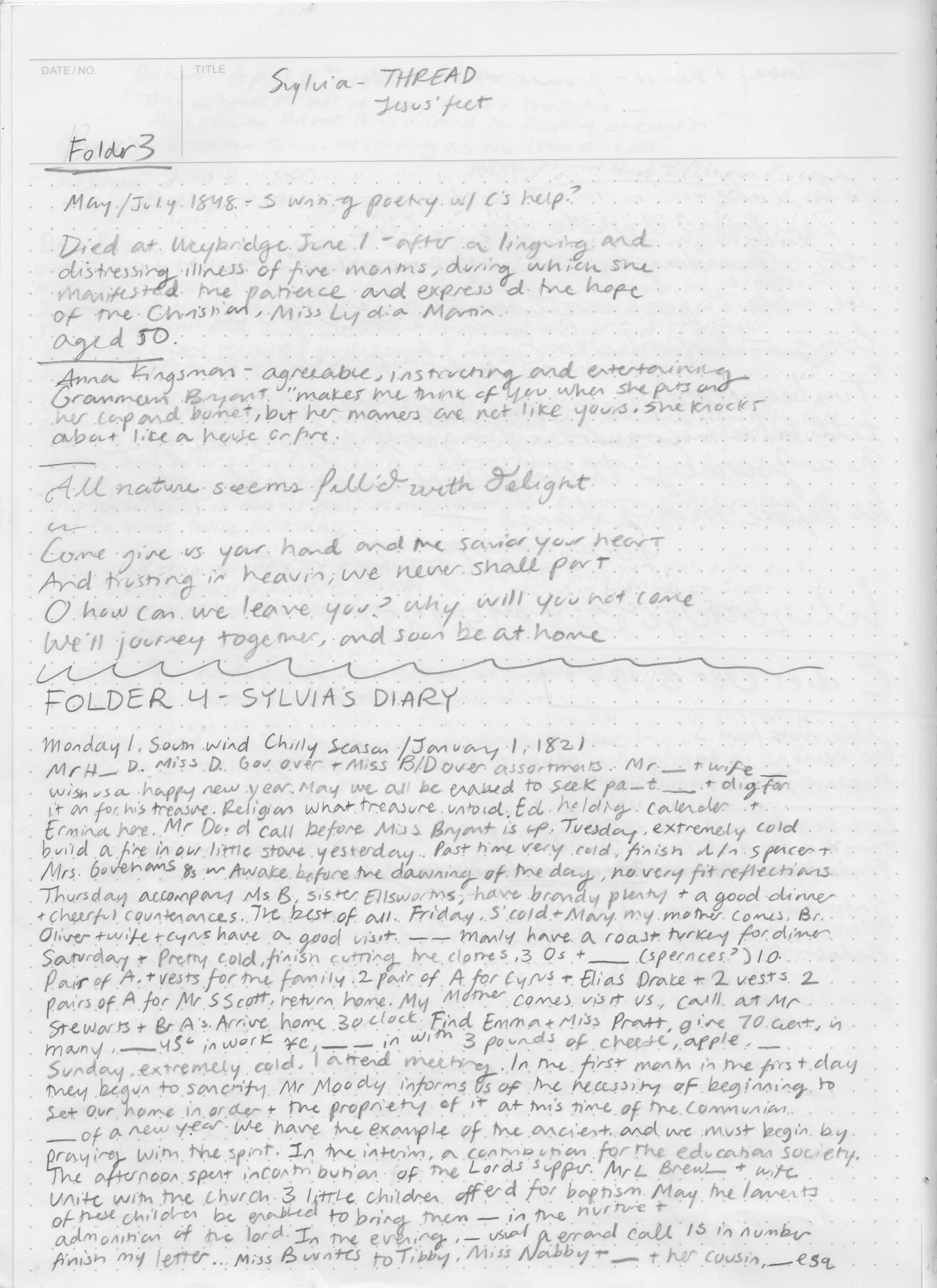
While reading through everything I transcribed what I could, writing it out in pencil first in the archive and then going home and typing it up. I wish I could’ve transcribed everything but the time simply wasn’t there. At first I was SO SLOW with this process. Reading old handwriting is… hard. But I would say after two months I really started to get the hang of it and I got faster and faster.
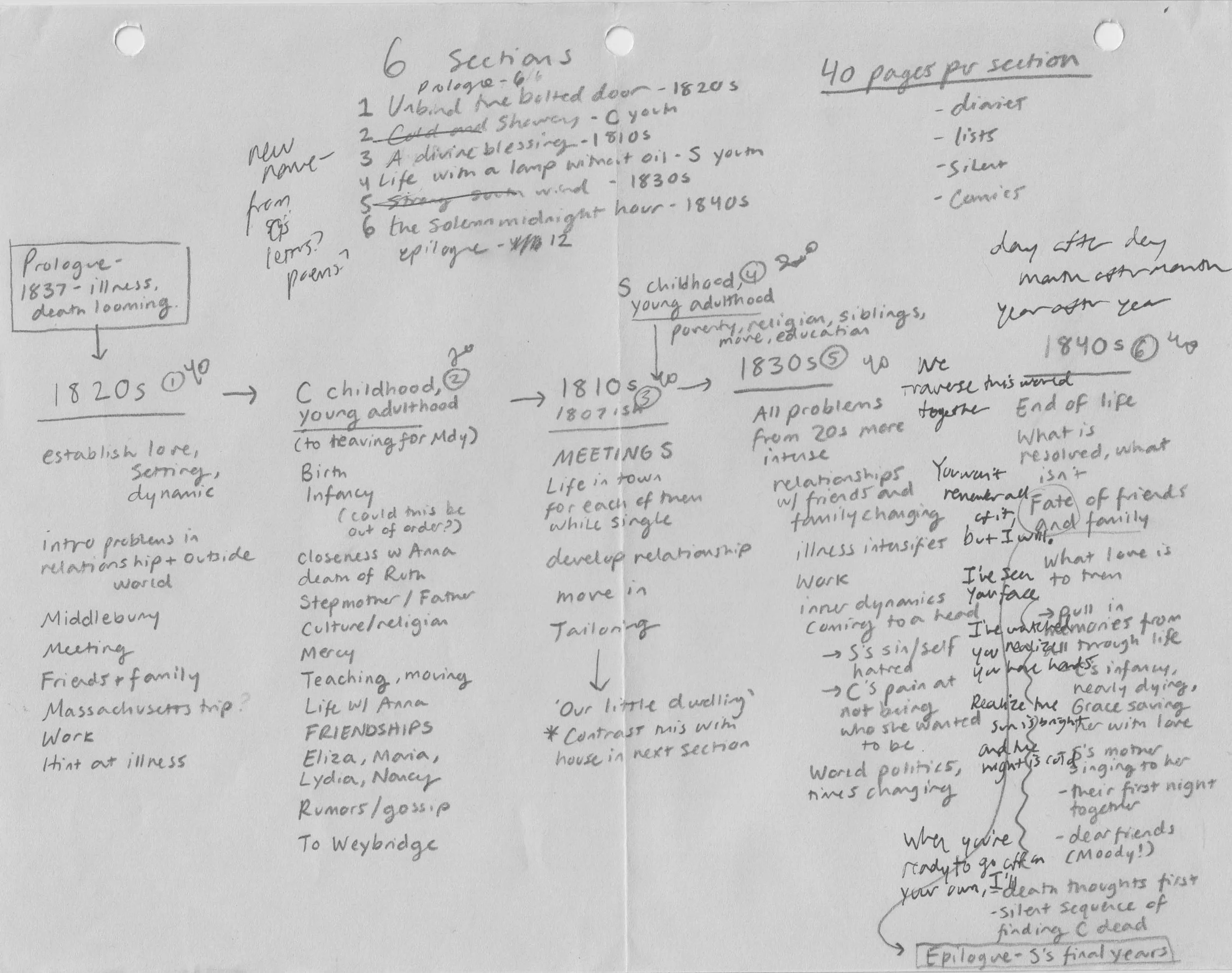
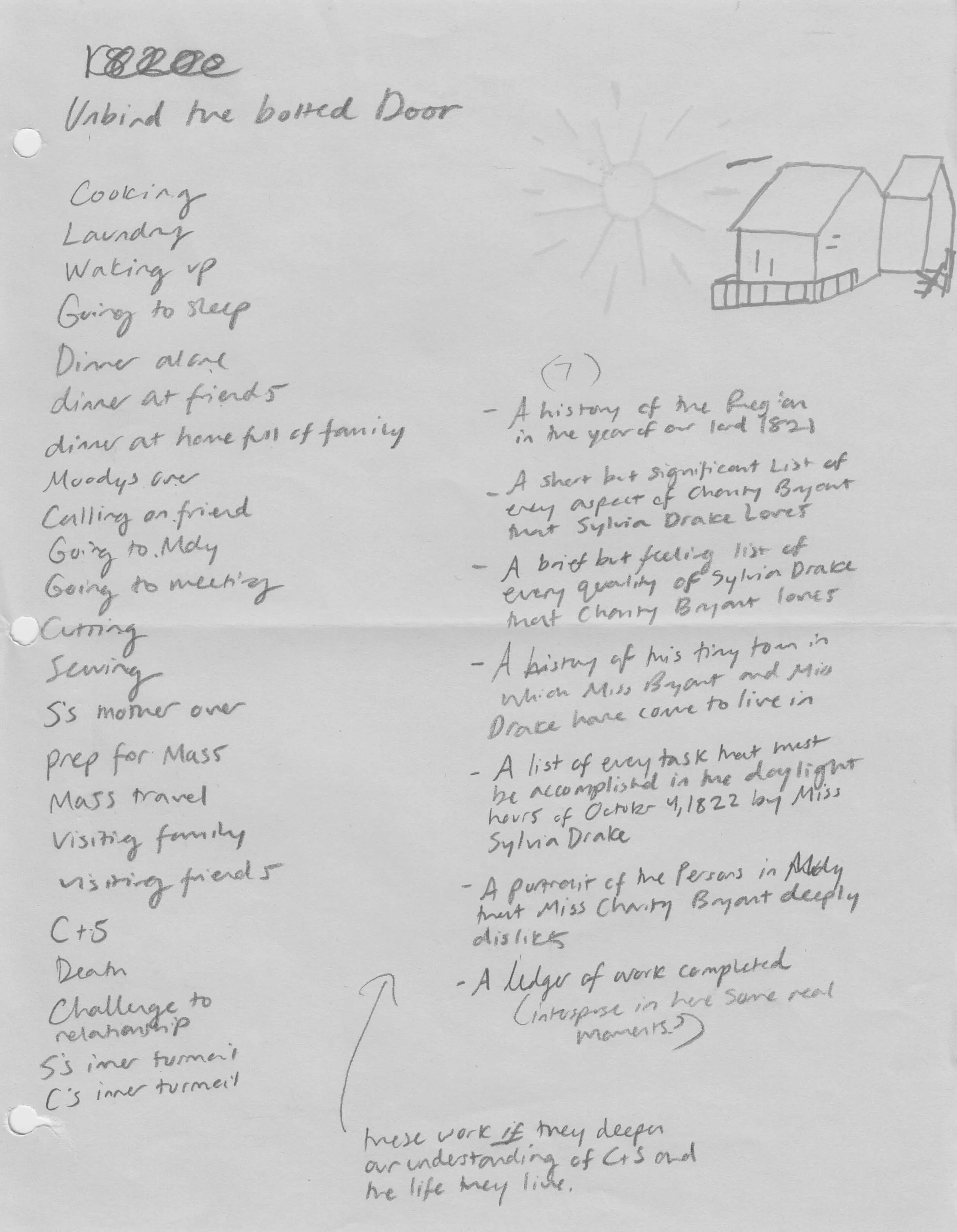
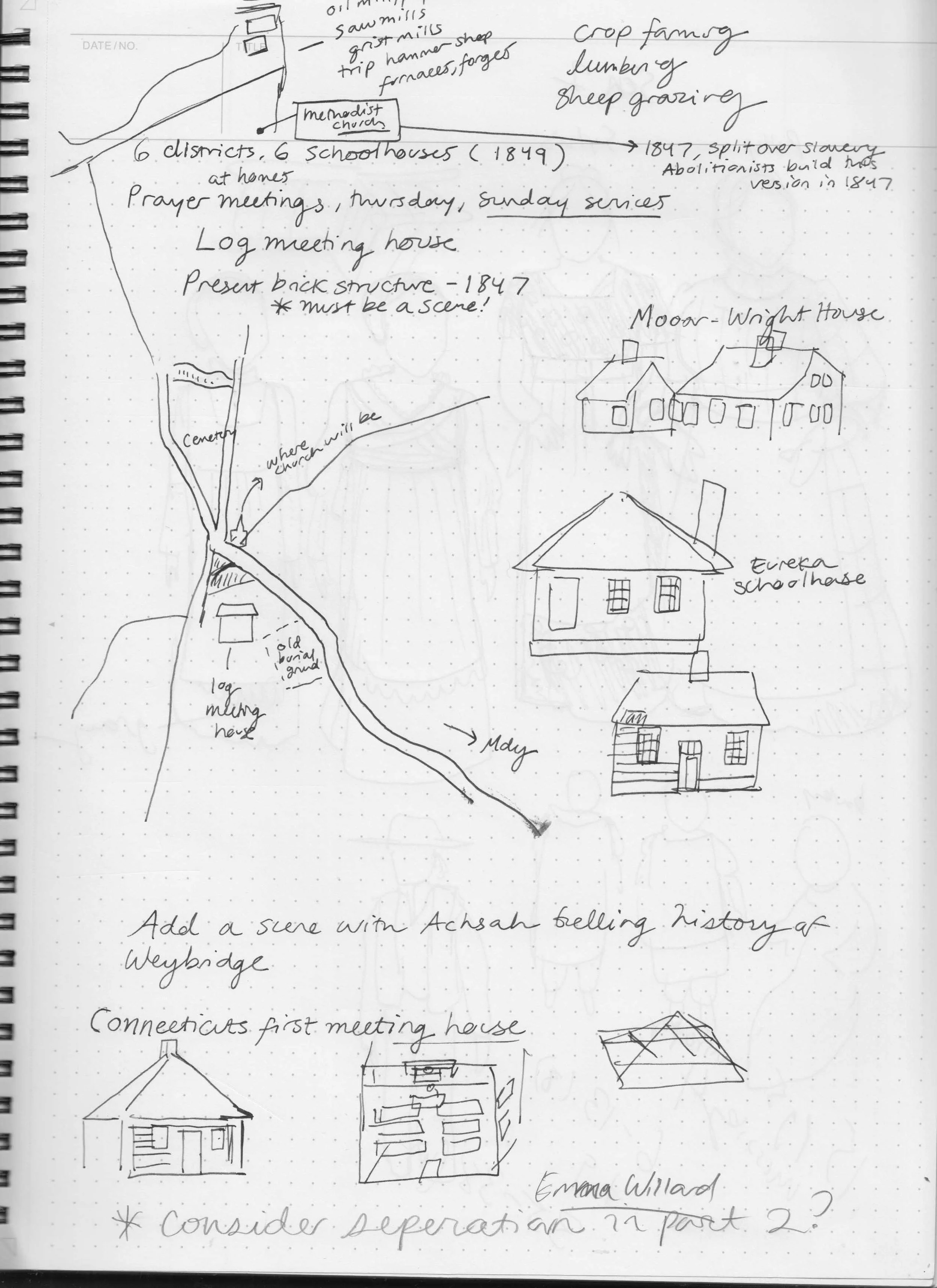
As burrowing through the archive progressed I also started to ponder story structure. It was a big question looming over me - what order in which to tell this story. Chronologically, like Cleves? Jump around time? Chapters? Parts? Below you will see images of my transcriptions as well as my meandering notes on how to begin to pull the threads of this story together. I considered many ideas before finally settling on a direction.
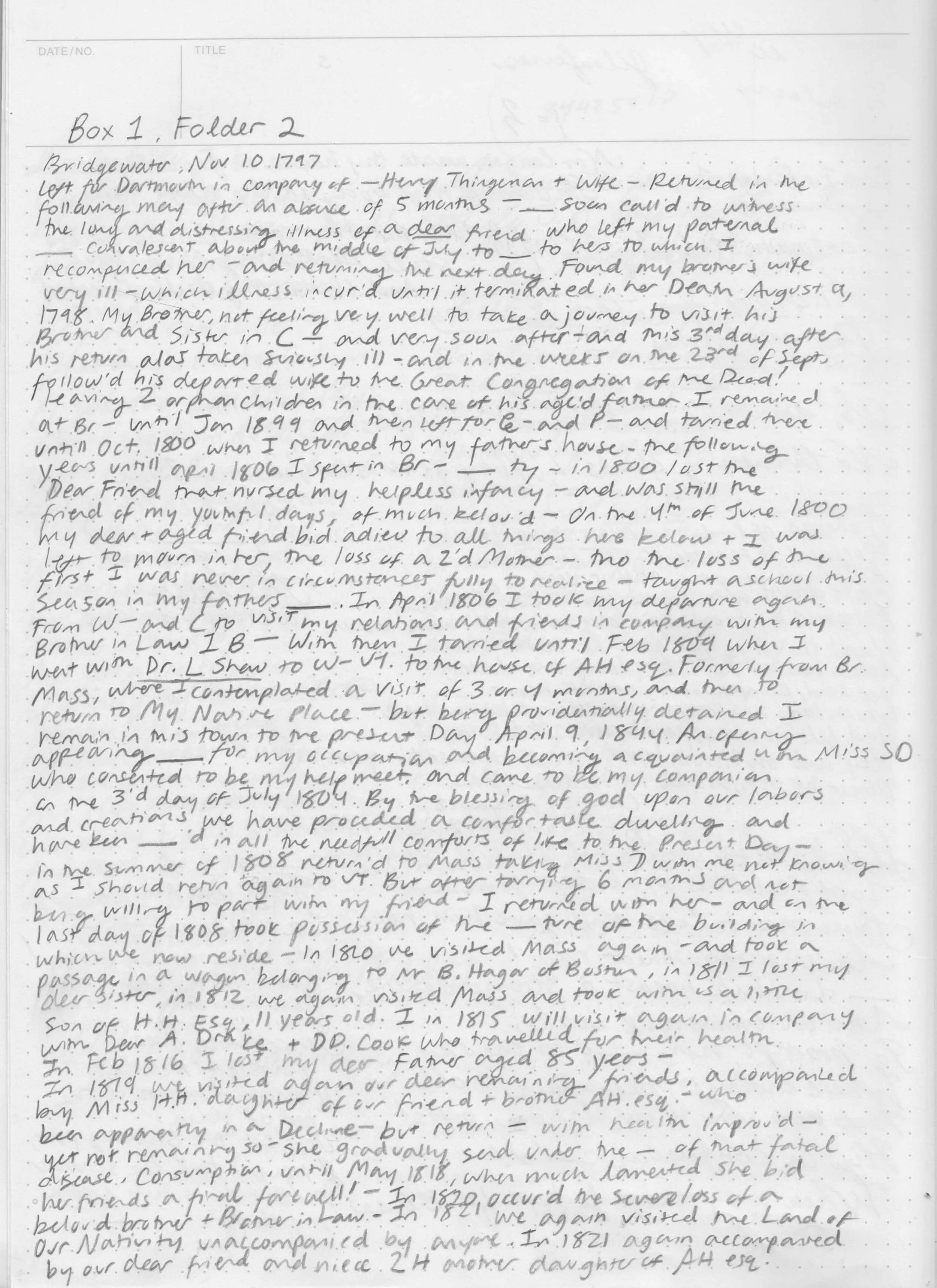
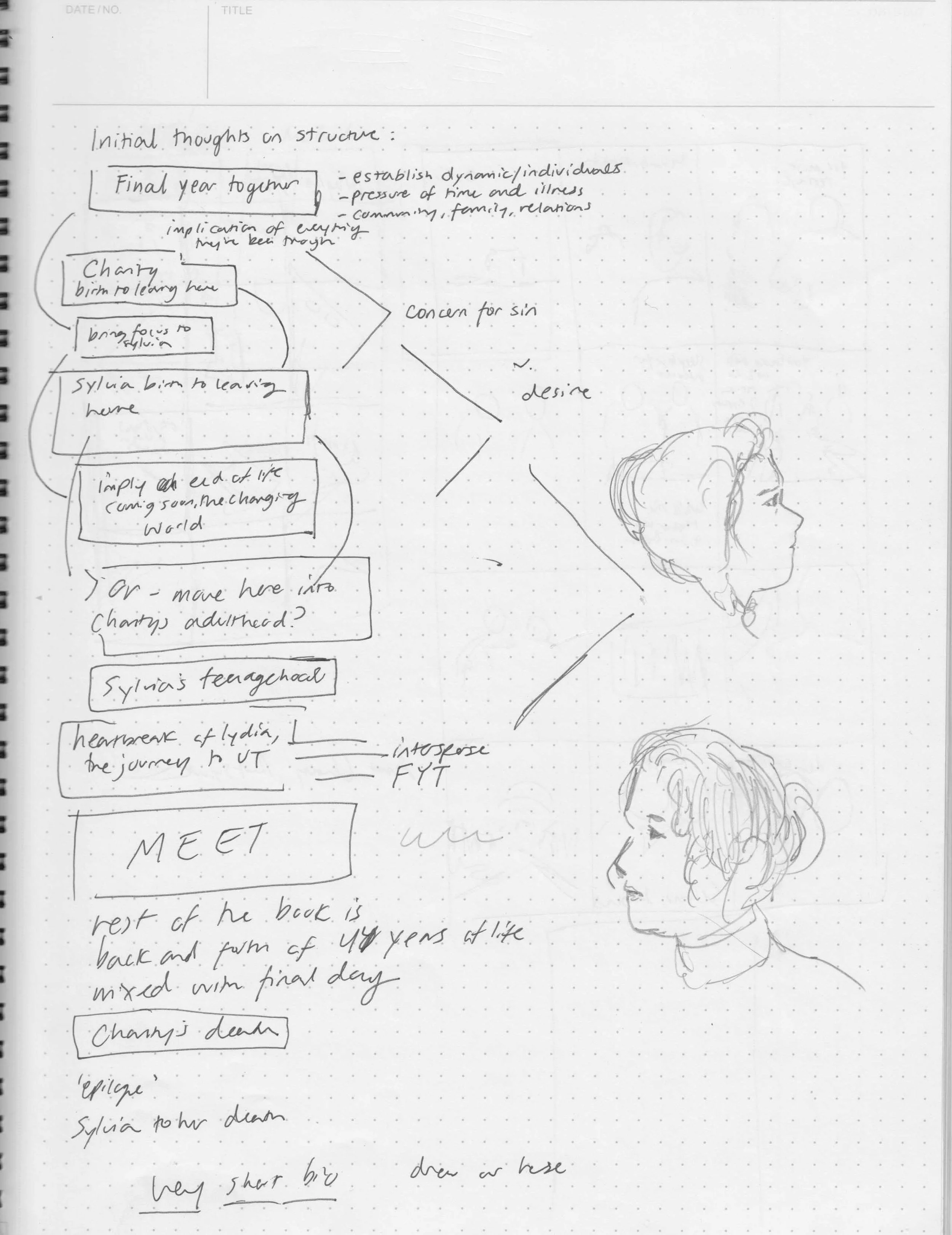
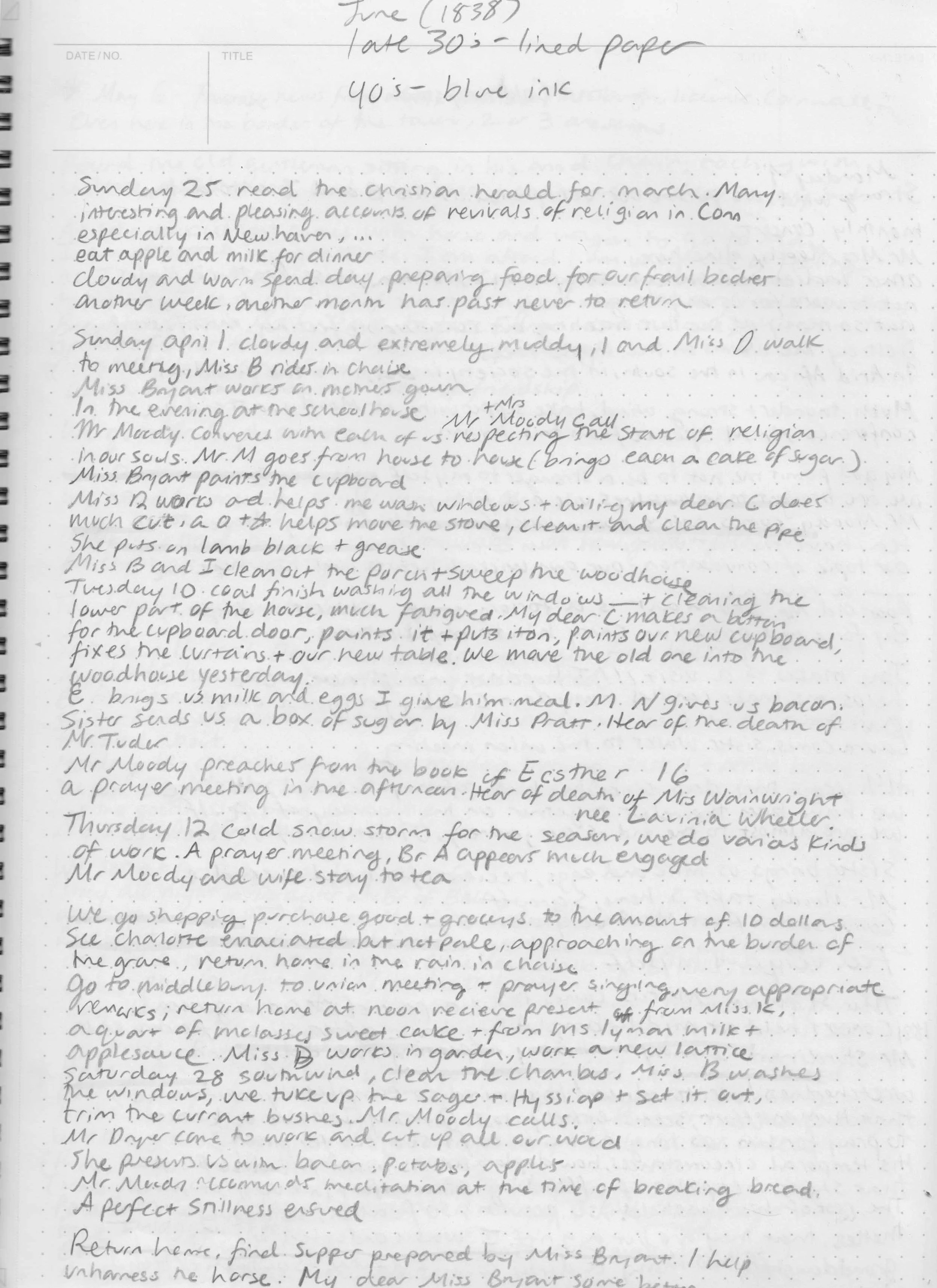
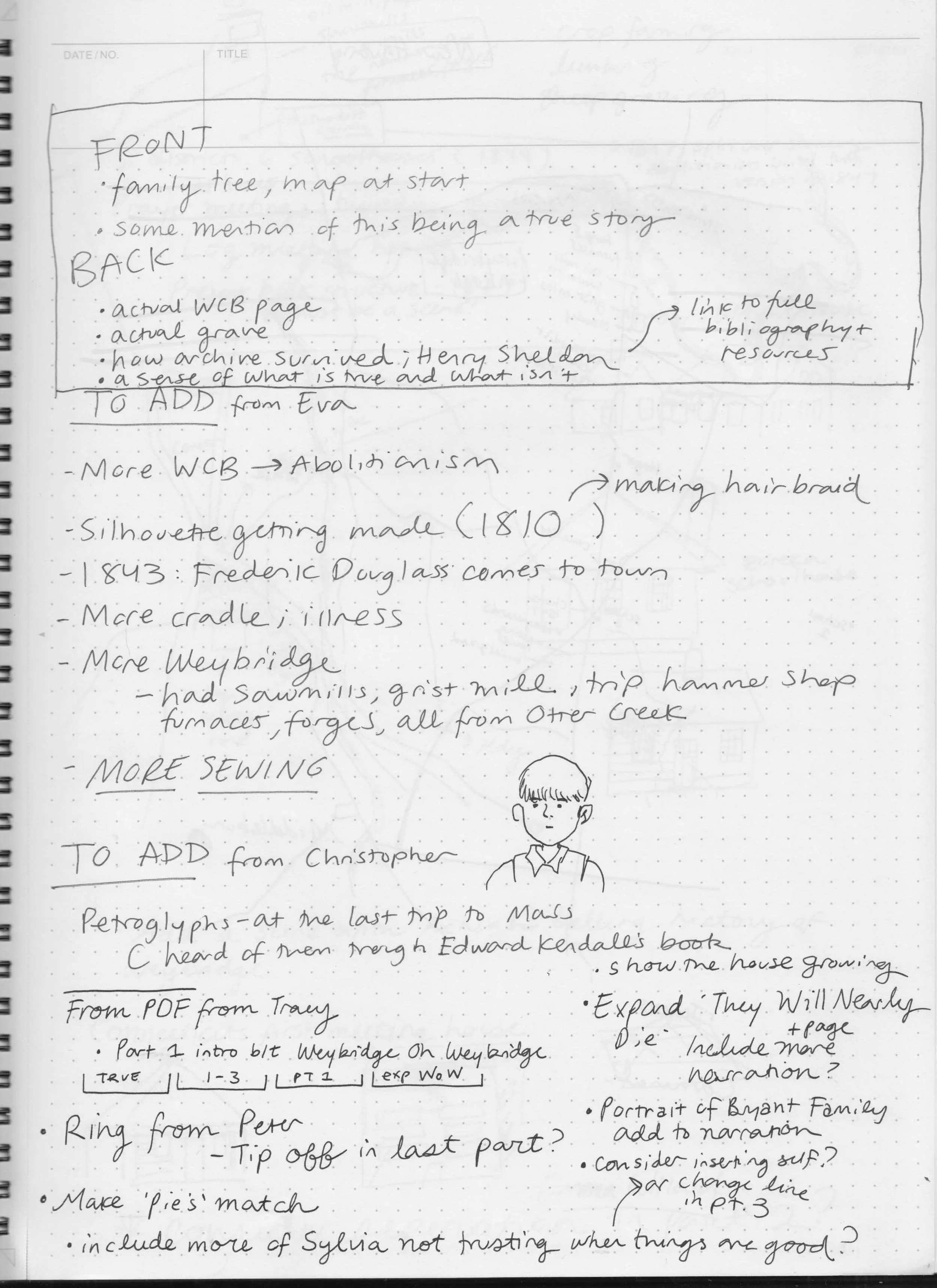
The last kind of research I did simultaneously with going to the archive was to read books from Charity and Sylvia’s lifetime. I noted down any book that Cleves mentioned they had read and was determined to put my eyes on sentences that they themselves had looked at. This became crucial later when I needed to write dialogue - absorbing these books helped me write in a voice that felt related to their time. The books I read for research are pictured below. I didn’t finish ALL of them, of course, but they all provided me with insight:
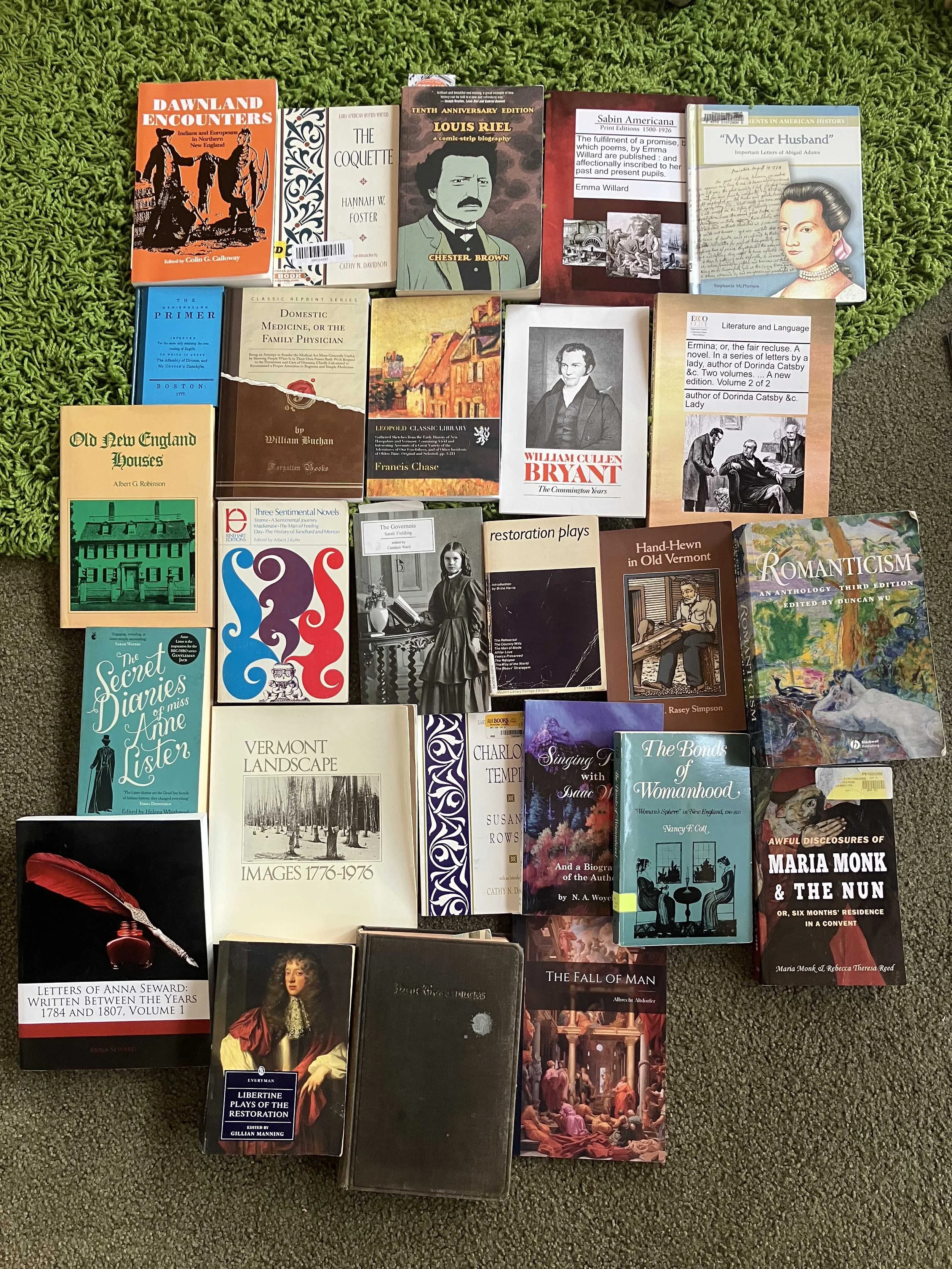
Dawnland Encounters - Colin G. Calloway
The Coquette - Hannah W. Foster
Louis Riel - Chester Brown
Poems - Emma Willard
My Dear Husband - Abigail Adams
New England Primer
Domestic Medicine - William Buchanan
Gathered Sketches from Early New England - Francis Chase
William Cullen Bryant, The Cummington Years
Ermina, or the Fair Recluse - Anonymous
Old New England Houses - Albert G. Robinson
Three Sentimental Novels - Albert Kuhn
The Governess - Sarah Fielding
Restoration Plays
Hand Hewn in Old Vermont - Ruth Simpson
Romanticism, an Anthology
The Secret Diaries of Anne Lister - Anne Lister
Vermont Landscape Images 1776 - 1967
Charlotte Temple - Susanna Rowson
Singing Psalms with Isaac Watts
The Bonds of Womanhood - Nancy Cott
Maria Monk and the Nun - Monk, Reed
Letters of Anna Seward
Libertine Plays of the Restoration
The Bible
The Fall of Man - Albrecht Durer
Not pictured but used extensively:
Pamela - Samuel Richardson
Charity and Sylvia - Rachel Hope Cleves
Part Two: Drafting and Editing
Winter 2023 to Spring 2025
I felt really daunted about starting to actually draft out the book. The more I researched, the more vast this story became and the harder it was to pick what was important. I knew I didn’t want to write a full script, but every attempt at outlining left me feeling more lost. I would sit down to write with all my notes around me and get immediately overwhelmed. So, in order to delay having to actually start the book, I sketched reference images and figured out what the characters would look like:
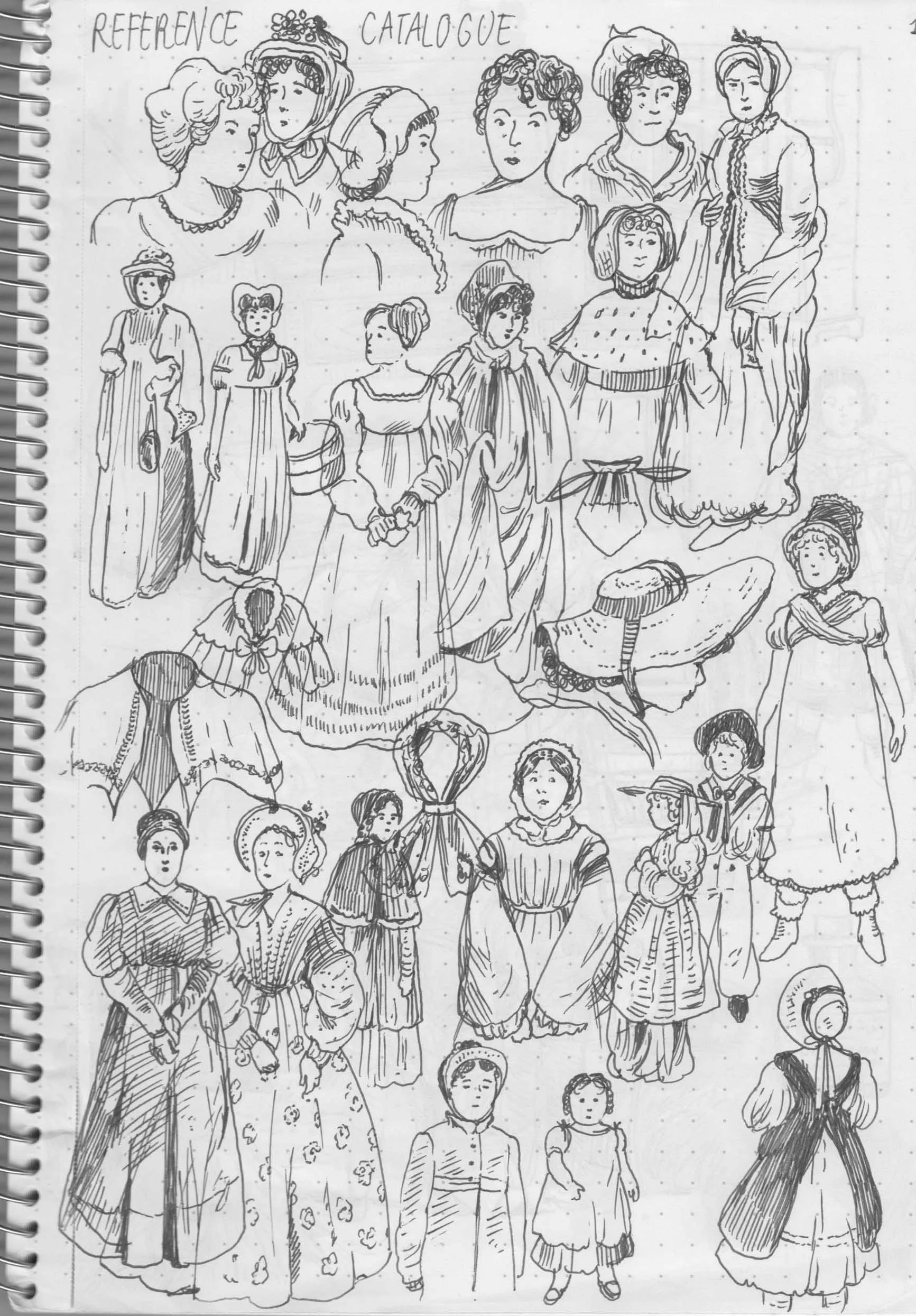
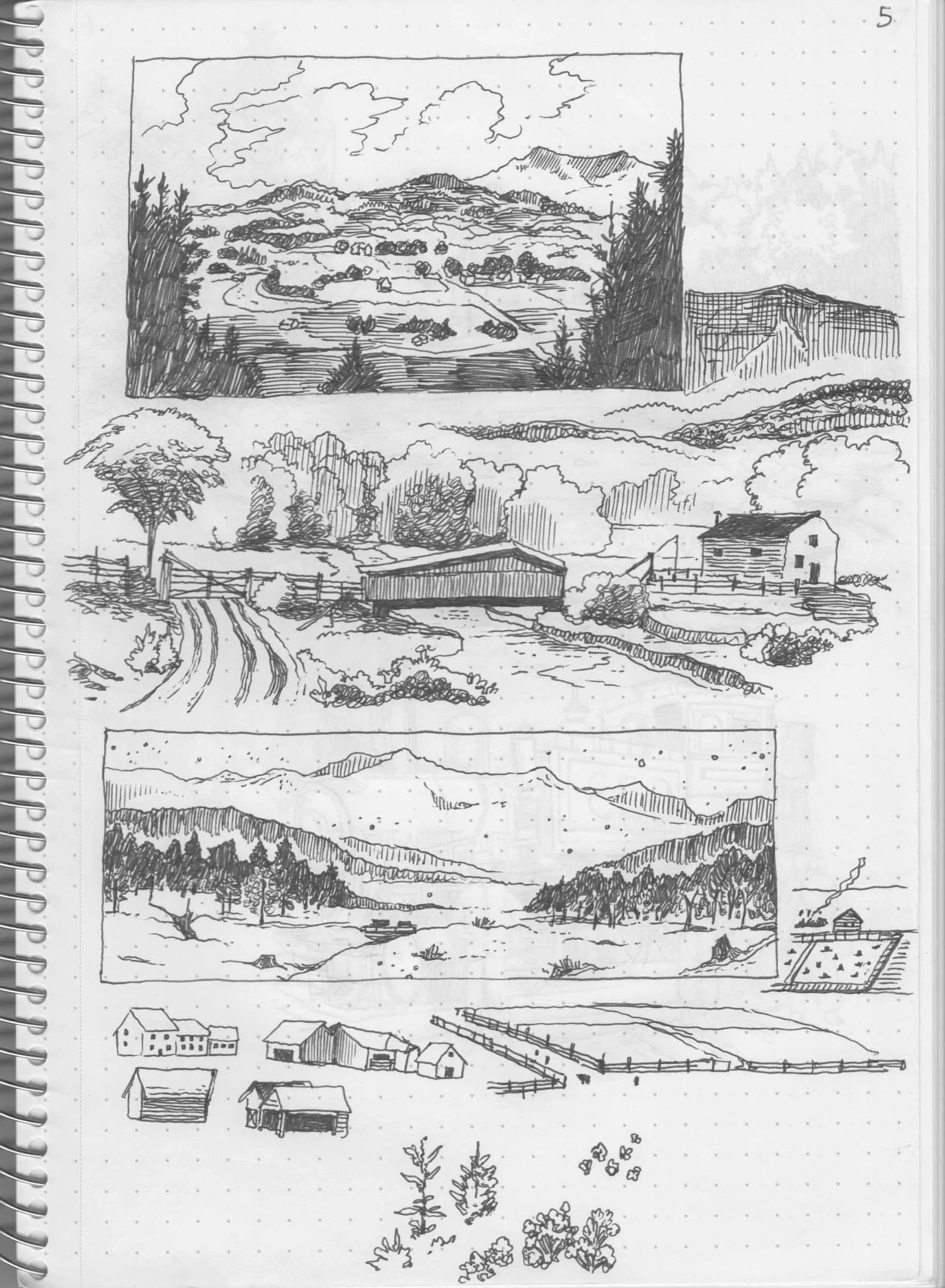
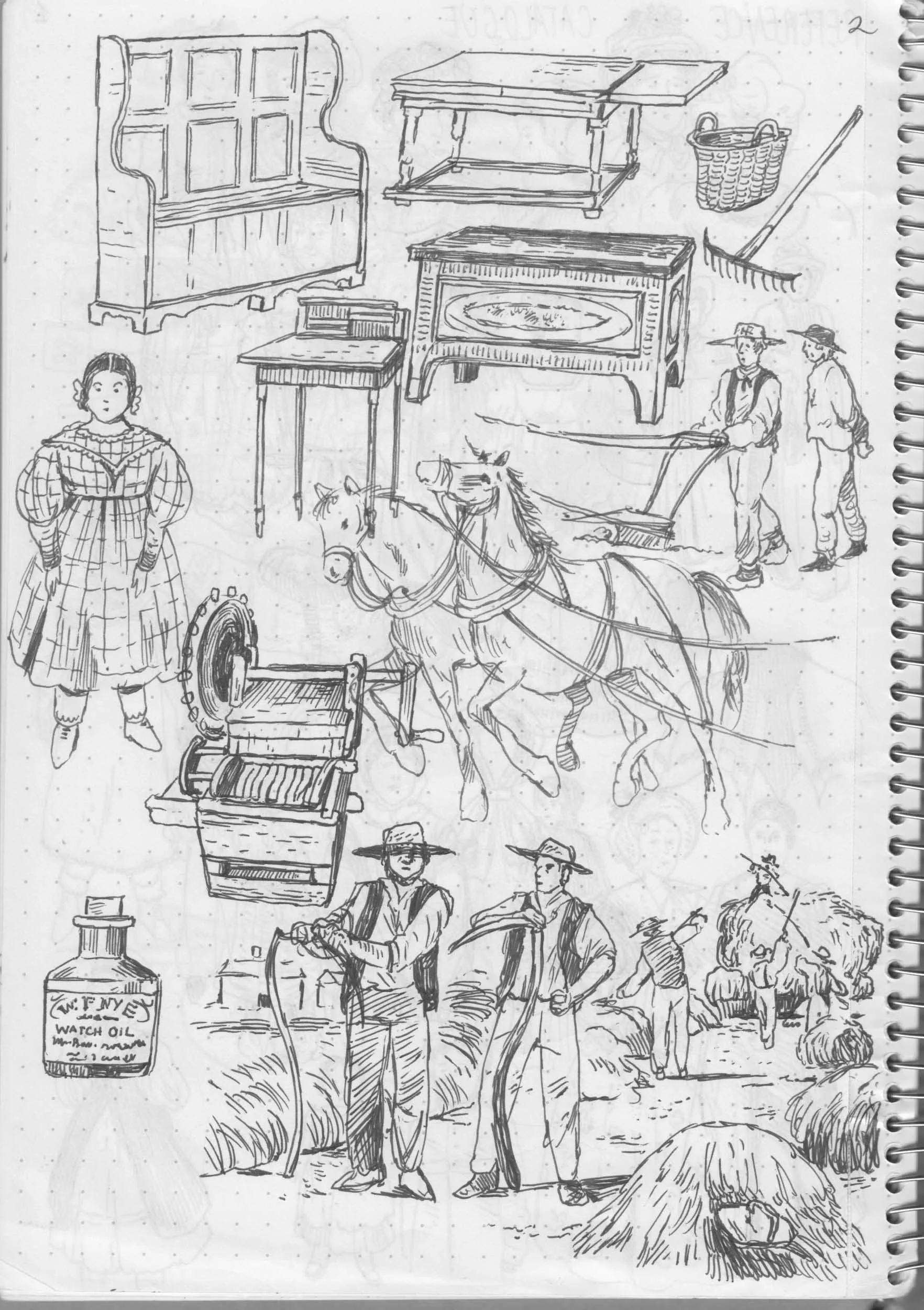
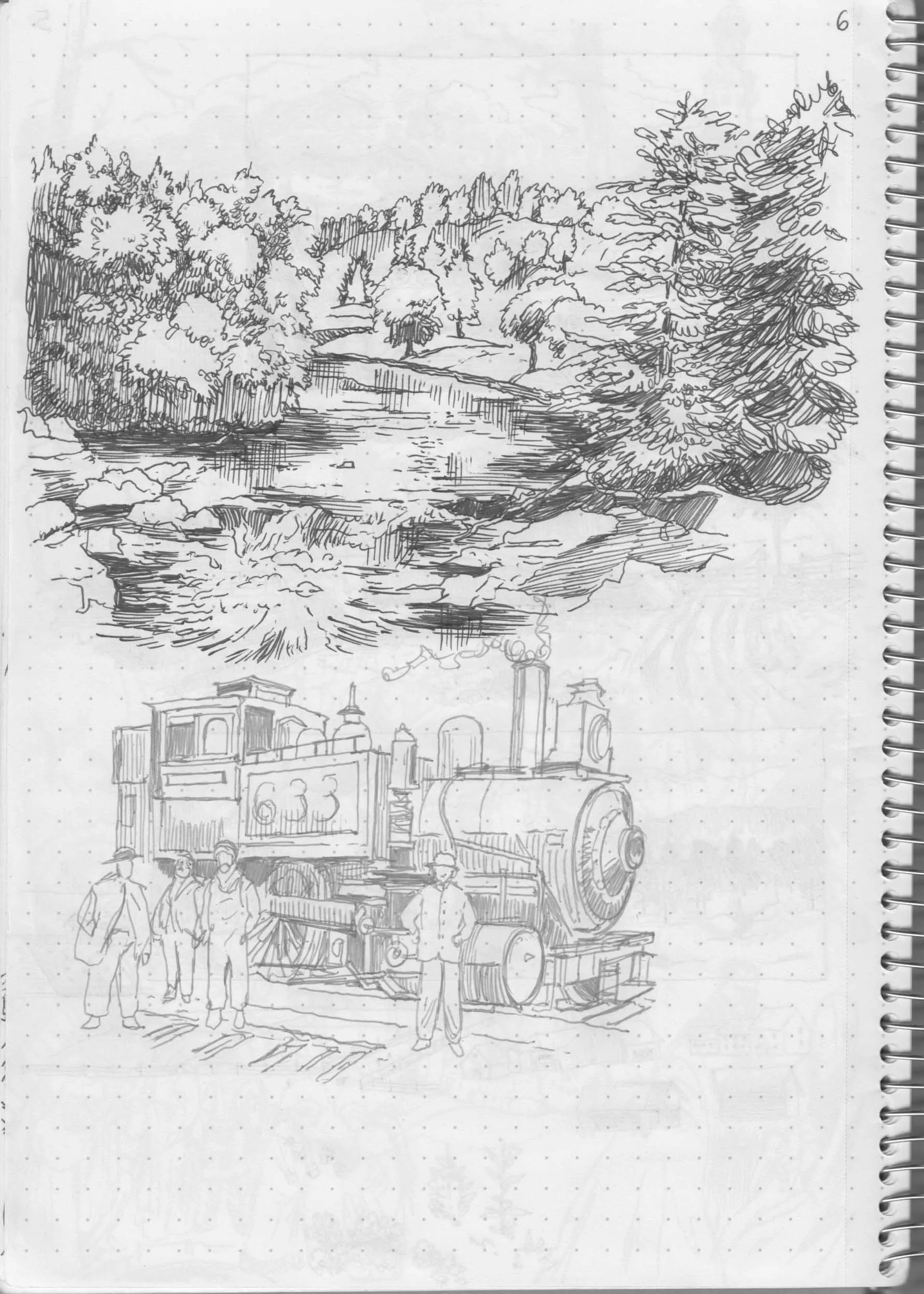
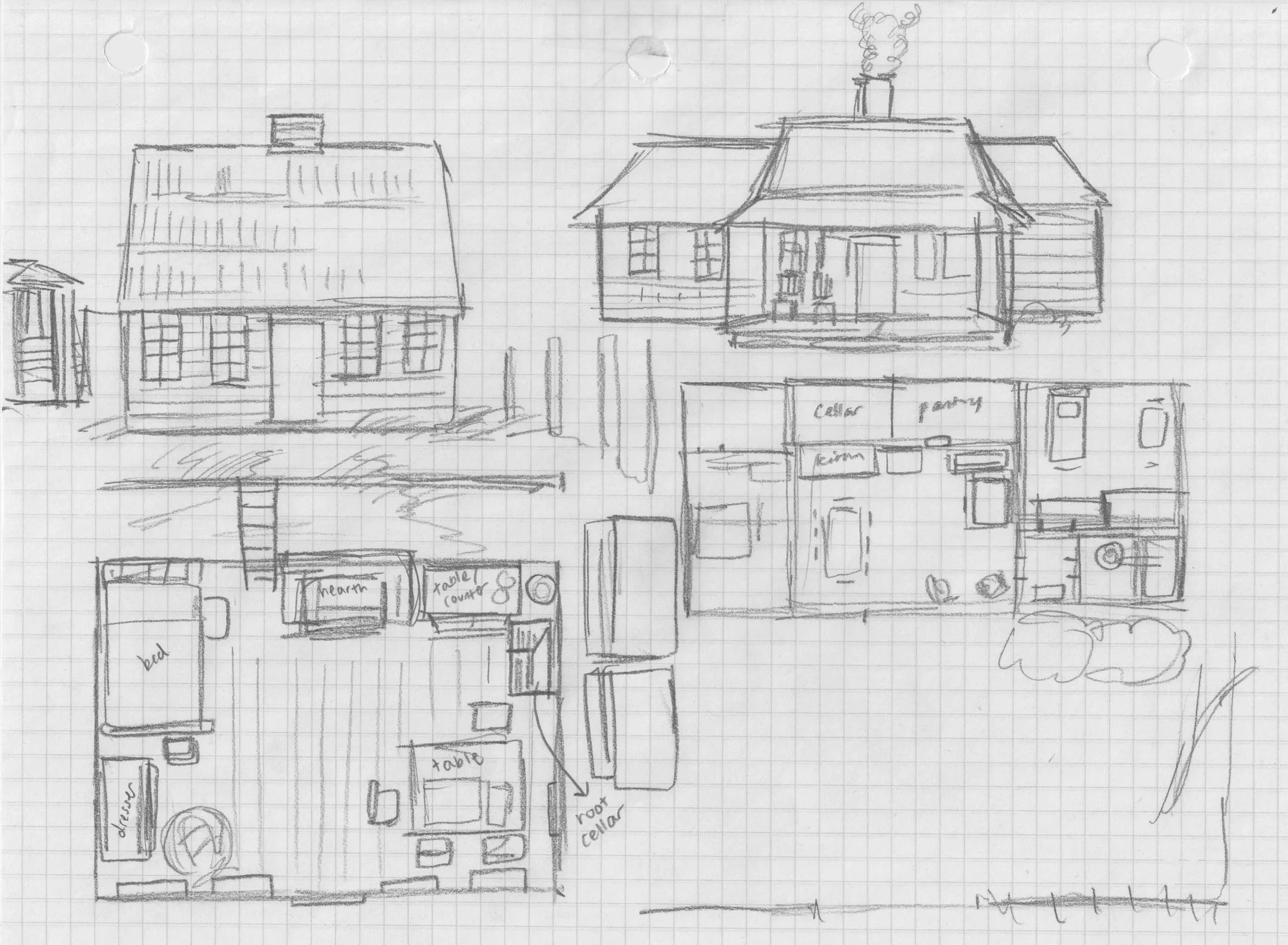
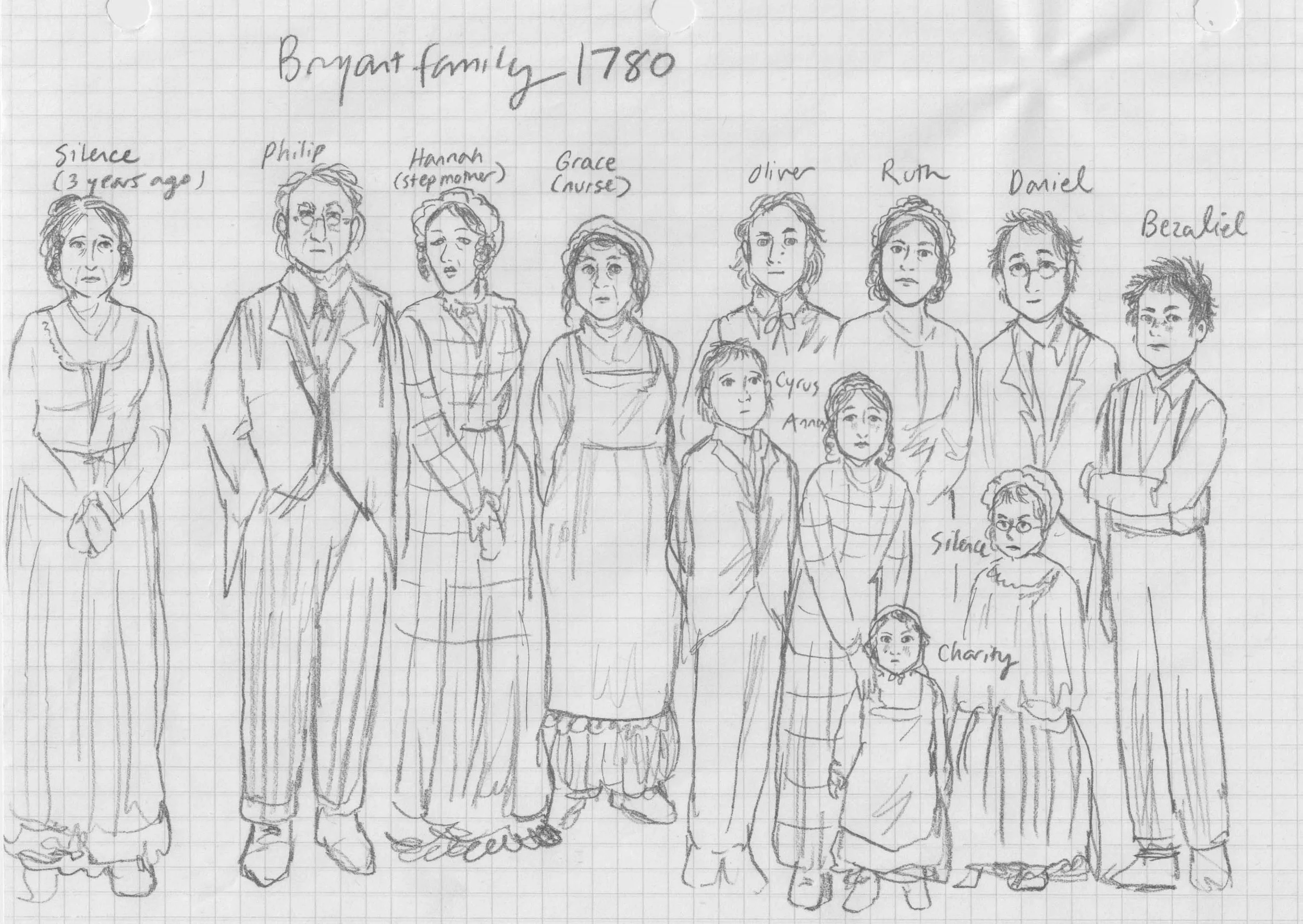
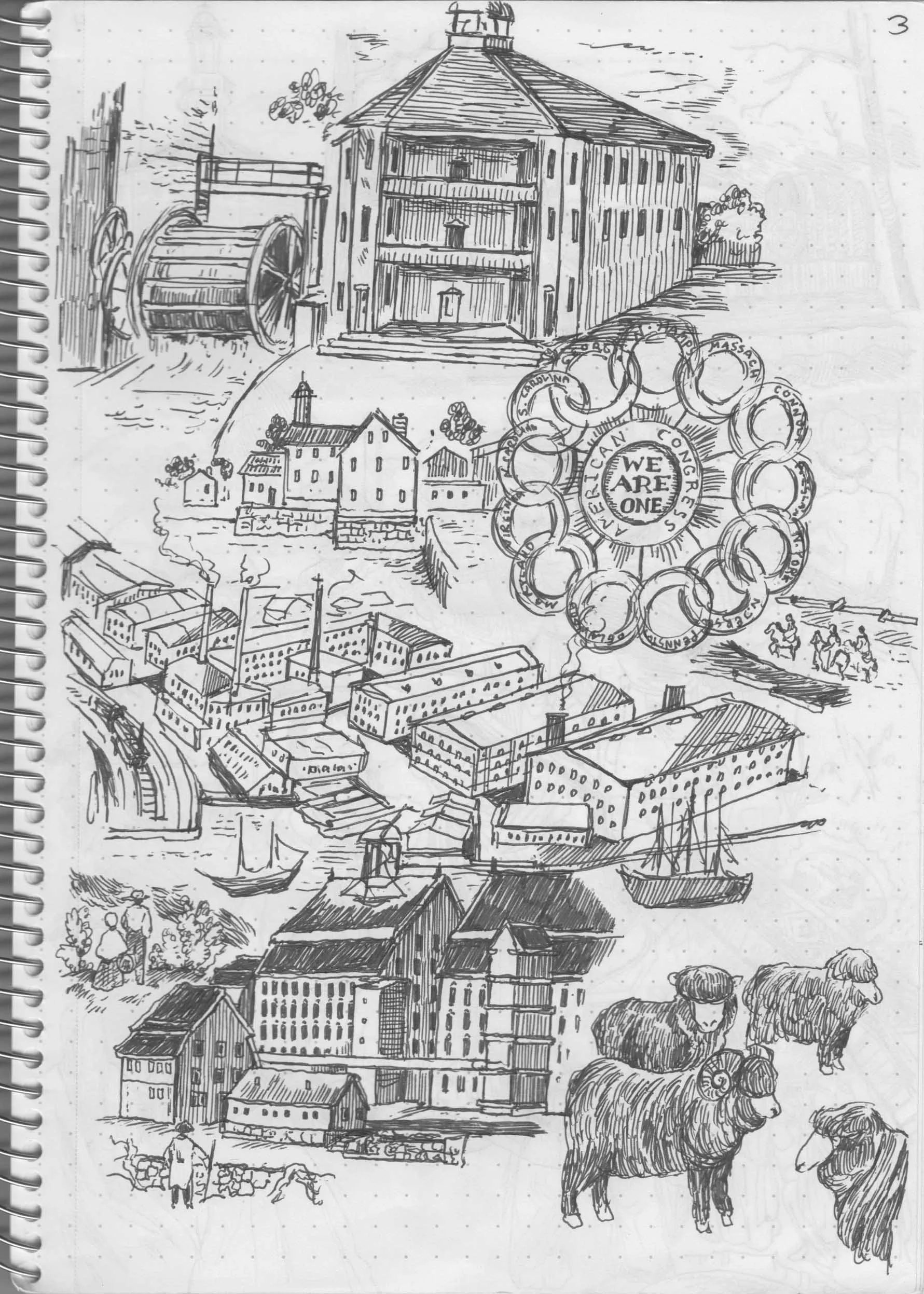
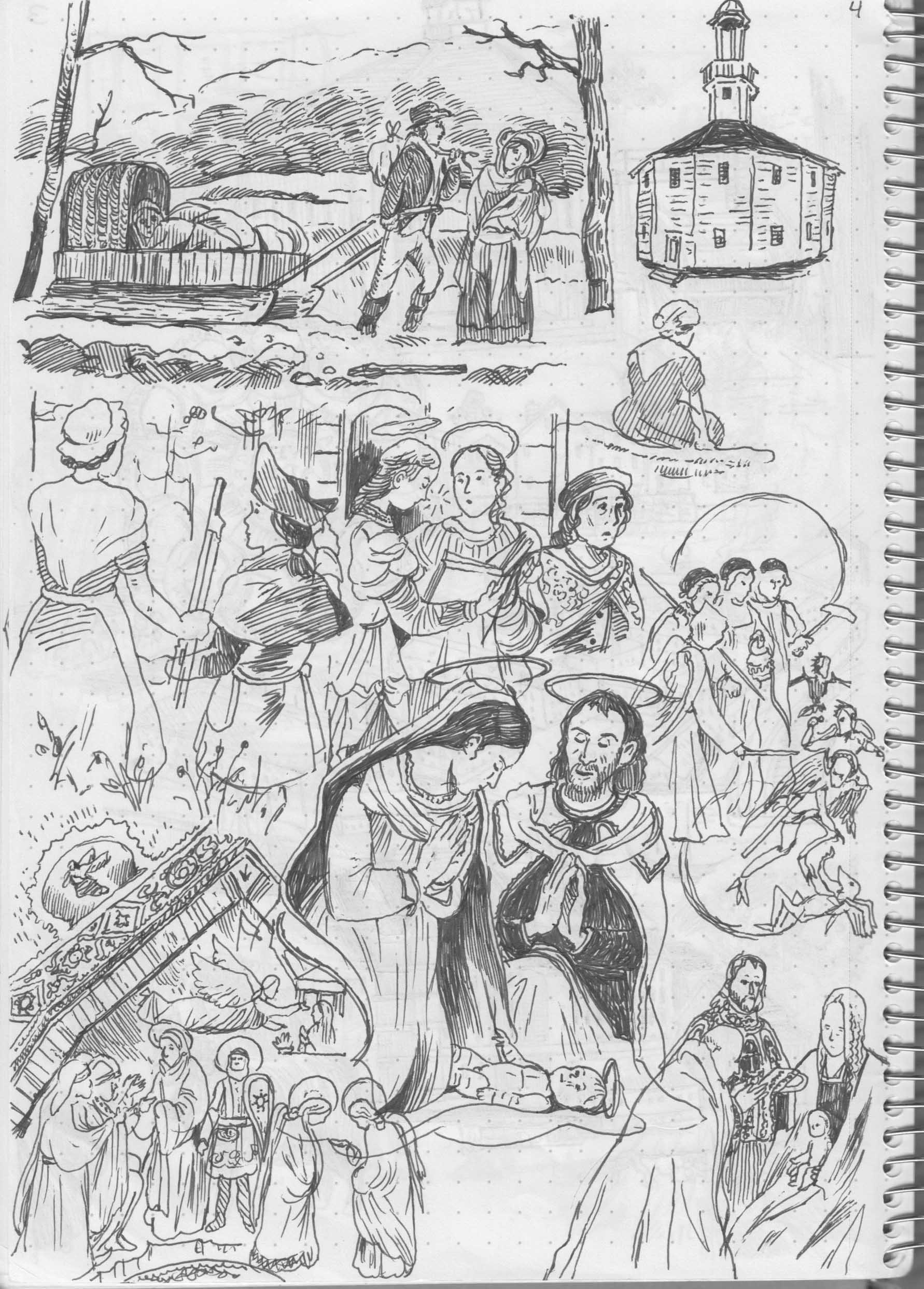
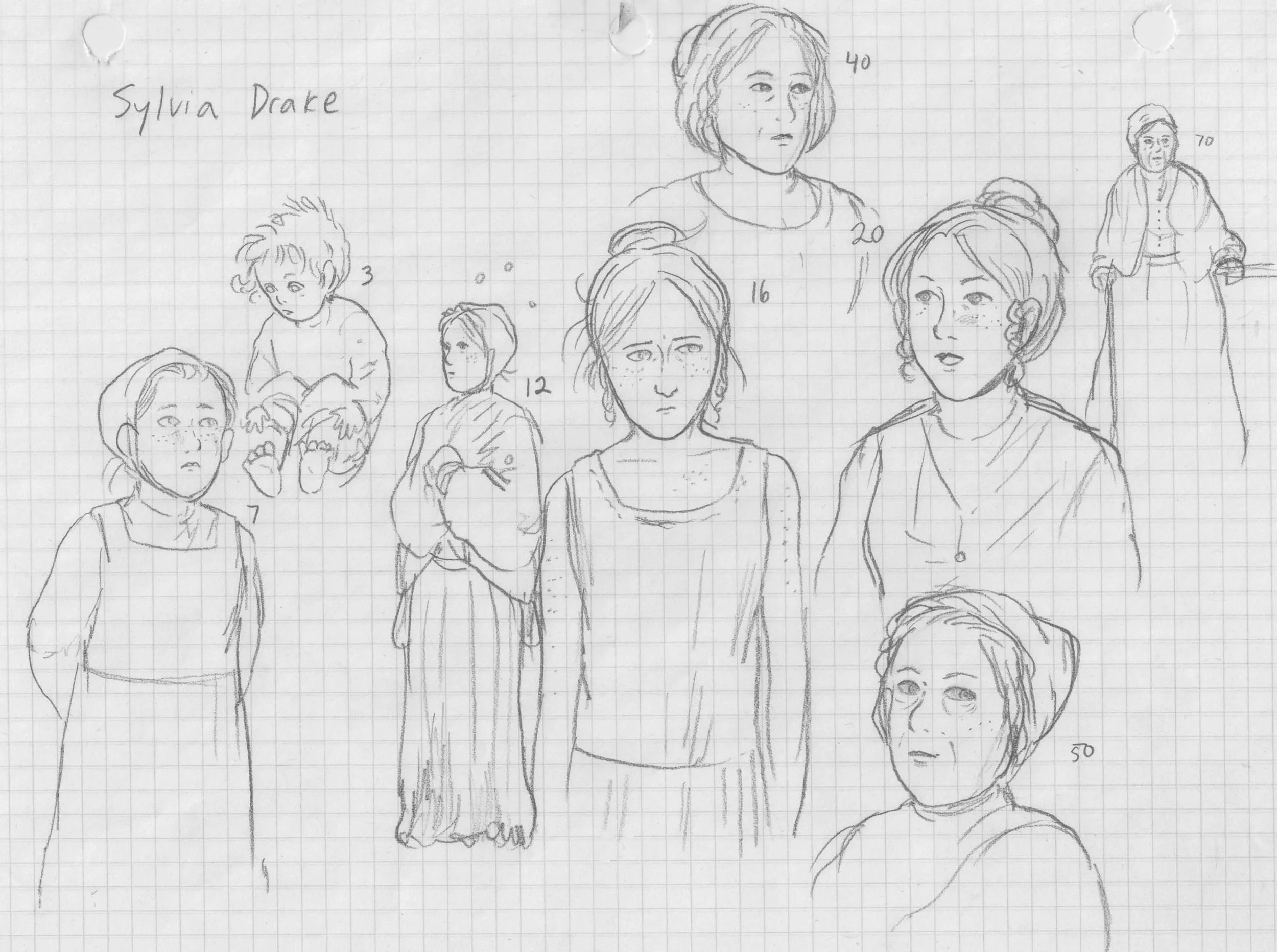
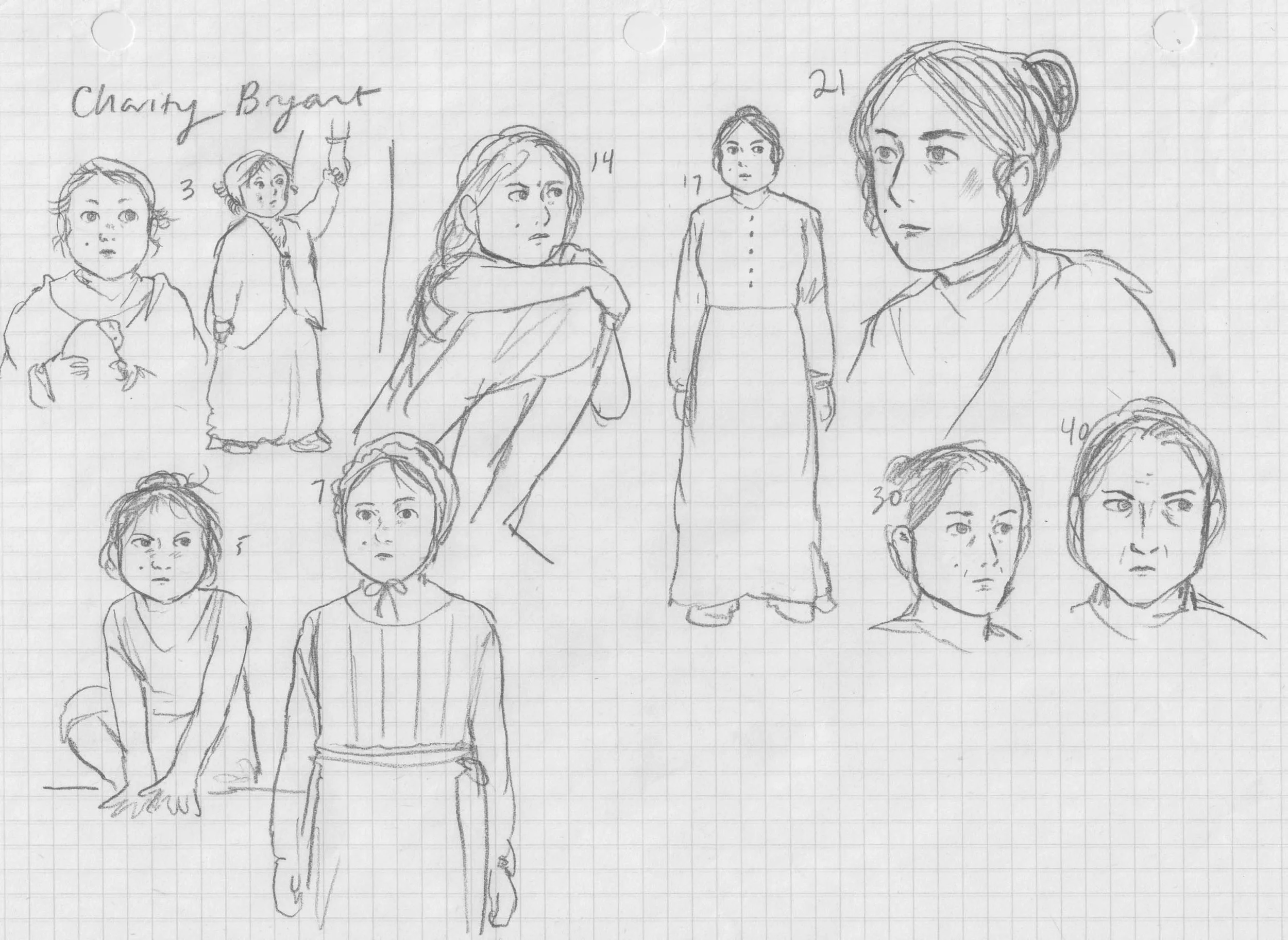
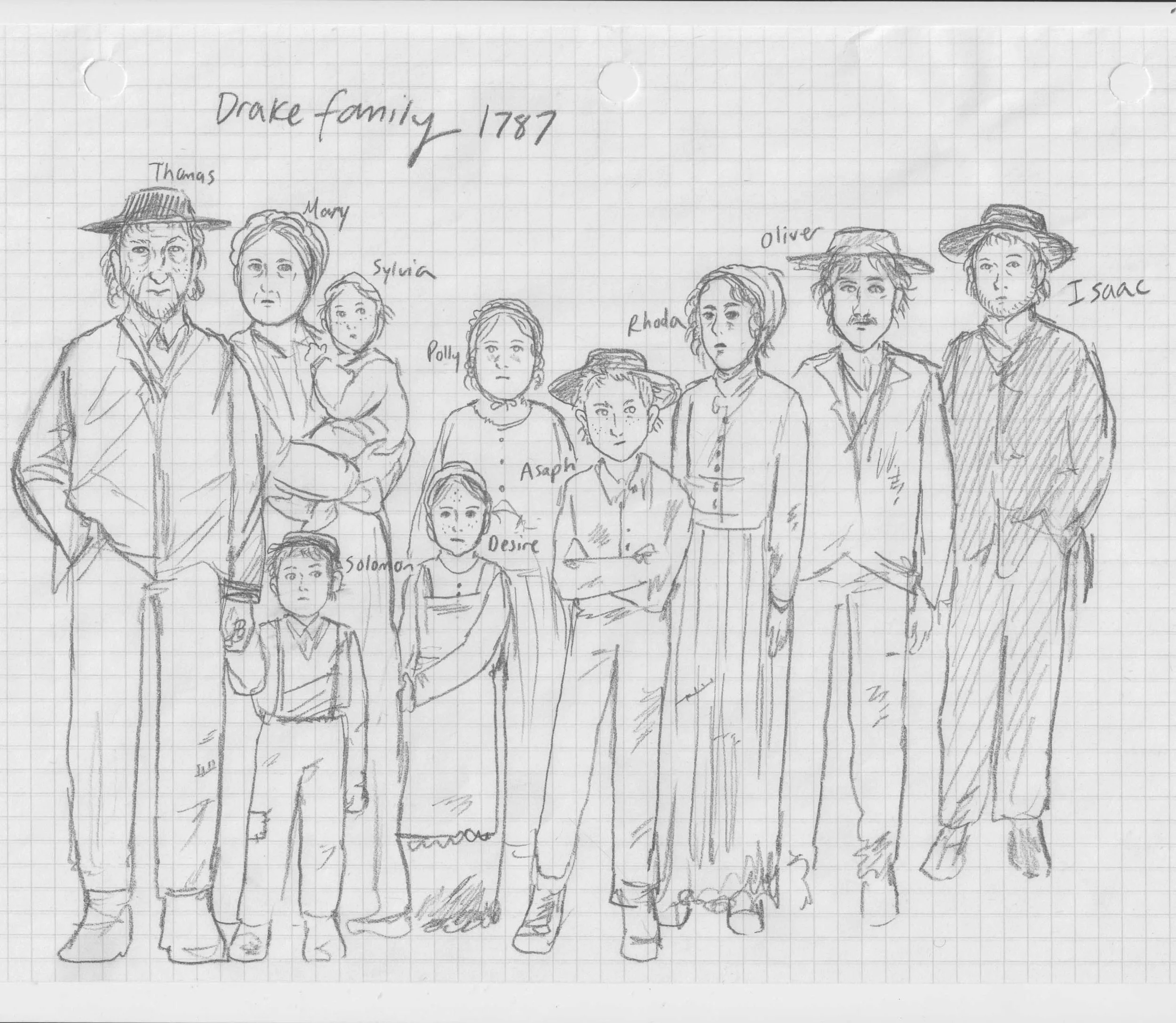
After all this drawing it was really time to get started. I was cavalierly telling people about the book I was working on as if it actually existed - but it didn’t. So I needed to make it exist. I decided to do what I do with most of my books and just start with page one. I drew out maybe five pages before giving up again. A few days later I drew from page one again - it also didn’t work. It just fizzled. I knew at this point already that I wanted the book to be on a grid (inspiration for that comes directly from Joseph Lamberts Annie Sullivan) and I also knew that I wanted the story to be told in short vignettes (inspiration for that comes from Kate Beaton’s autobio comics that I read on twitter a million years ago. All of which were short and titled.)
Drafting wasn’t working after three starts and stops, so then I tried to make an outline again. My attempts pictured below:
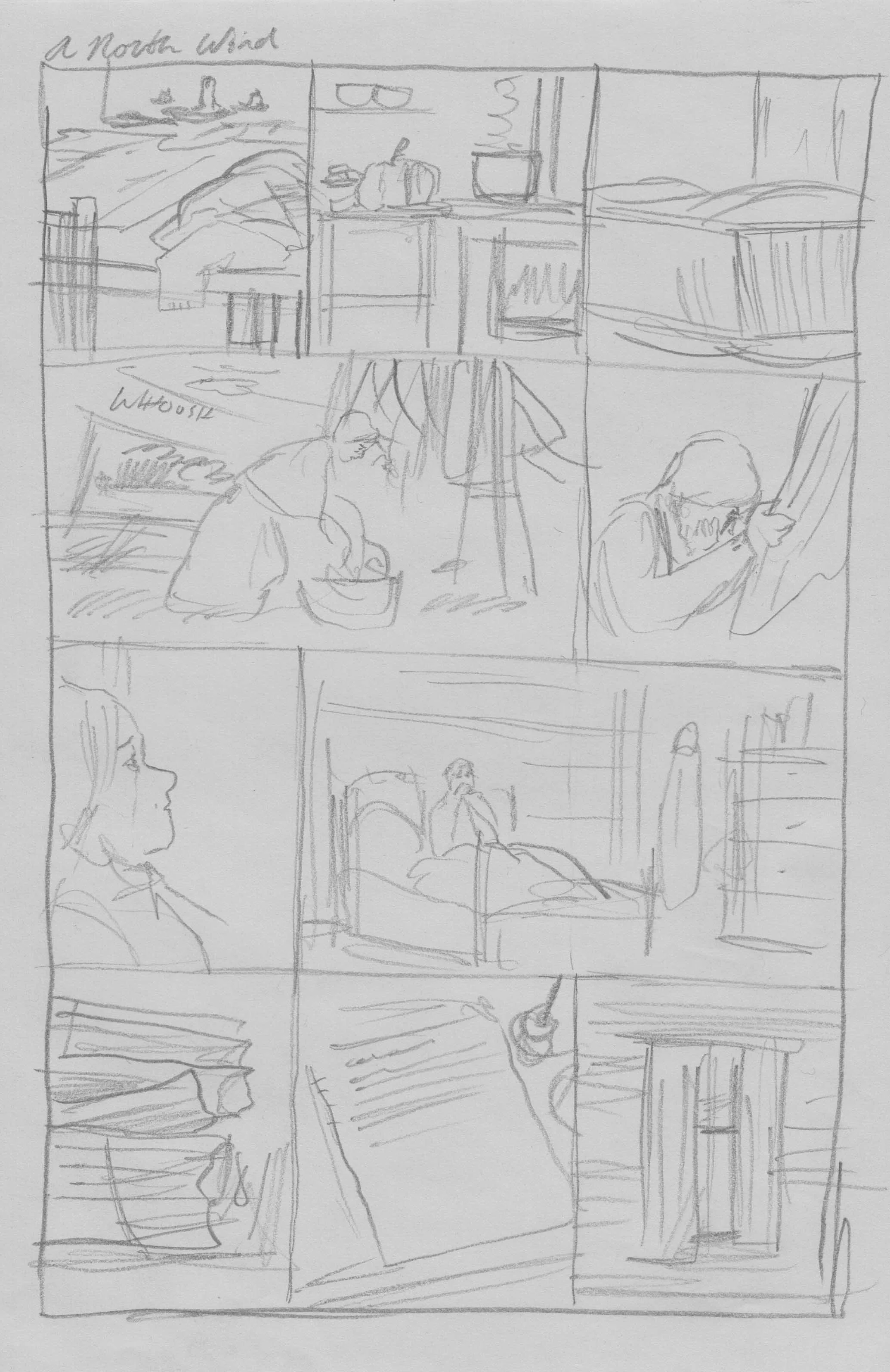
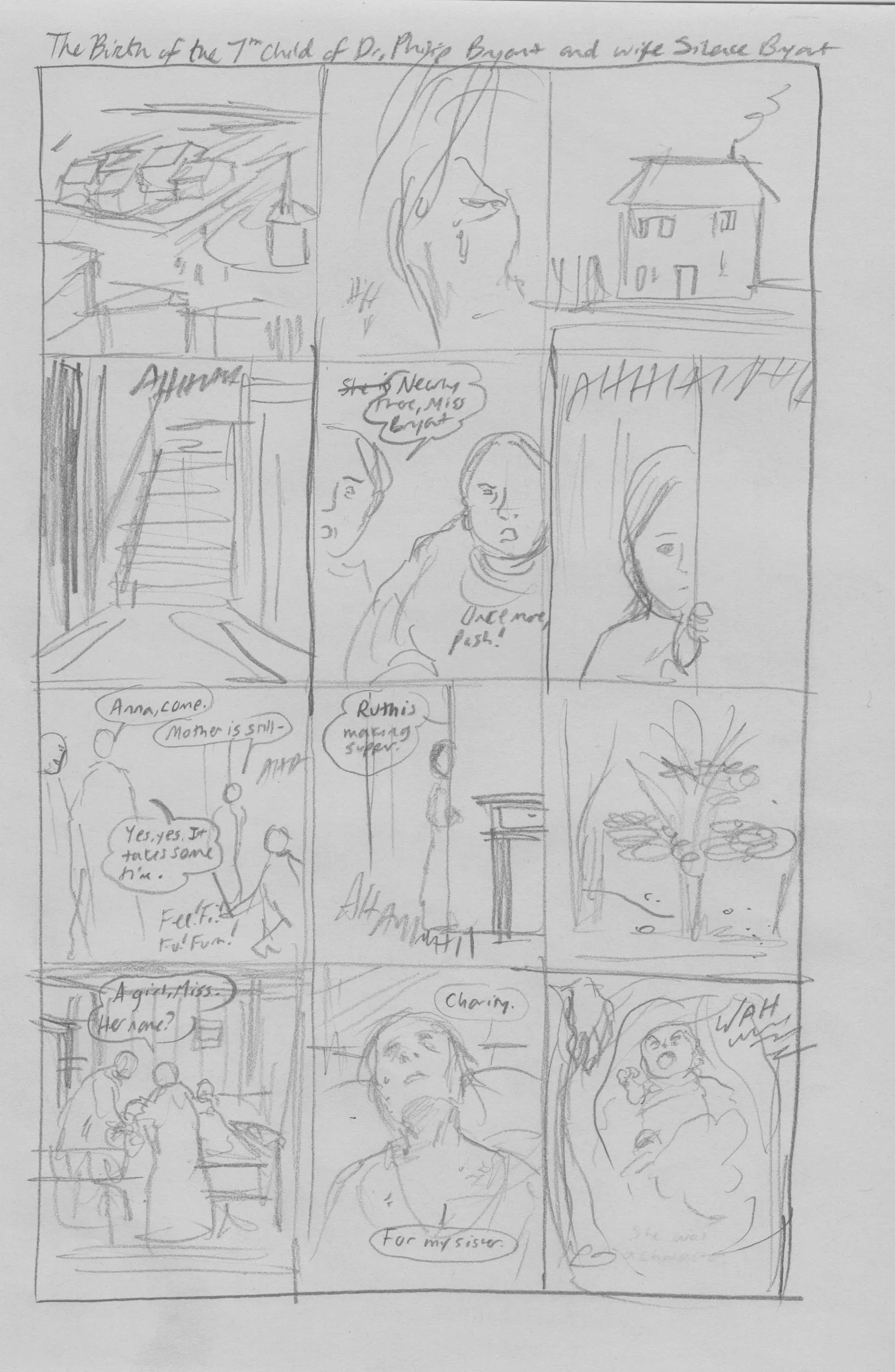
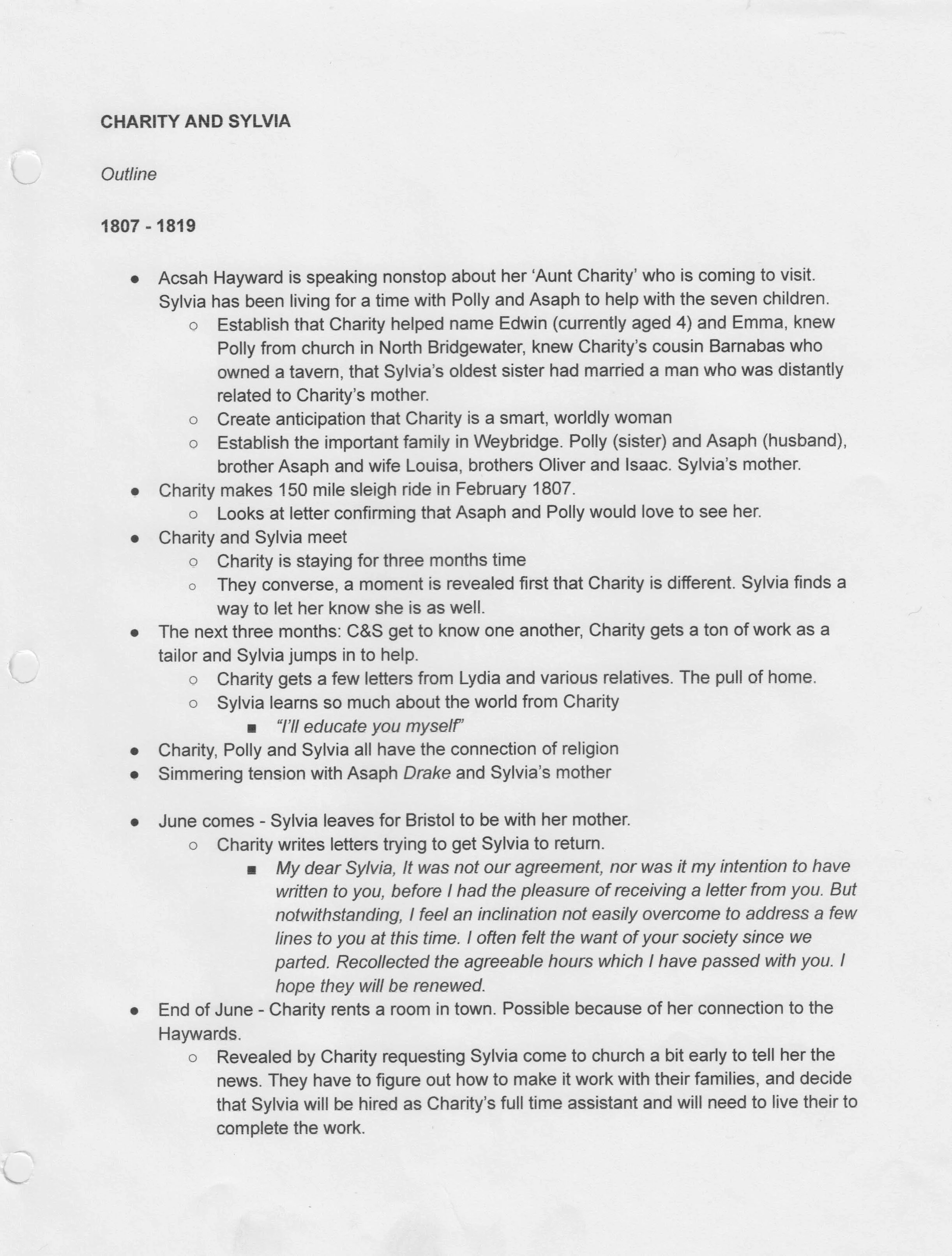
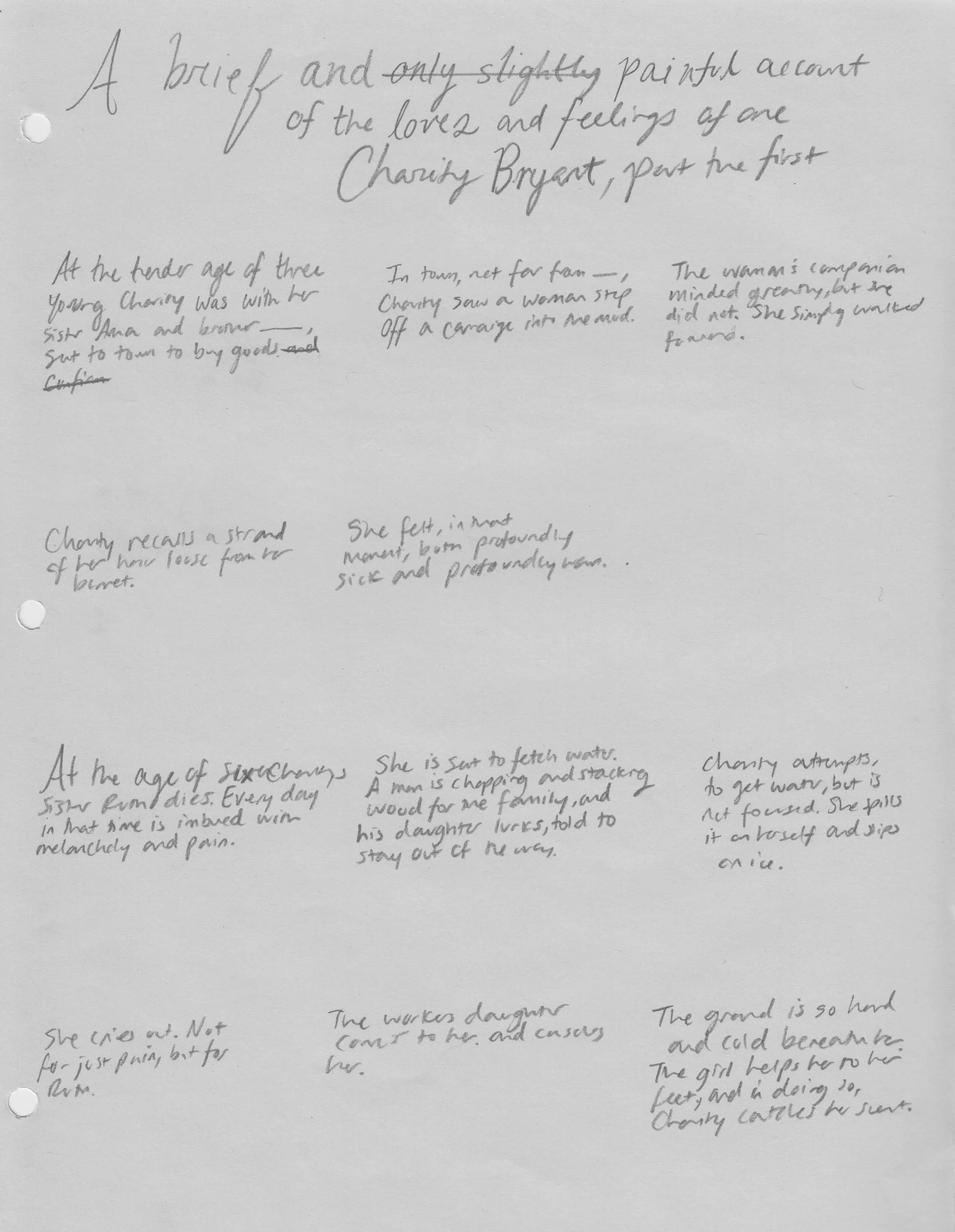
Finally, I cracked the draft on the fourth try. After making the whole outline I realized that part of what was agonizing me was by trying to connect the story to my research while I wrote. But I had been in the midst of all of this history for over a year at this point and I came to the conclusion that I needed to trust that I knew their story. I put away the outline, put away the notes, put away the sketches and took yet another blank piece of paper and started the story.
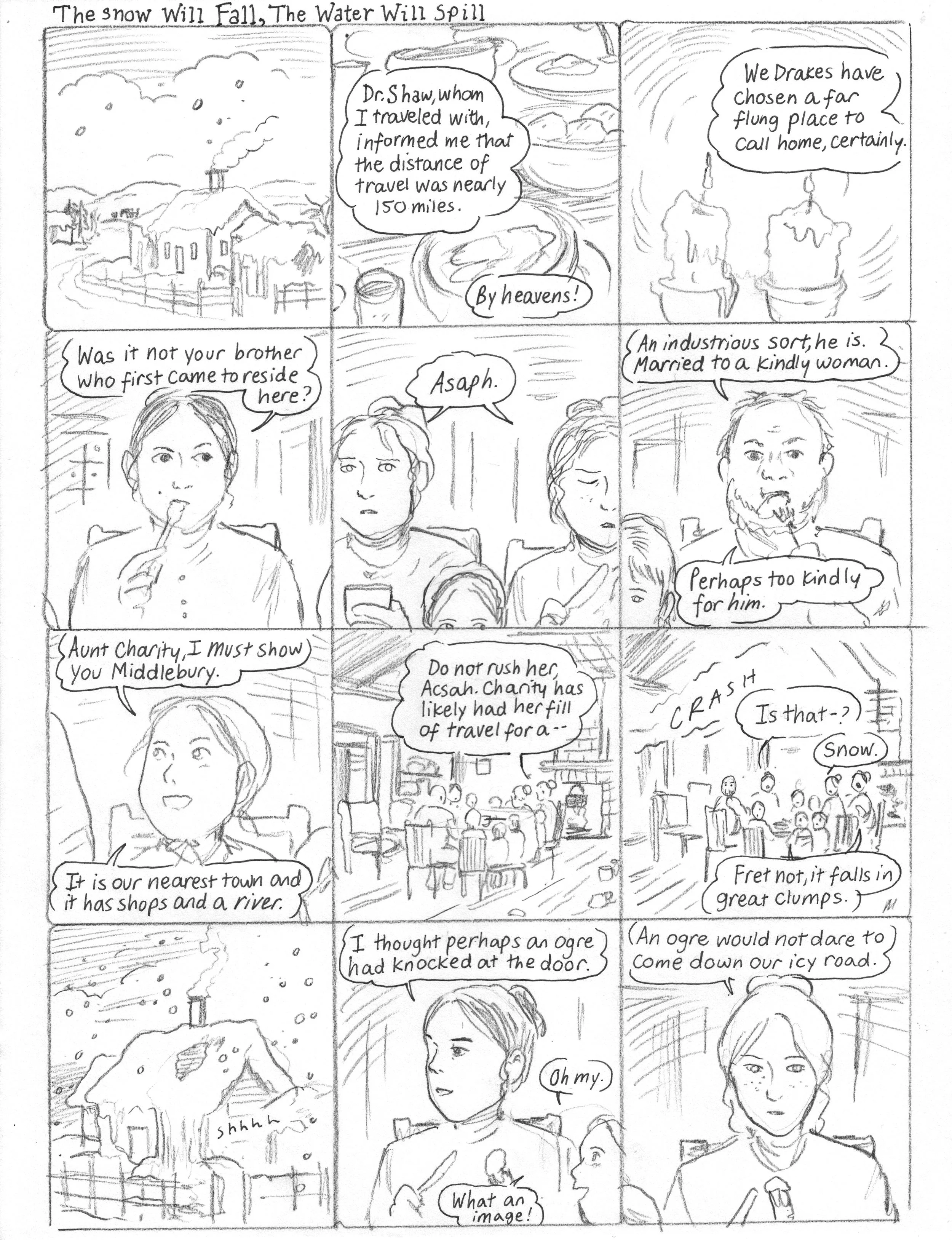
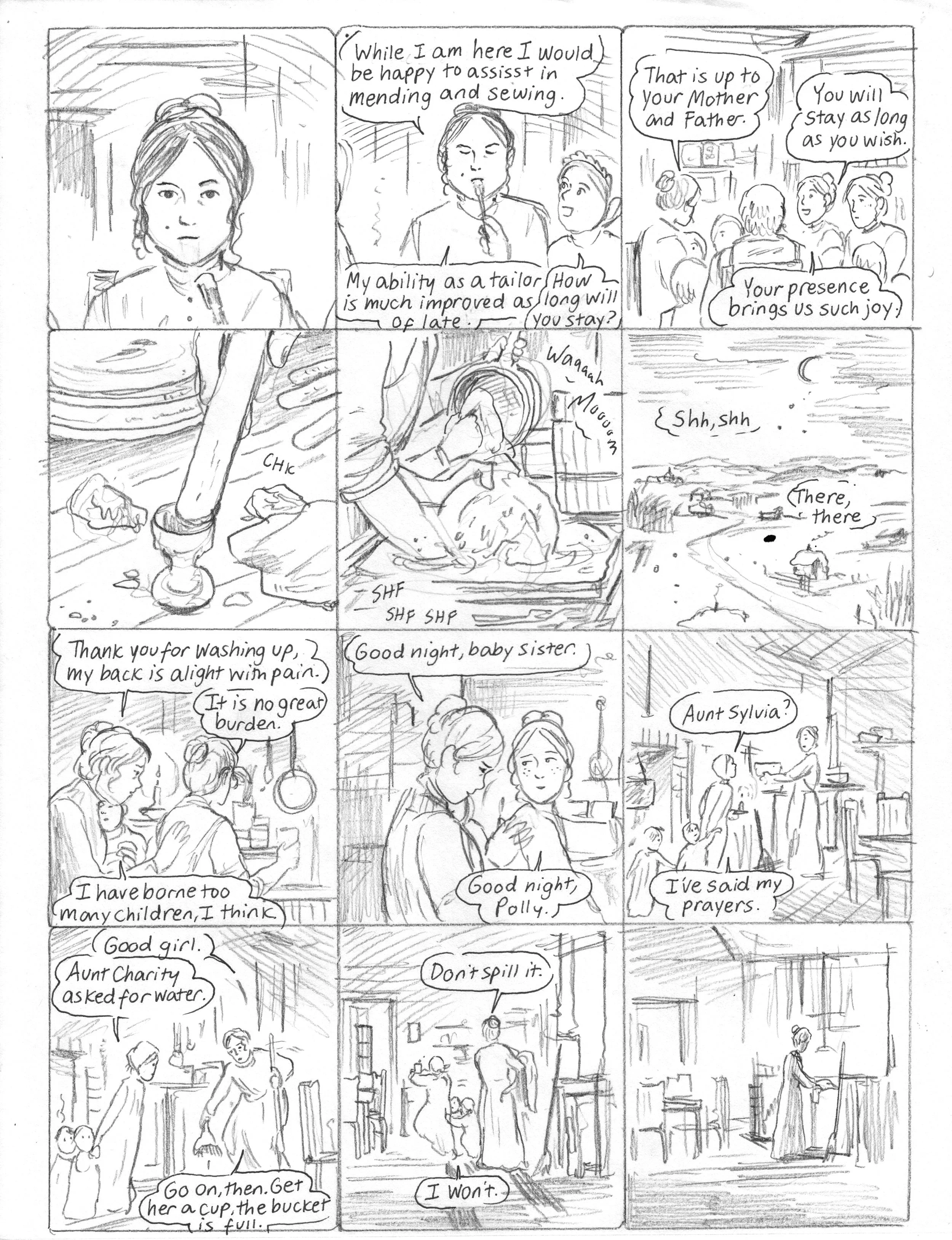
It worked. Over the course of a few weeks I very messily drew out the whole book. With each passing page I got more invested in the tone and style and could finally visualize what I was doing. This draft was a mix of clear and messy. Some pages readable and have art, others are just dashed off text:
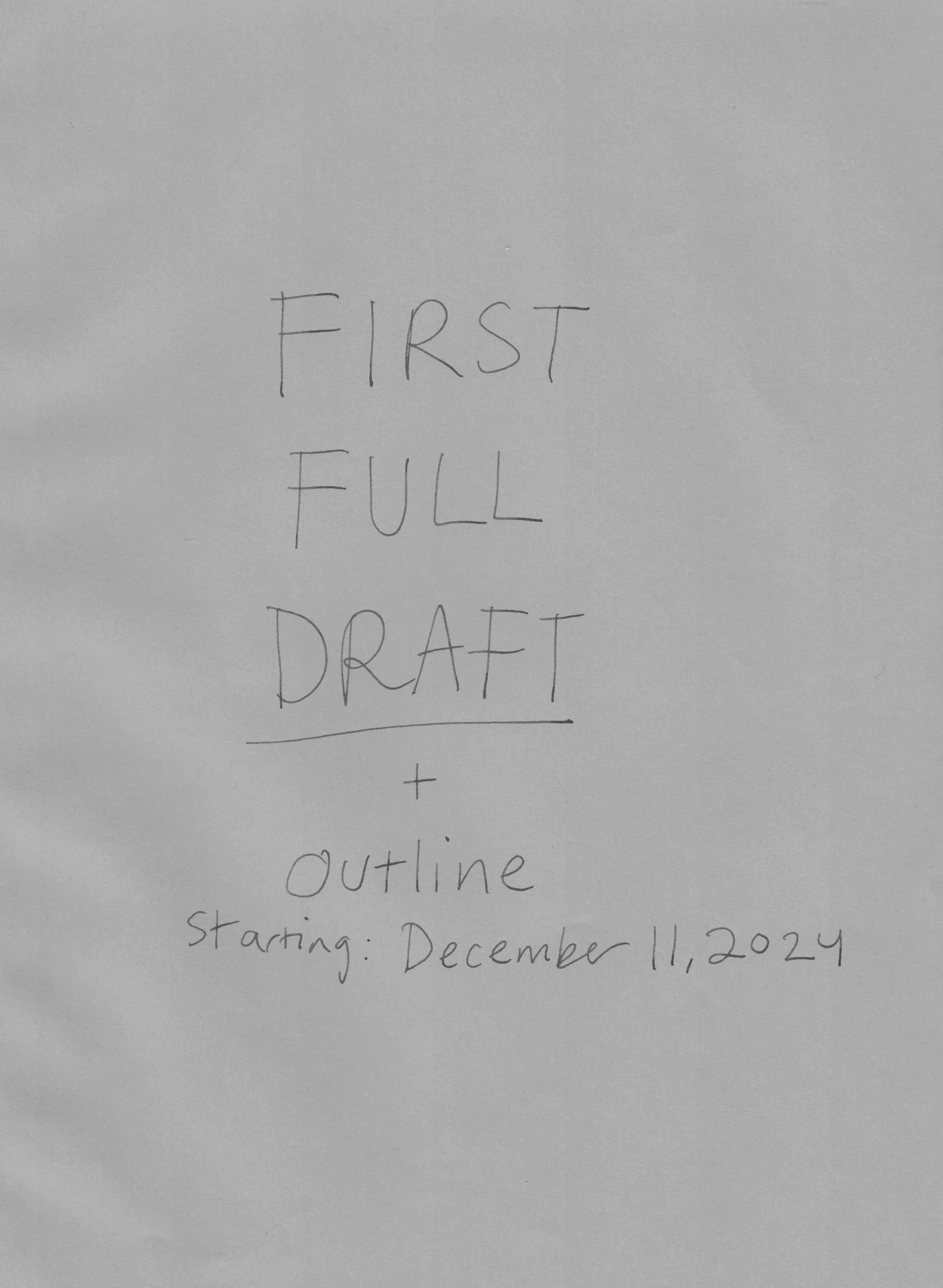
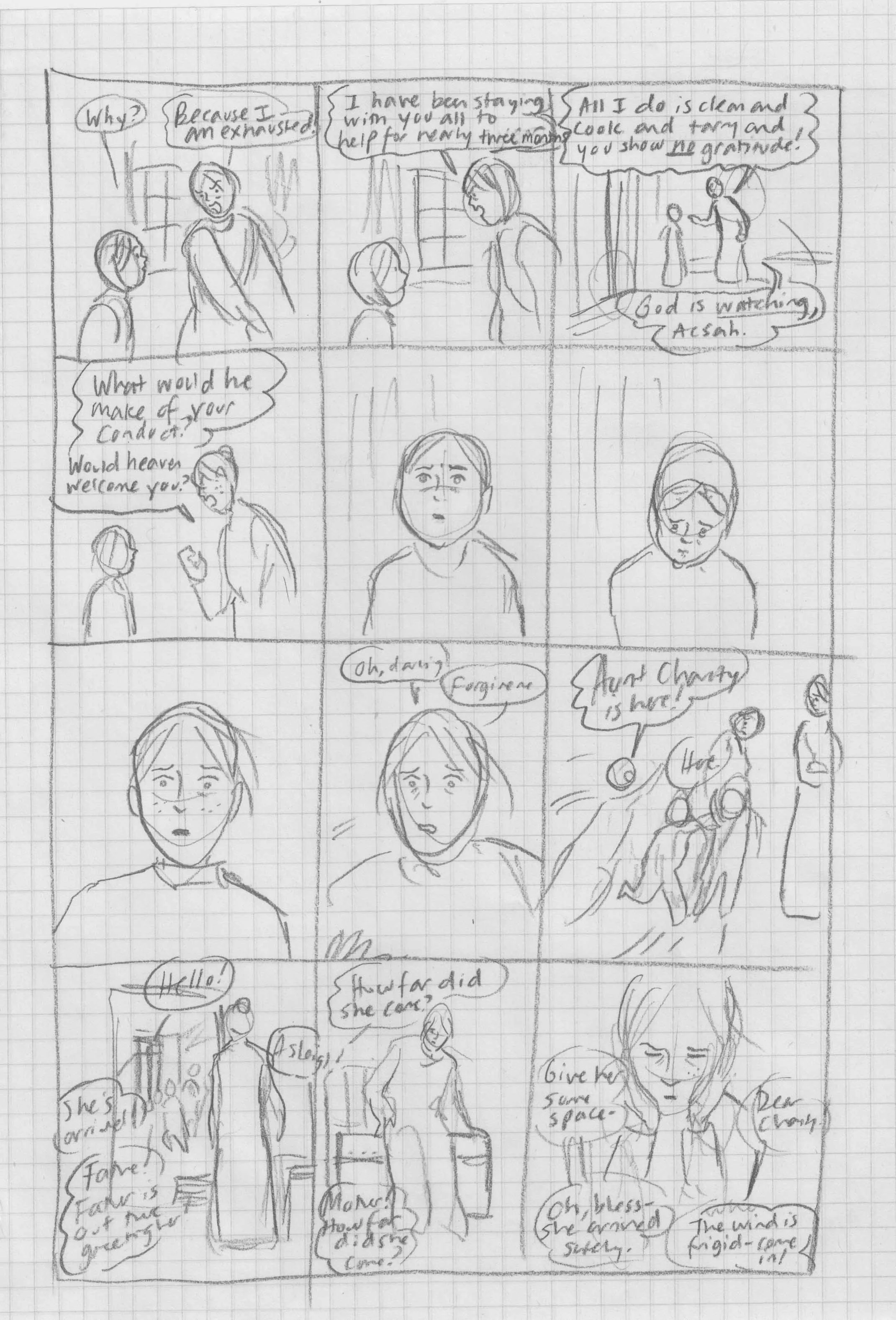
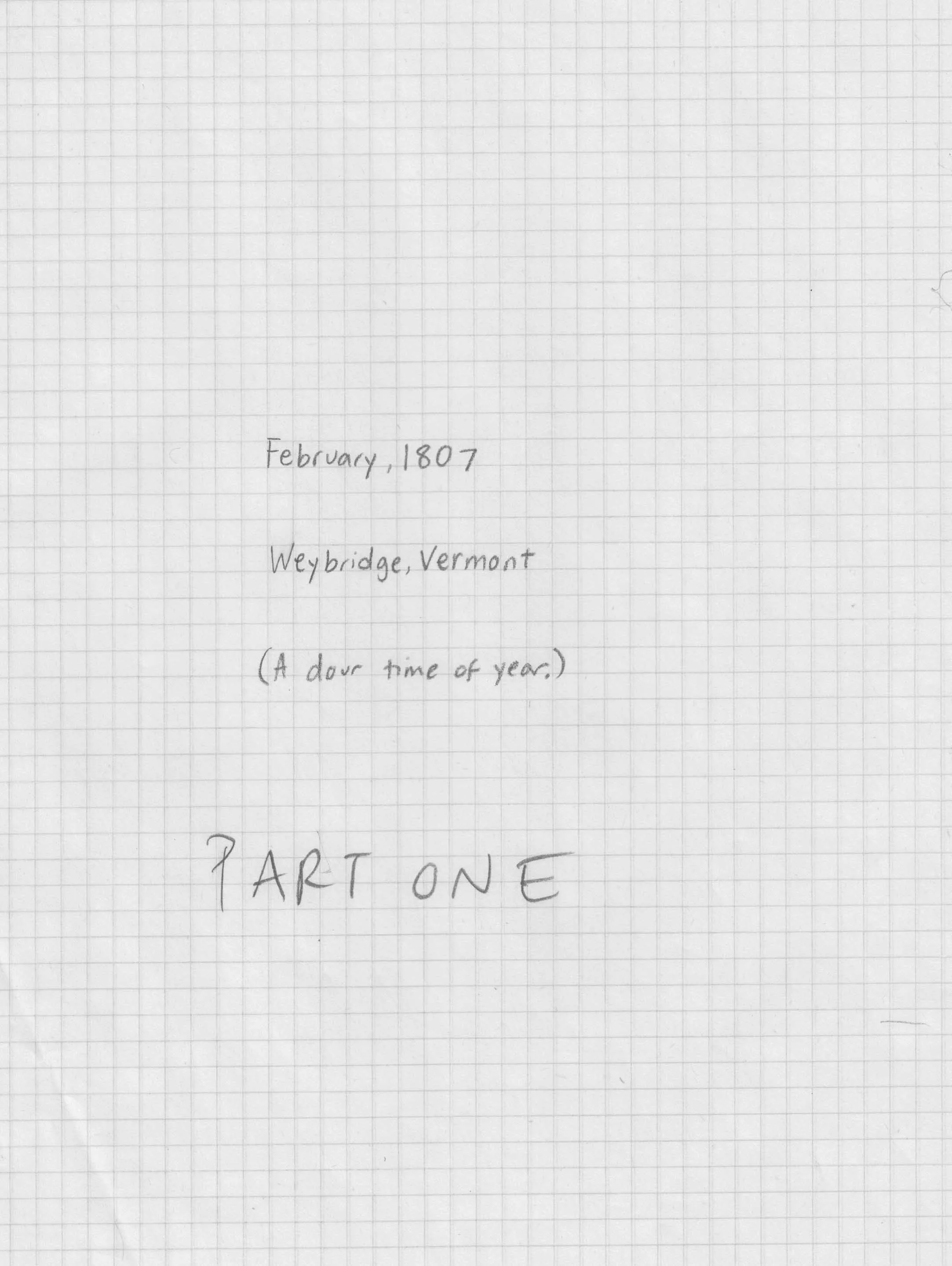
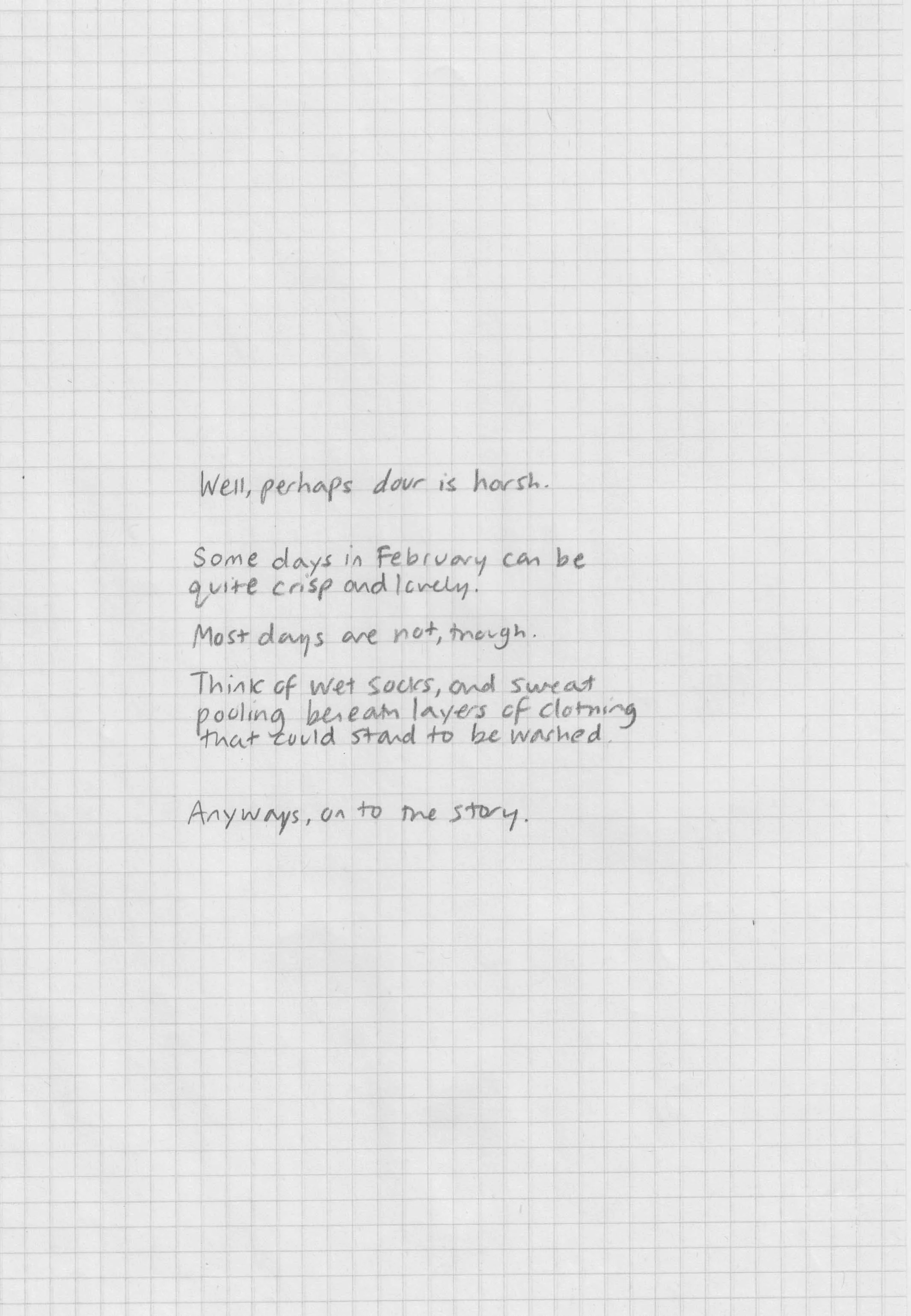
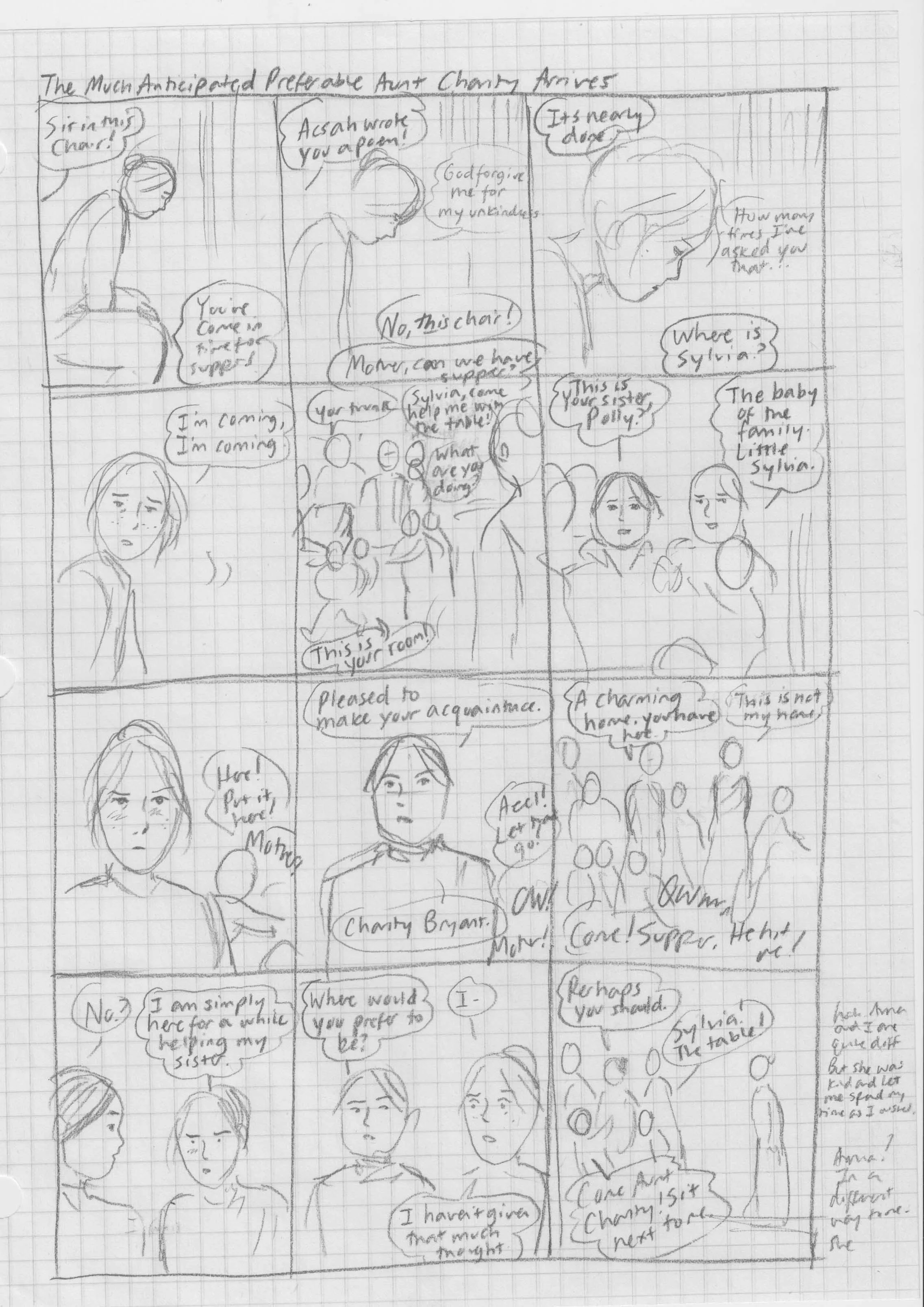
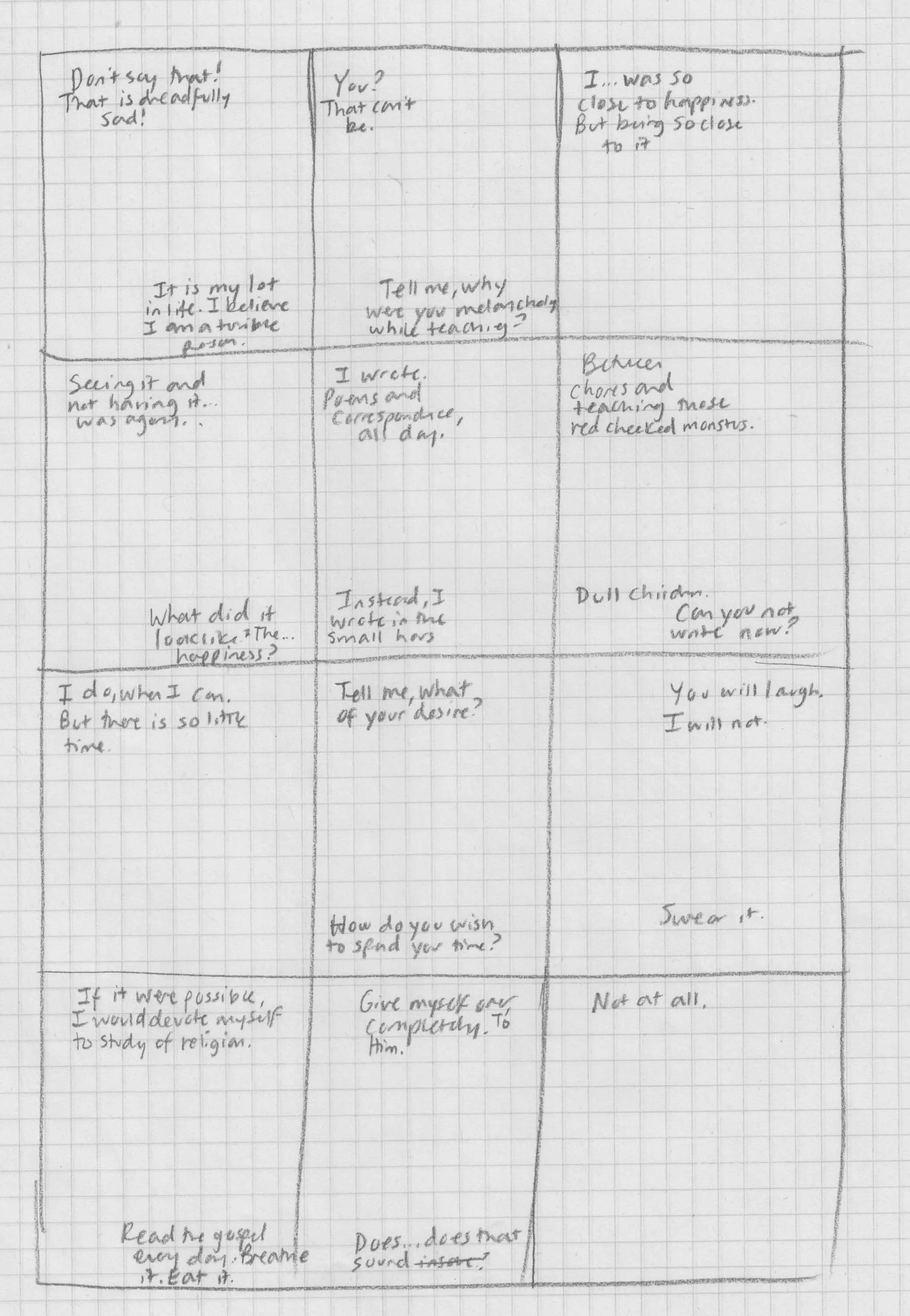
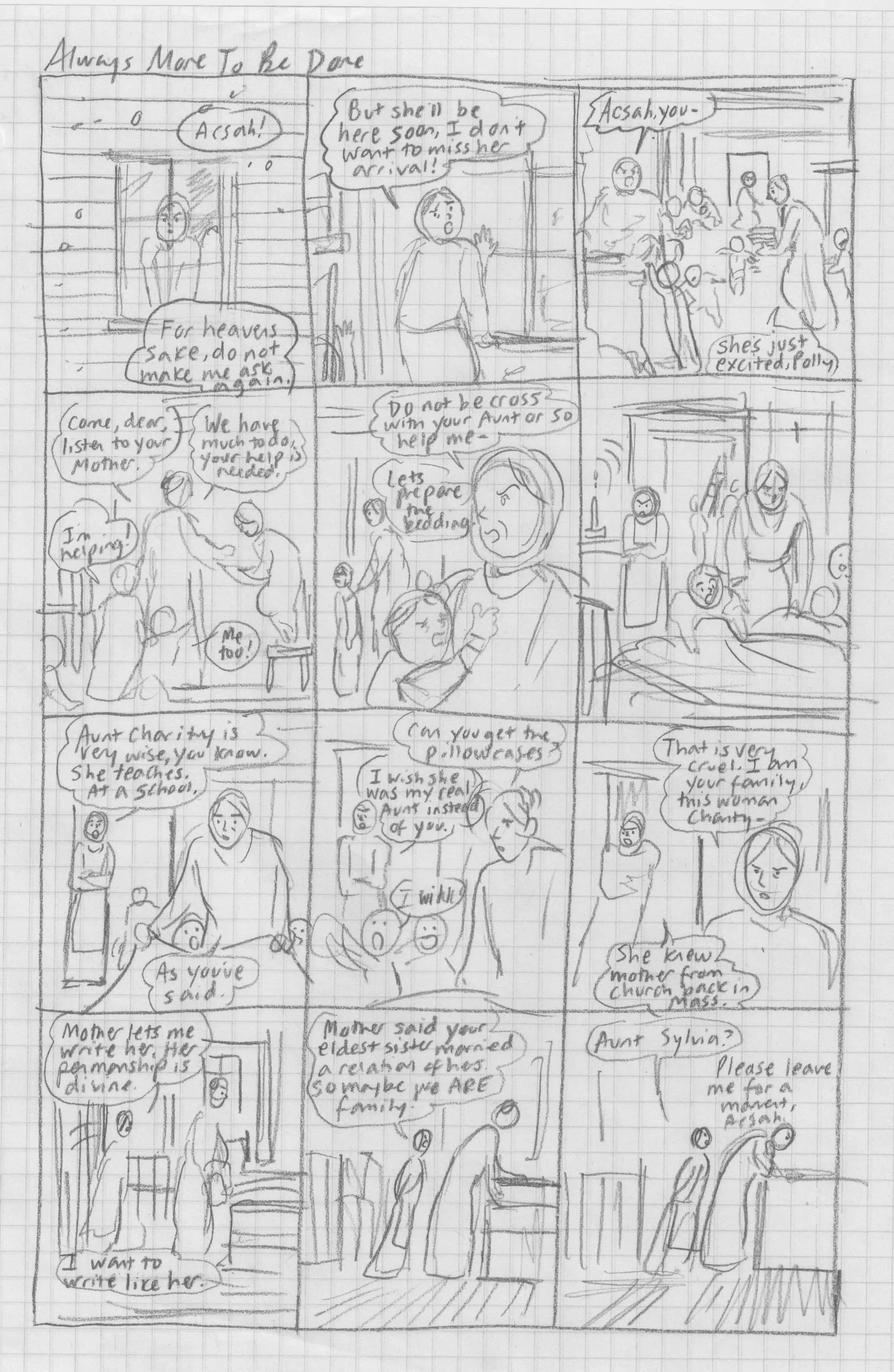
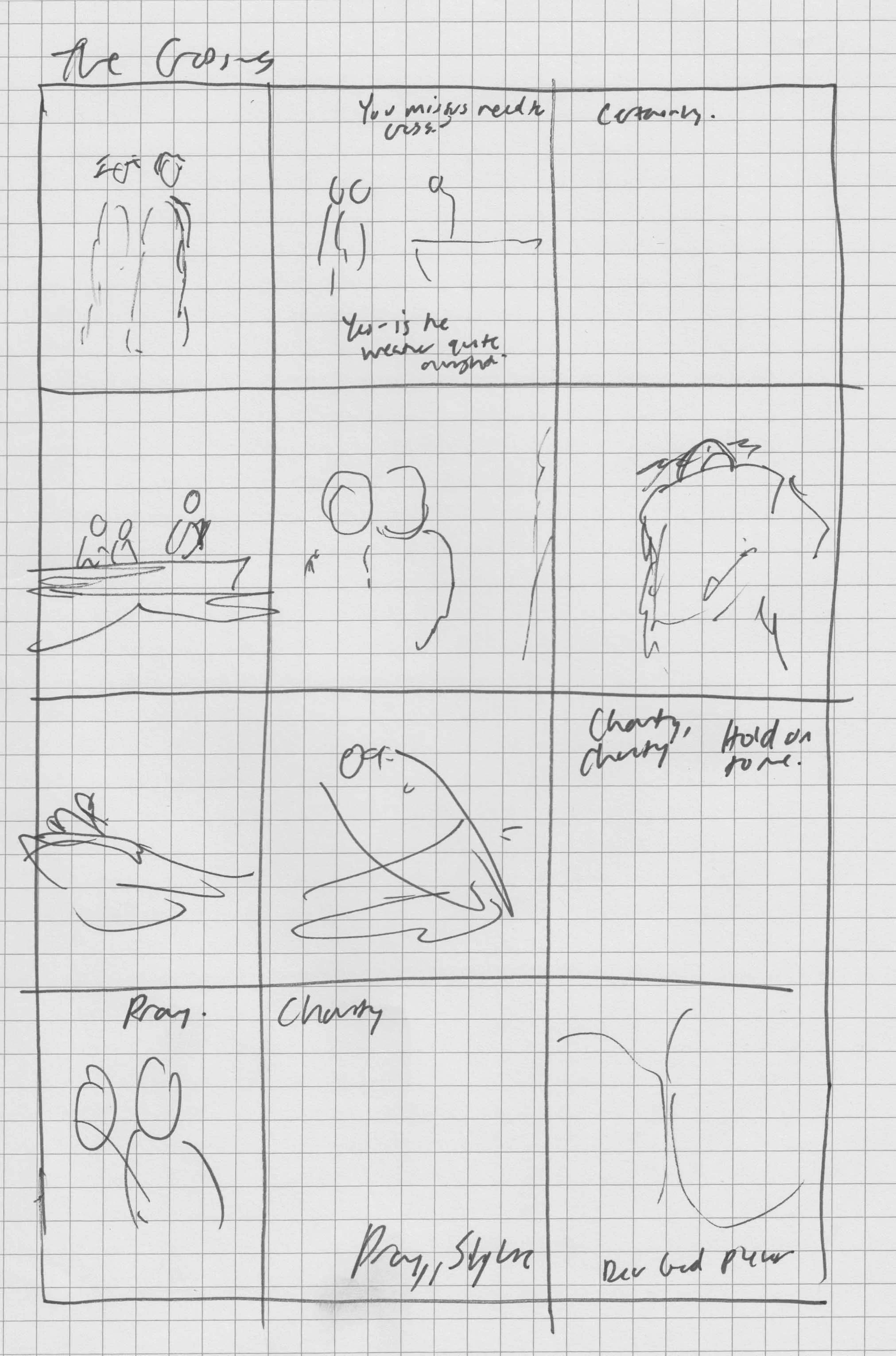
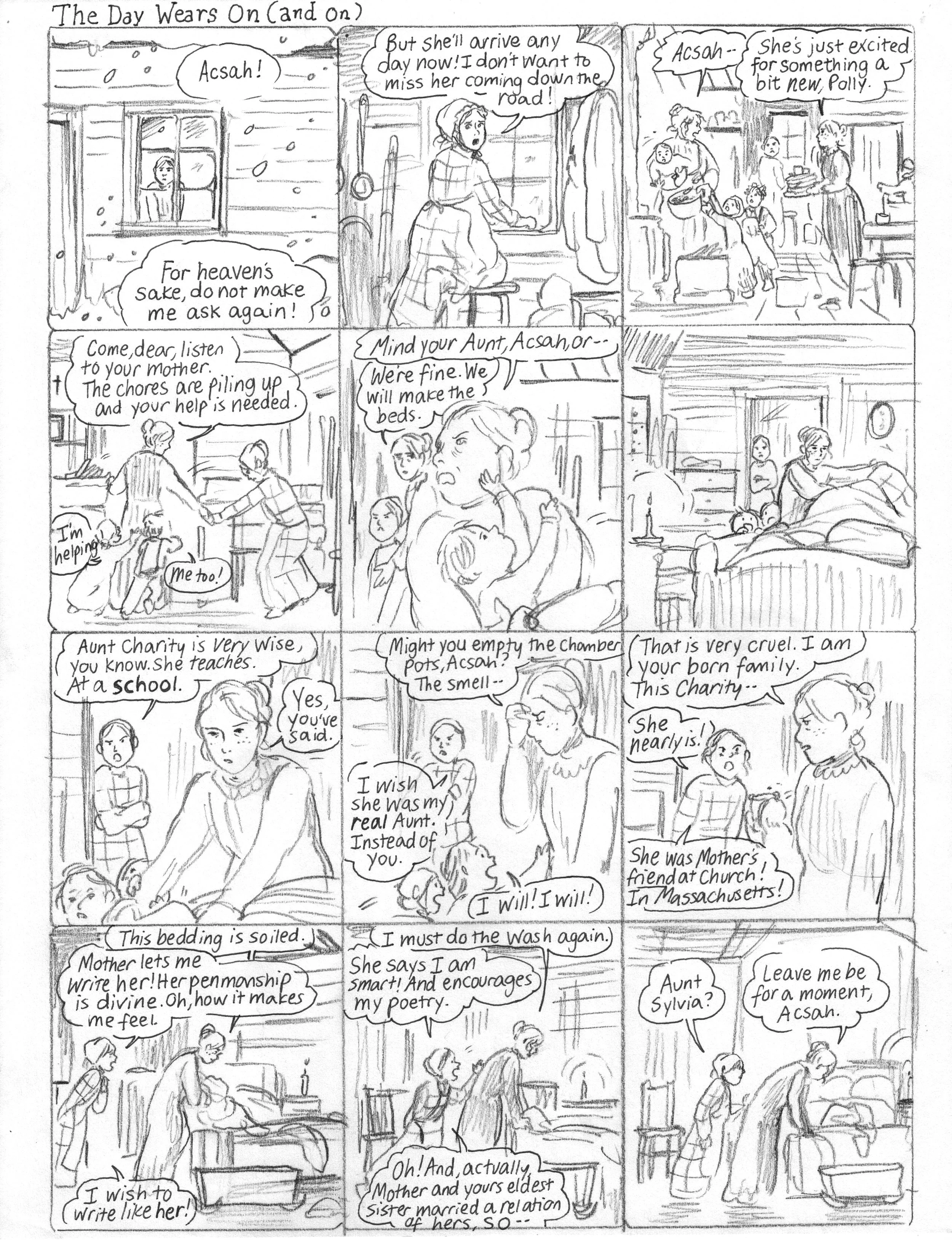
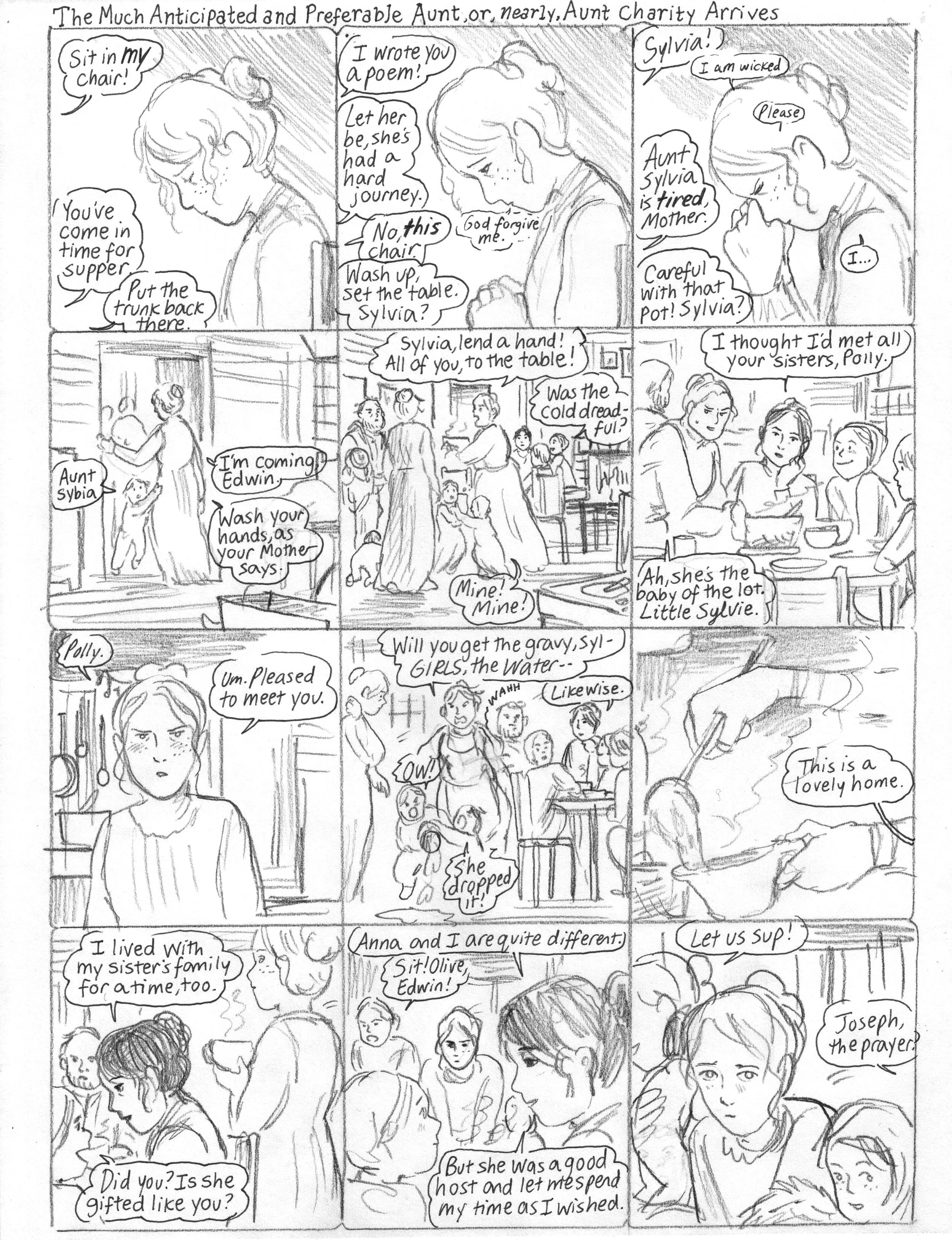
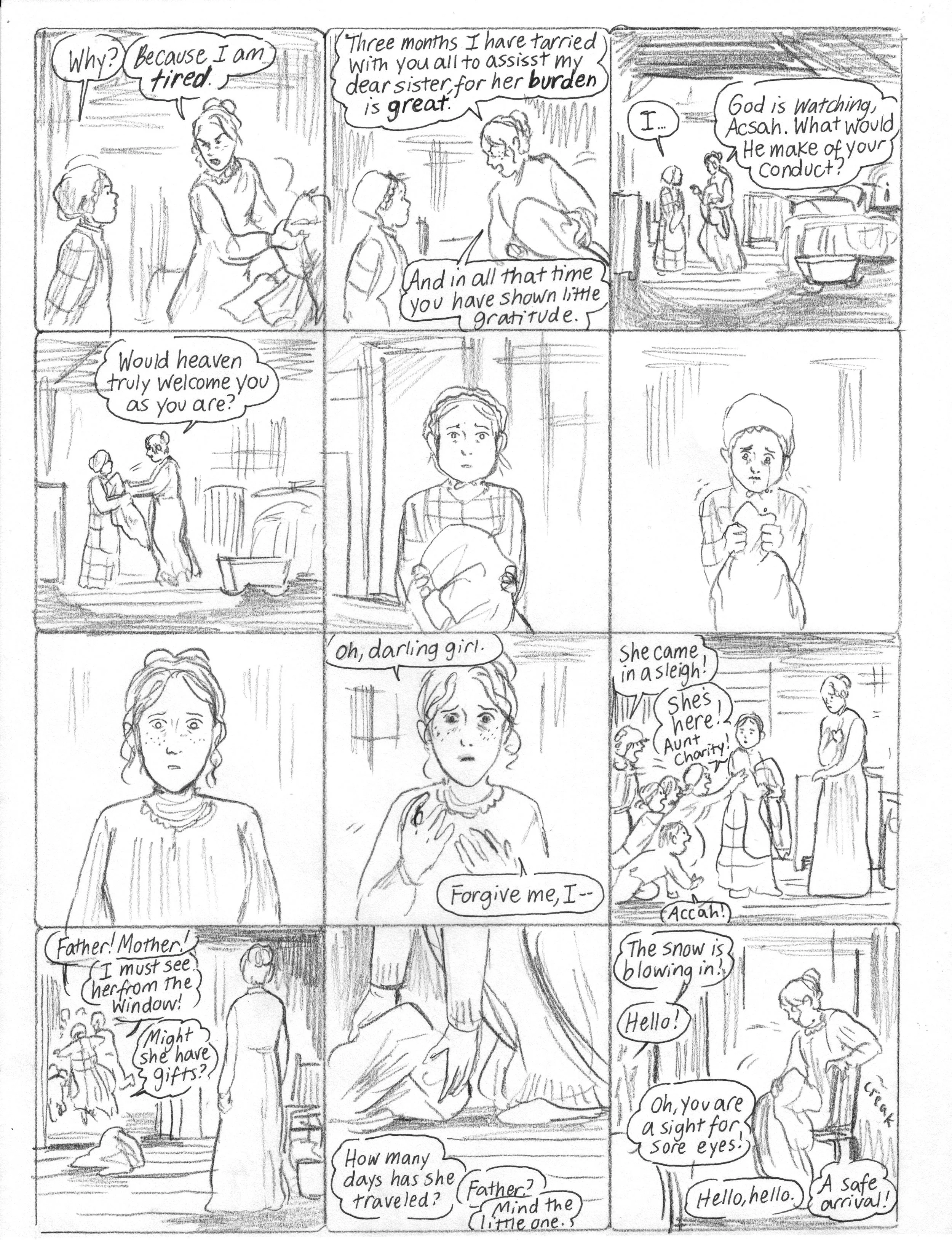
From there, the process became very typical. I took the rough draft and drew it all again only more neatly this time. Then I took that draft and sold the book to a publisher - Drawn and Quarterly. Next step was to get feedback and polish. D&Q edited the draft, VT humanities edited the draft, the Sheldon folks edited the draft. Everyone looked and poked and questioned. There wasn’t a ton to change but there was a lot to add. Readers and editors told me what they wanted to see more of, and because the format was one-page vignettes it was very simple to put in more pages. A second draft was born, and around that time it became clear that the timeline for finished art was going to be much tighter than we had all anticipated. There was a choice at this juncture - I could’ve pushed the book and taken it out of a reading program to have more time on it, but ultimately I decided to try and get it done in time. Do I regret this? Honestly, I don’t know. But it’s the way the cookie crumbled.
Part Three: Final Art
Spring 2025 to Winter 2025
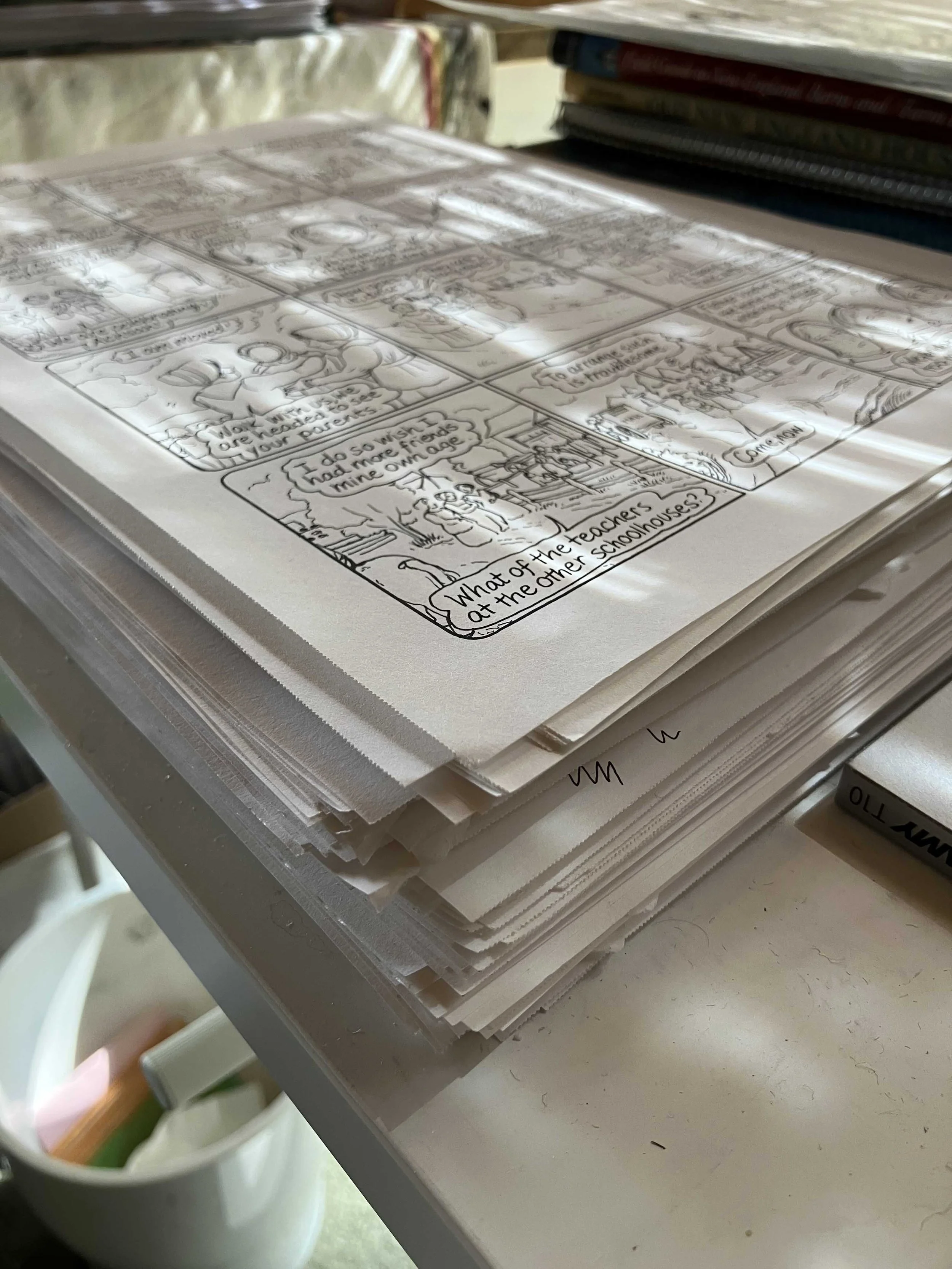
This whole book was drawn in eight months. I can’t recommend doing a 240 page historical graphic novel in that timeline. It was really, really hard. I found ways to make it work, and there were plenty of moments of joy and inspiration, but overall it felt like I didn’t feel calm or rested for… eight months. Here is how I did it:
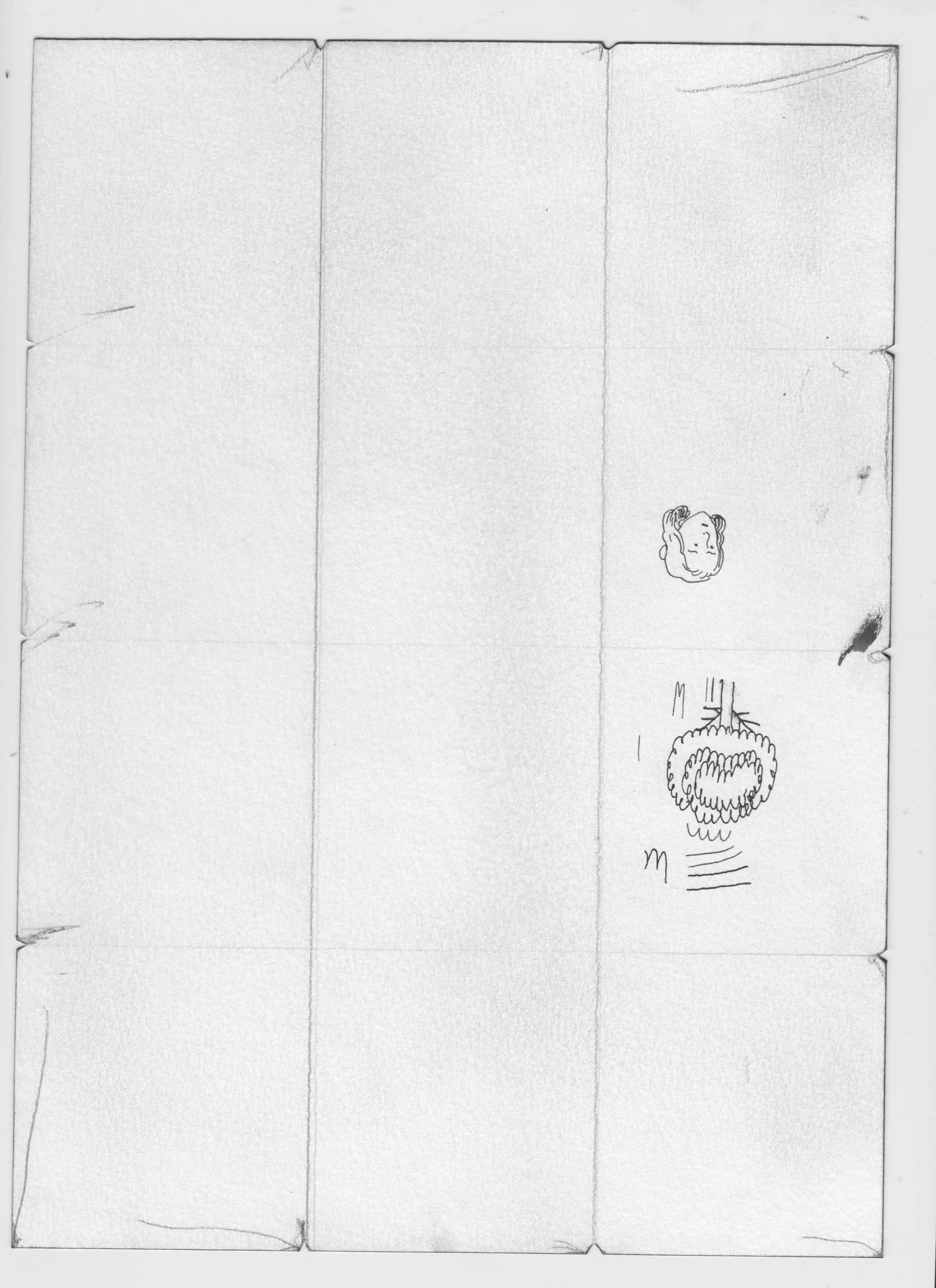
To start, all of the pages needed to be prepped to be inked. The draft was done in pencil on copy paper and was sitting in the wings waiting to be redrawn beautifully. I needed to first get paper - I found some thin-ish sketch paper of varying brands. Then I needed to pick a tool - I picked three different fountain pens but ultimately did the majority of the book with an extra-fine Pilot Kakuno. Armed with paper and a pen I now had to draw out a 12 panel grid on 240 pieces of paper. To make this go a little faster I drew out a template that was the shape of the grid with little cut out points wherever there was a line that needed to be drawn. I would use pencil and the template to get the basic shape down and then use a pen and ruler to ink the borders. OF COURSE I had decided to ROUND THE CORNERS as well of each panel on the exterior border. So the lines would stop short of connecting and I would draw the round corner by hand.
It took about a month and a half to get all of the panel borders done. Woof.
I then took the bordered pages and layed it on top of the pages from the draft on a lightpad so the draft was visible and did all the speech bubbles and hand lettering. This took a little under two months. It was wild seeing the whole book sitting there with panel borders and speech bubbles and text and NO ART. It looked cool, but also made me shake with fear over how much art there was ahead of me to make.
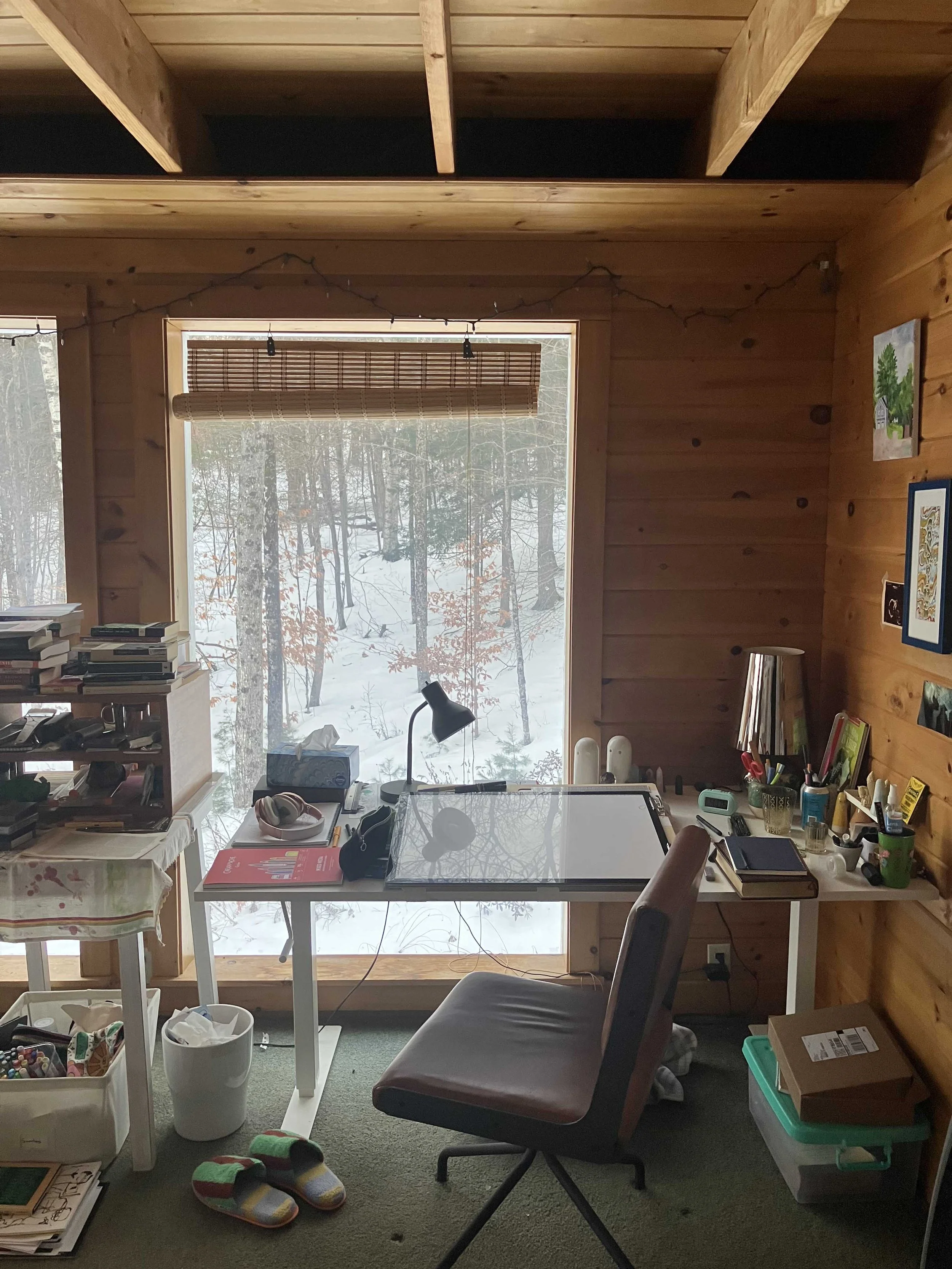
I started inking the art in earnest around August 2025. Inking is fun, it’s my favorite part of the process, and I got into the rhythm pretty quickly. Of course there were the usual agonies - some pages didn’t look right, my wrist hurt, the constant need for reference images, etc. But my pen was smooth and I had ink cartridges aplenty. For the first 50 pages or so I was able to fill in all the areas of solid black myself, but when I faced the fact that the book was due in October (technically) I started to pass off filling the spot black in to my intern Kate (who also scanned every page.)
What I didn’t realize while inking is that I should’ve been prioritizing getting the pages toned at the same time. I assumed that adding the tone would be easy - I was going to do it digitally, I could be snuggled in bed while it happened, how hard could it be?
It turns out it would be very, very hard.
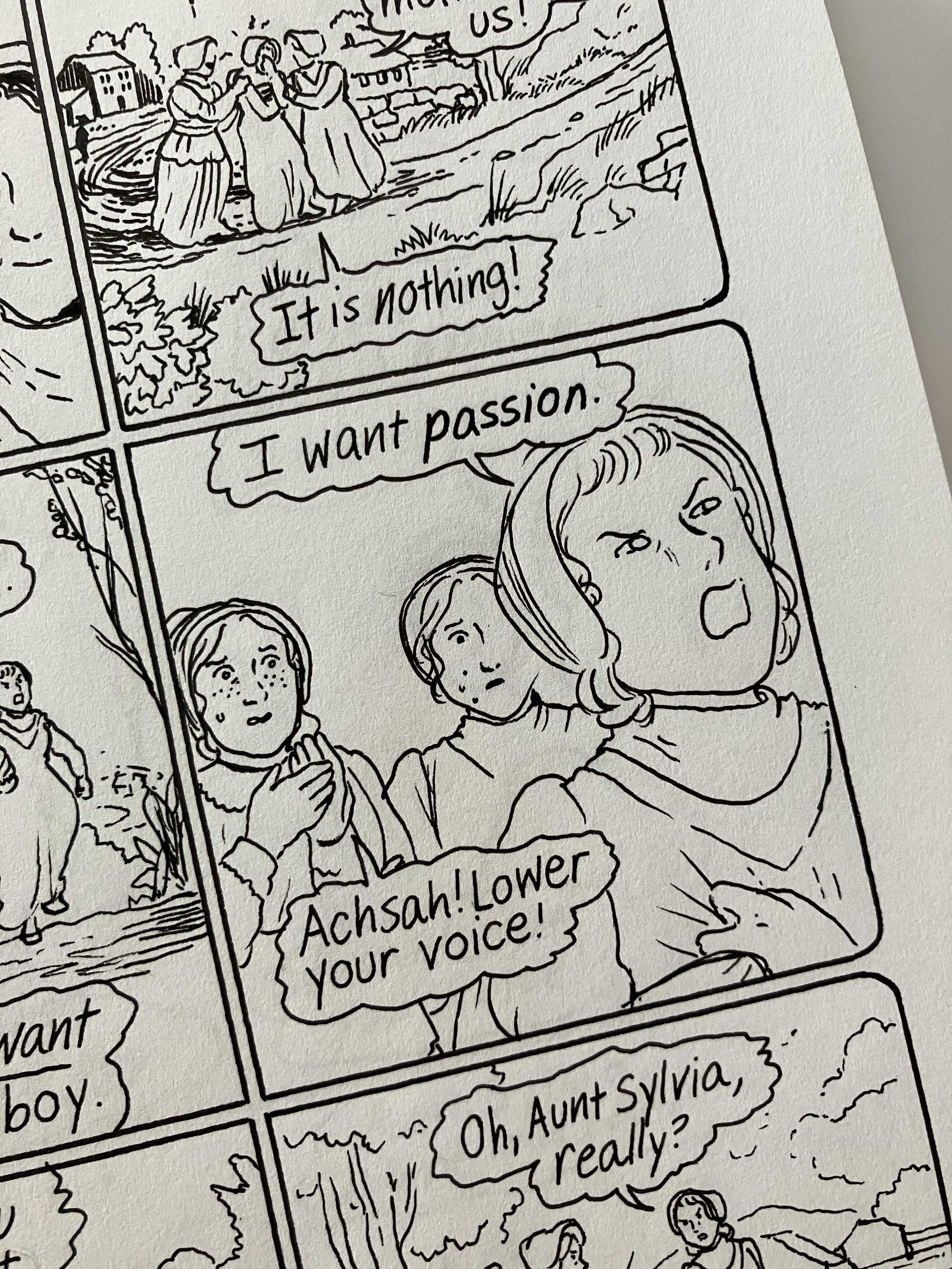
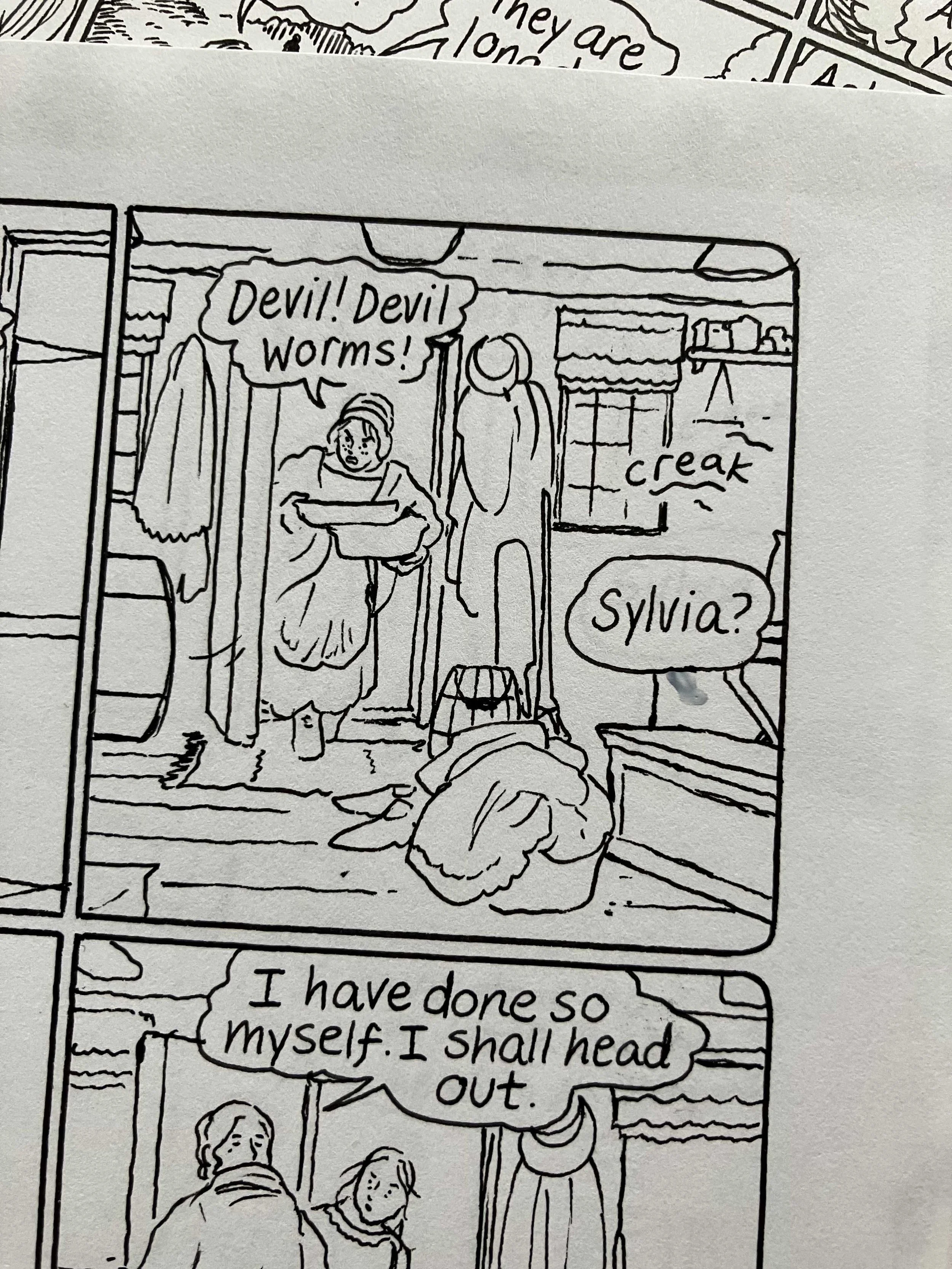
As I raced to finish the inks I started uploading the scanned pages onto my ipad, into Procreate, and began the toning. Originally I wanted the book to be black and white but found myself really disliking how the gray looked. A friend of mine was looking over my shoulder while I was toning and suggested it be a color instead of gray. She was right! Thanks Johna. Once a page was toned in gray I would then send it to the computer to turn it into a sepia shade.
The problem with the toning is that most of my books incorporate a lot of single page images or pages with just a few panels. So my experience of toning books in the last five years is that it’s not that hard. But, because this book had 12 panels on basically every single page there really wasn’t any break to the labor. Toning one page sometimes took four hours. I was gobsmacked, honestly. I didn’t calculate in time for the tones to take this long, but just look at one of these goddamn pages - there’s multiple people in panels, there’s backgrounds, there’s lighting. And because every panel is actually pretty small the tones play a crucial role in clarifying the space to the reader. So basically, I couldn’t even half-ass them!
Getting the tones done on time, as well as getting the inks done, truly sent me into a spiral. I thought doing five books in four years was hard, but this was harder. I really thought I would explode from stress. Unfortunately the final months of working on the book weren’t pleasant because of this, and I’m bummed I can’t look back on all this creation fondly. But when it was done on December 9th I was able to collect myself back into a human shape.
So, there you go. That’s how you make a graphic novel! A time-lapse of toning can be found below: